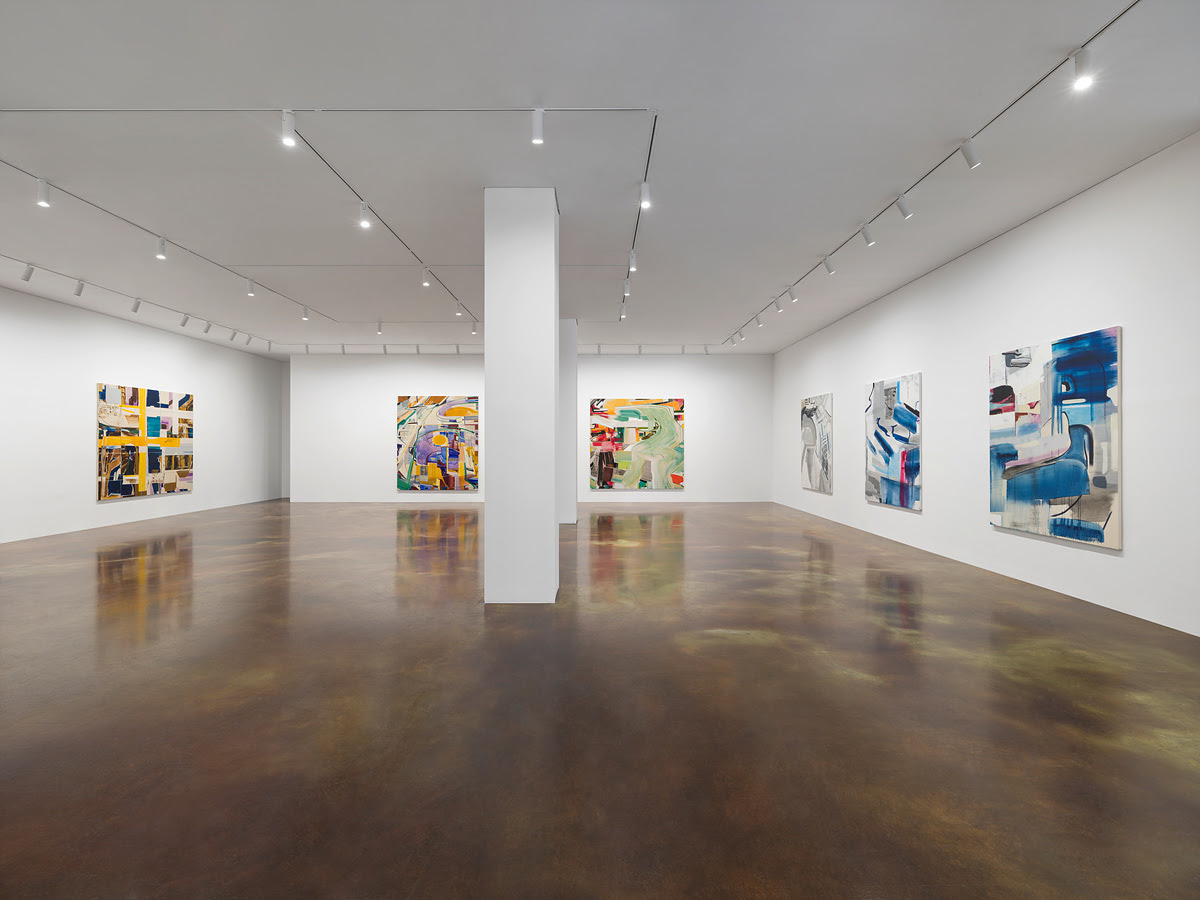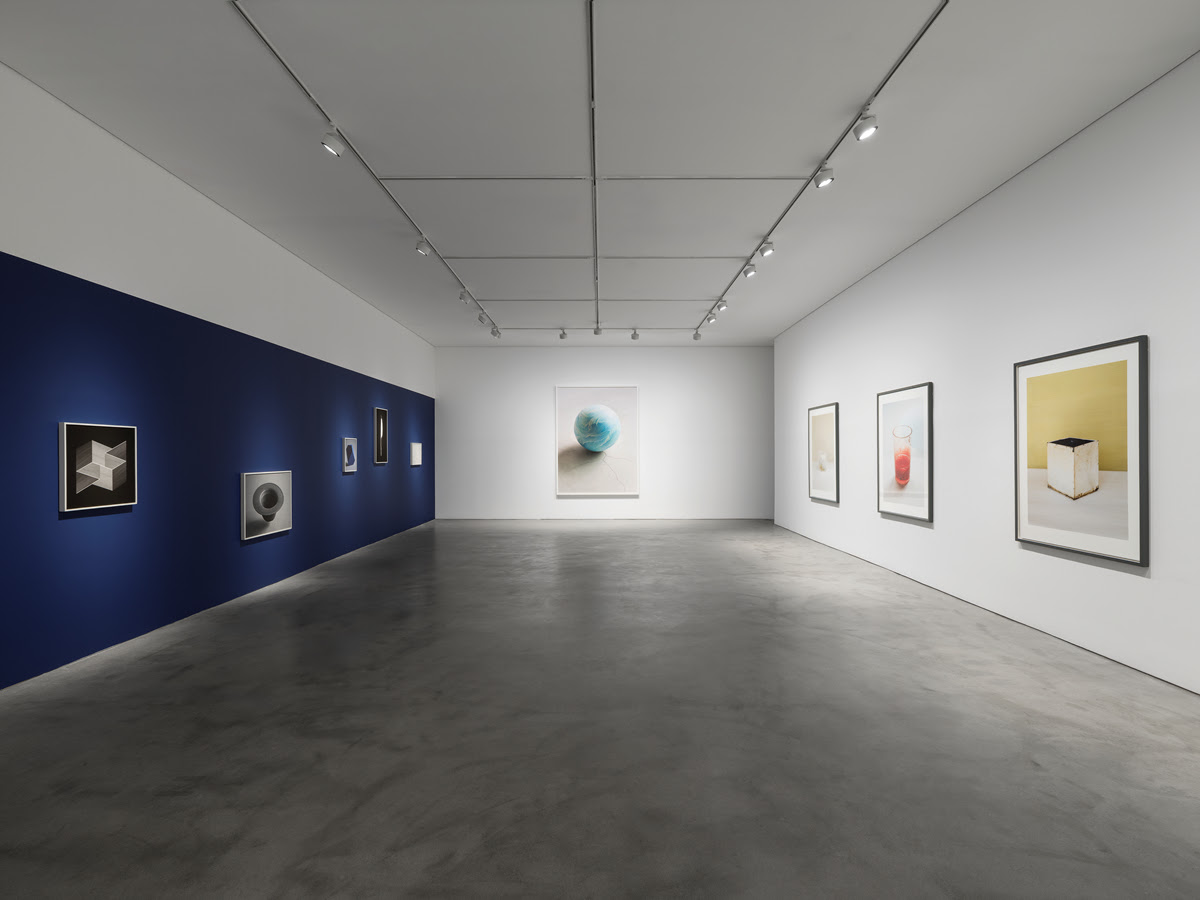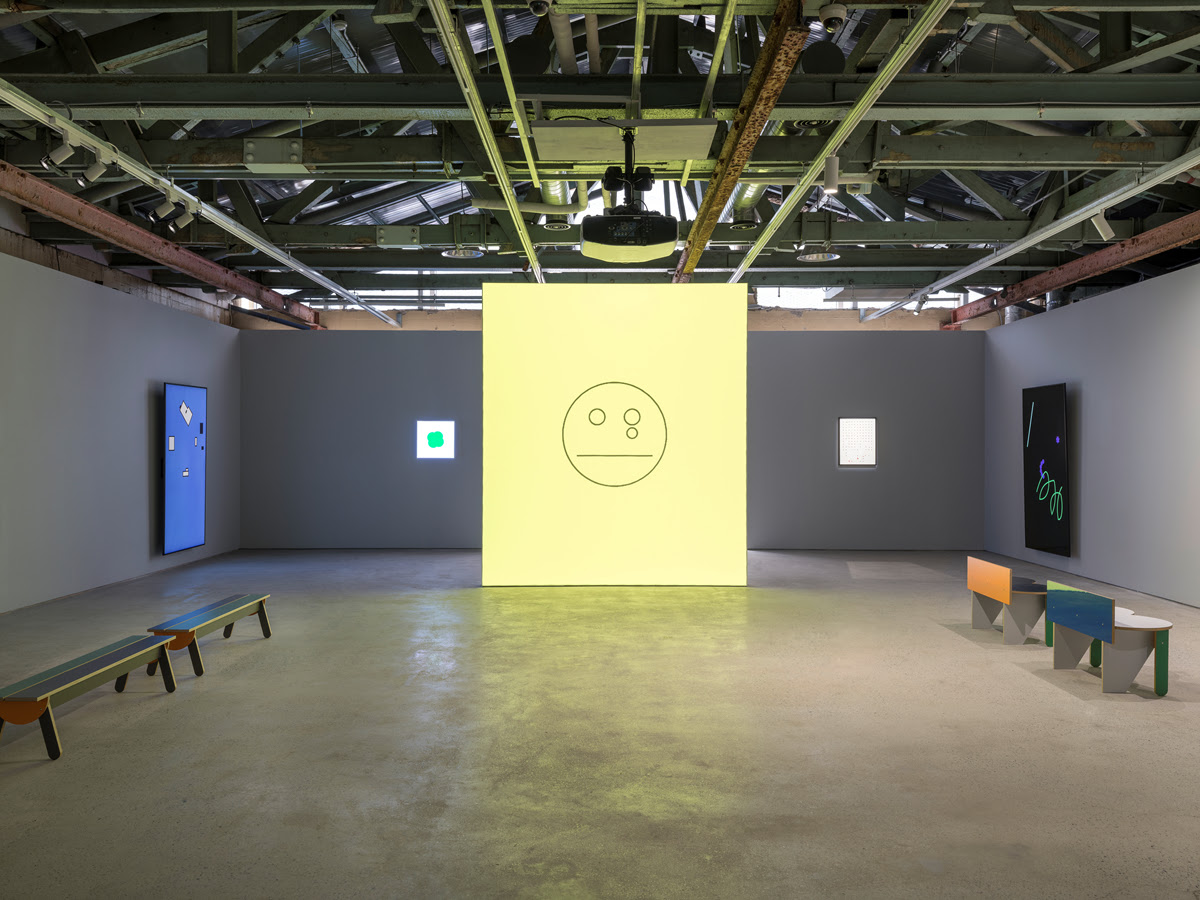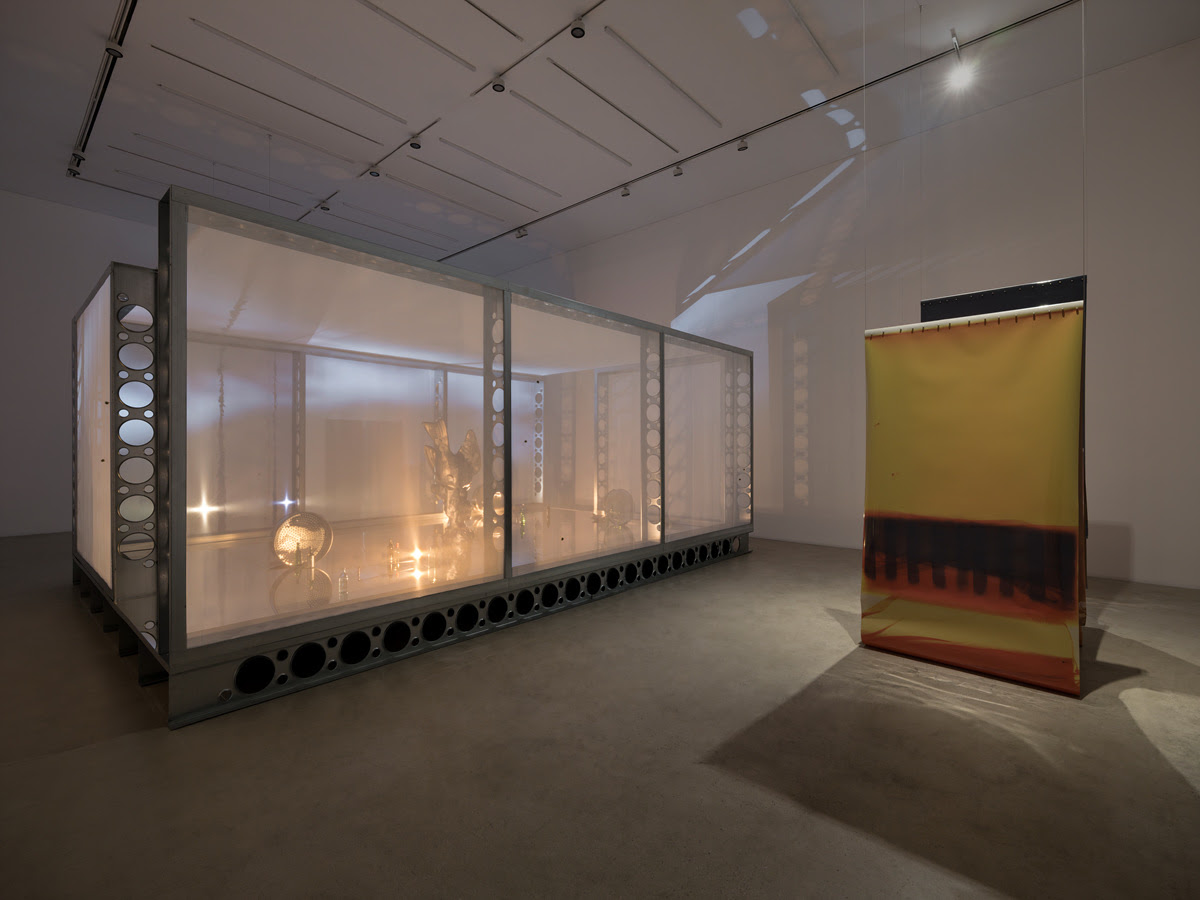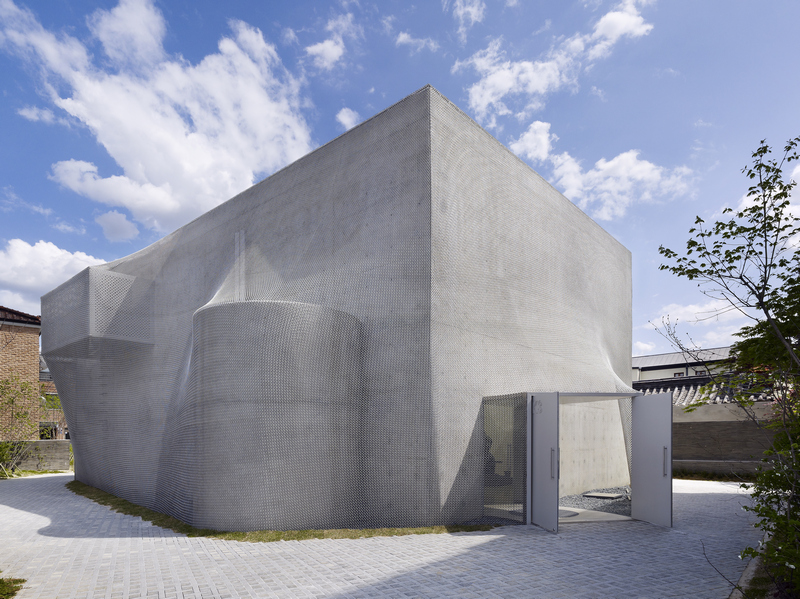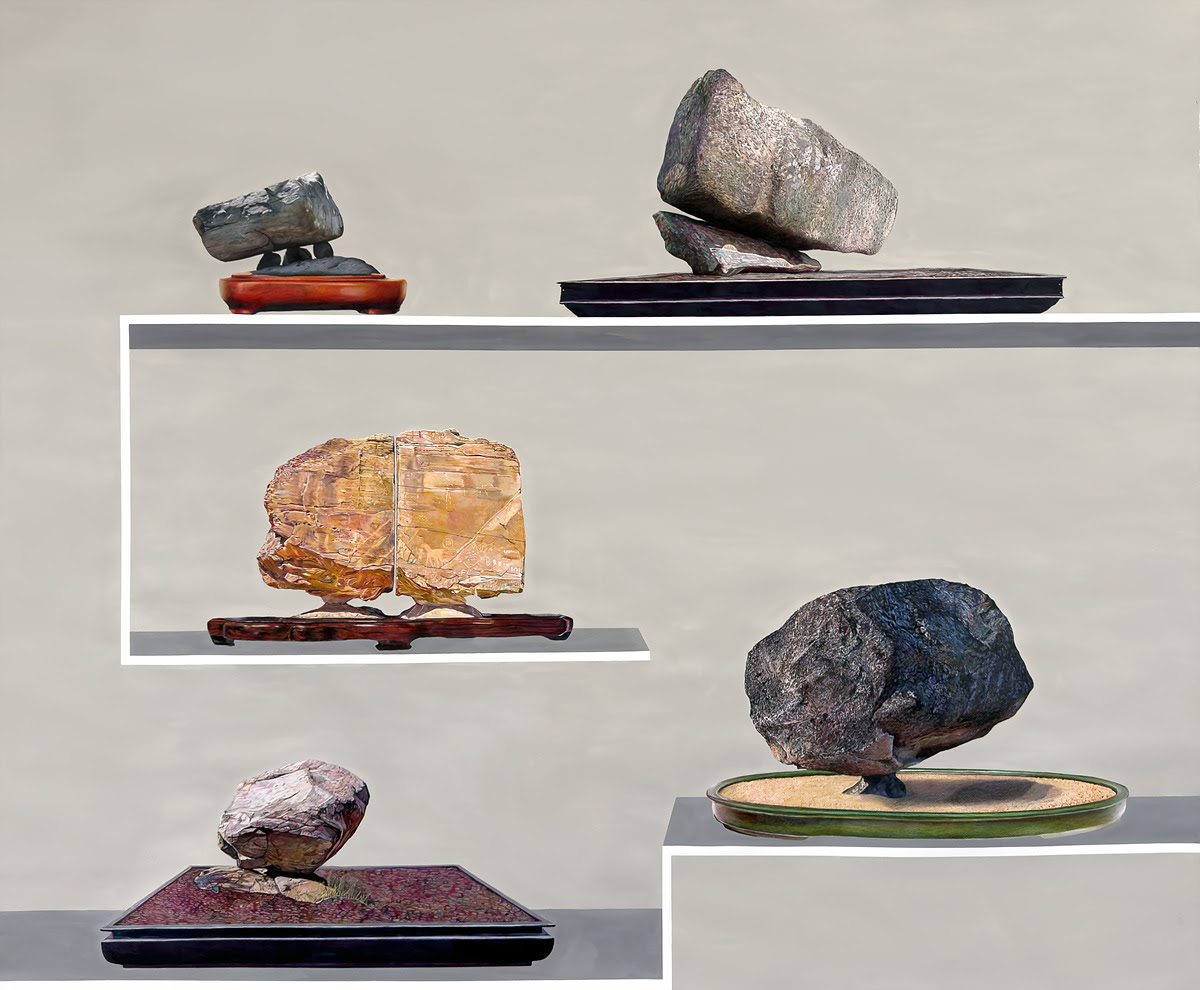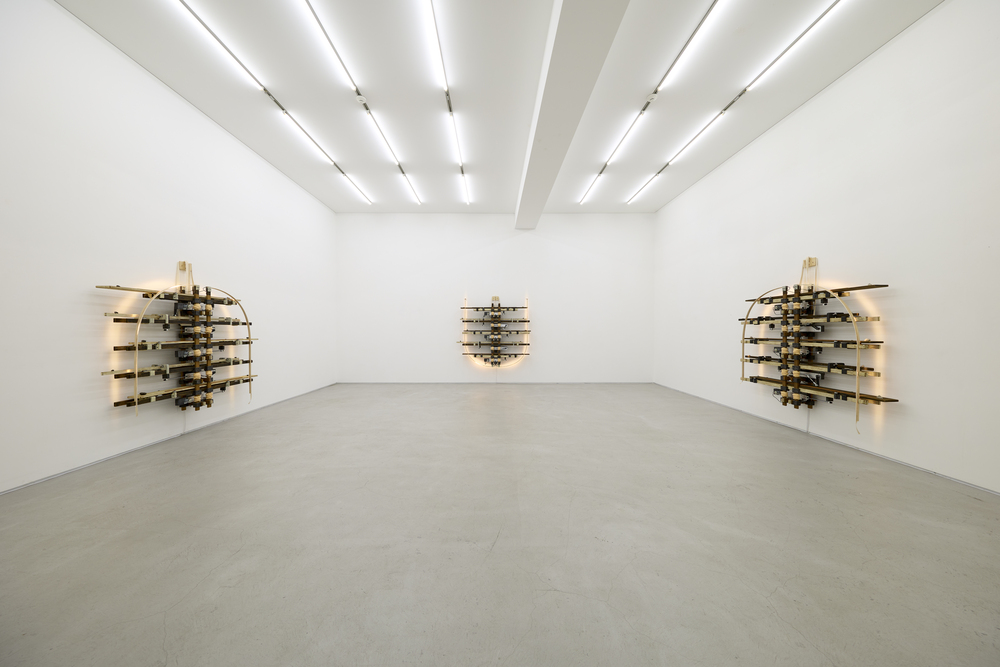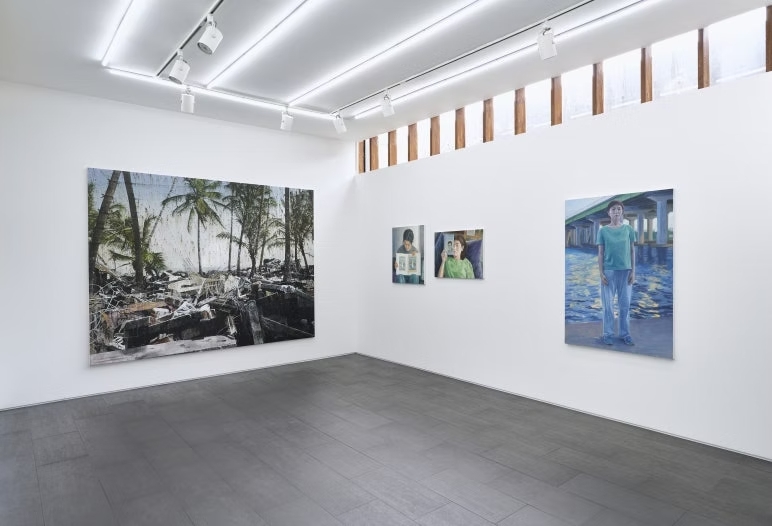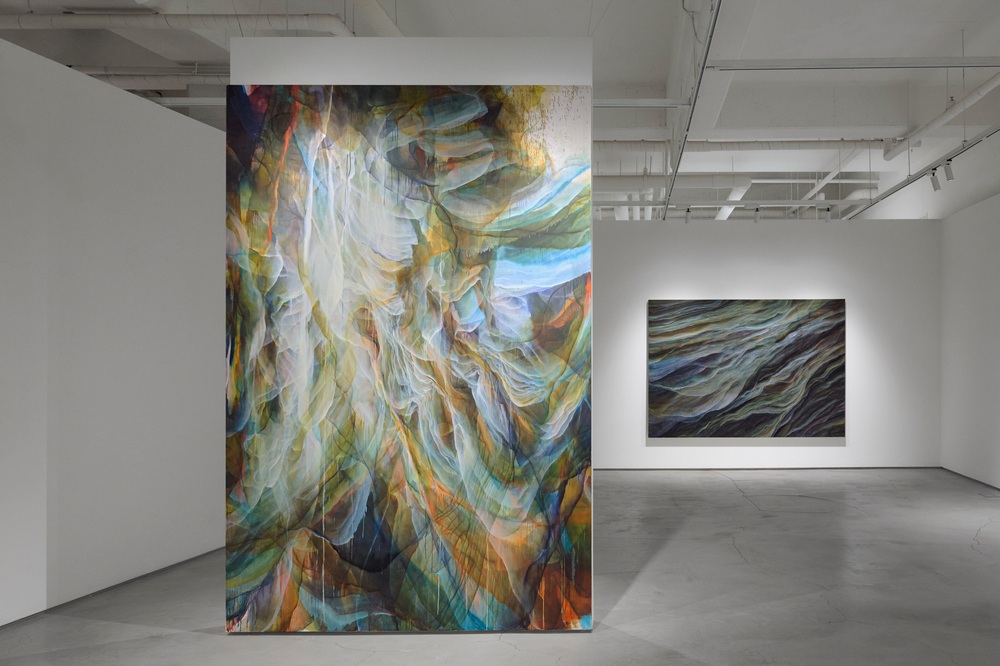

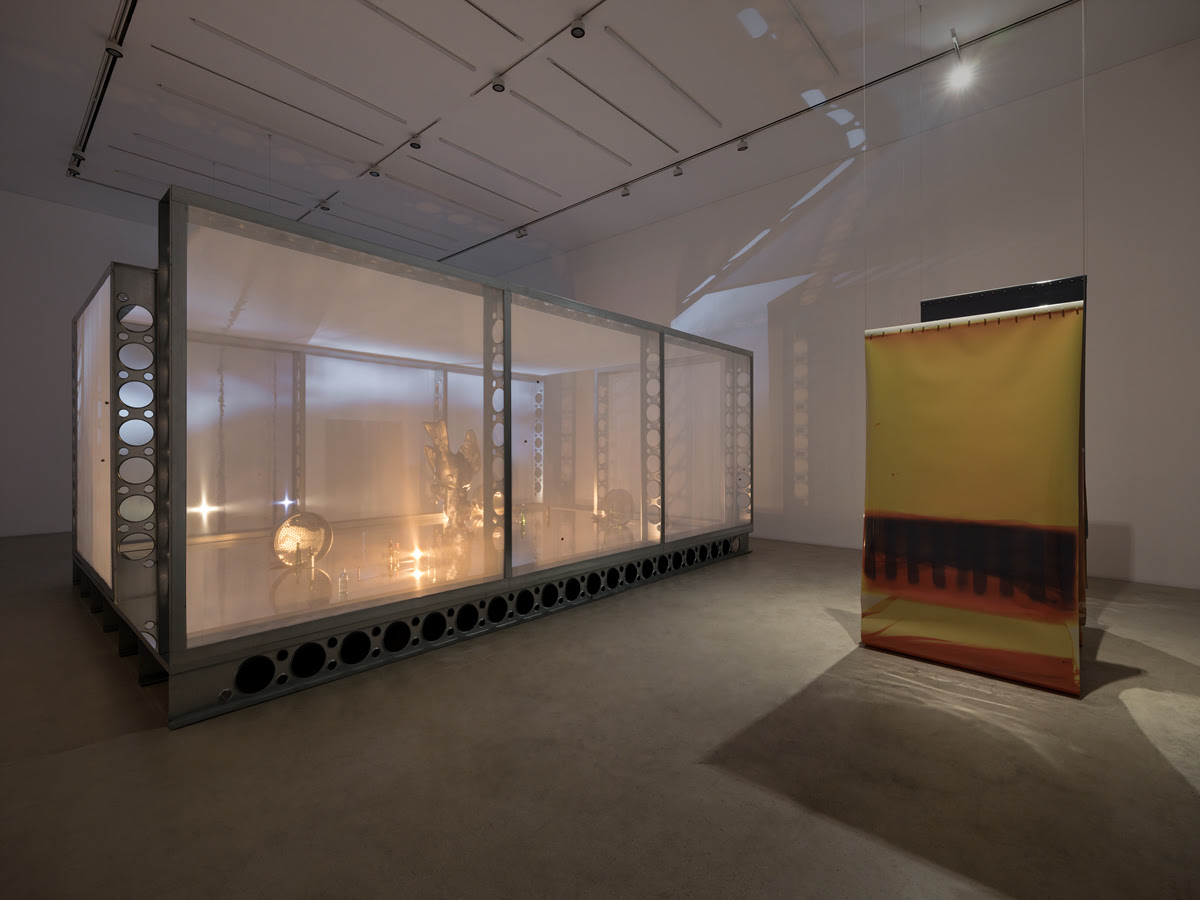
Installation view of 《Chora》 ©Kukje Gallery
Kukje Gallery presents 《Chora》, a solo exhibition by Korean Canadian
artist Lotus L. Kang, on view in the Hanok and K3 spaces through May 10.
Marking the artist’s first solo
presentation in Korea, the exhibition reflects on inheritance as an embodied
condition—one that extends beyond lineage to encompass architecture,
environment, and memory. Moving between the gallery’s traditional and contemporary
exhibition spaces, Kang presents a spatial translation in which past and
present cohabit without resolution.
The title of the exhibition draws from the
concept of “chora” articulated by the Bulgarian-French philosopher Julia
Kristeva (b. 1941), which describes a primordial space prior to fixed meaning
or form. Likened to a mother’s womb, chora suggests a generative
field—receptive, rhythmic, and continuously in flux.
Kang approaches this notion as a framework
for understanding space not as a mere container but as a site of nourishment
and transformation. Across the exhibition, forms emerge from states that are
neither fully solid nor fully void, but suspended in between.
Installation view of 《Chora》 ©Kukje Gallery
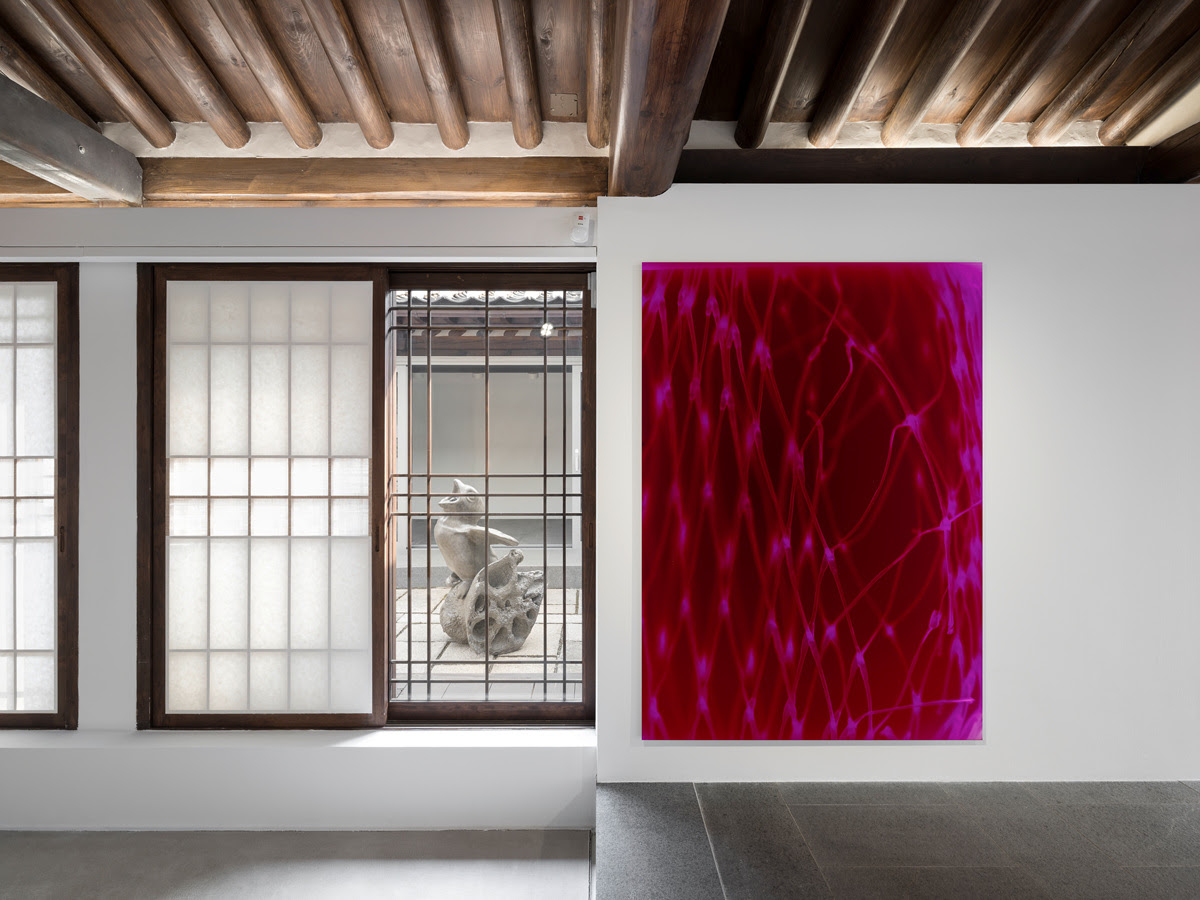
The exhibition begins in the Hanok space,
where the traditional inner courtyard, madang, operates as both interior and
exterior, a structural void that sustains the architecture surrounding it.
Kang considers this “in-between” condition
as an active force. Echoing the structure of a lotus root—whose perforations
strengthen rather than weaken its body—the courtyard’s emptiness becomes
generative.
Within the architecture is work from Kang’s
‘Mesoderm’ series composed of silicone, photograms, and cast elements that
reference the embryonic germ layer from which muscle, bone, and connective
tissue develop. Rather than depicting fixed imagery, these works suggest a
state of formation—matter in the midst of becoming.
This biological language is further
articulated through Kang’s luminogram series, ‘Synapse,’ in which the artist
enlarges details of nylon-woven produce bags in a color darkroom, generating
images that resemble biological and cellular structures, such as tendons and
veins.
Installation view of 《Chora》 ©Kukje Gallery
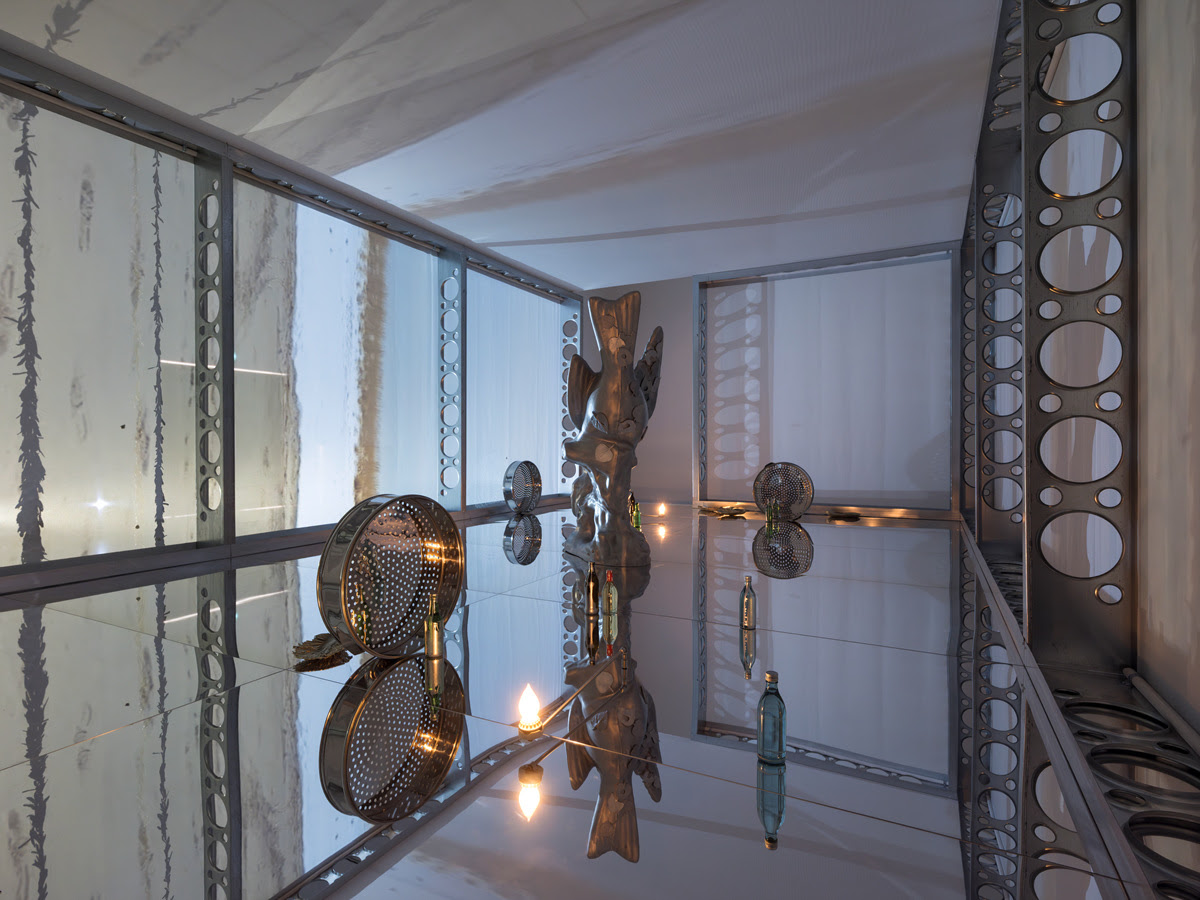
In K3, Kang translates and refracts the
Hanok courtyard inside the contemporary architecture into a new work titled Chora
Chora. Presented for the first time, the installation consists of
intersecting steel joists creating a skeletal framework reminiscent of a lotus
root’s porous structure.
Covered with translucent fabric and
installed on a mirrored floor that extends the space into apparent infinity,
the installation destabilizes the notion of an architectural center—perhaps the
most lucid embodiment of Kang’s understanding of her own identity.
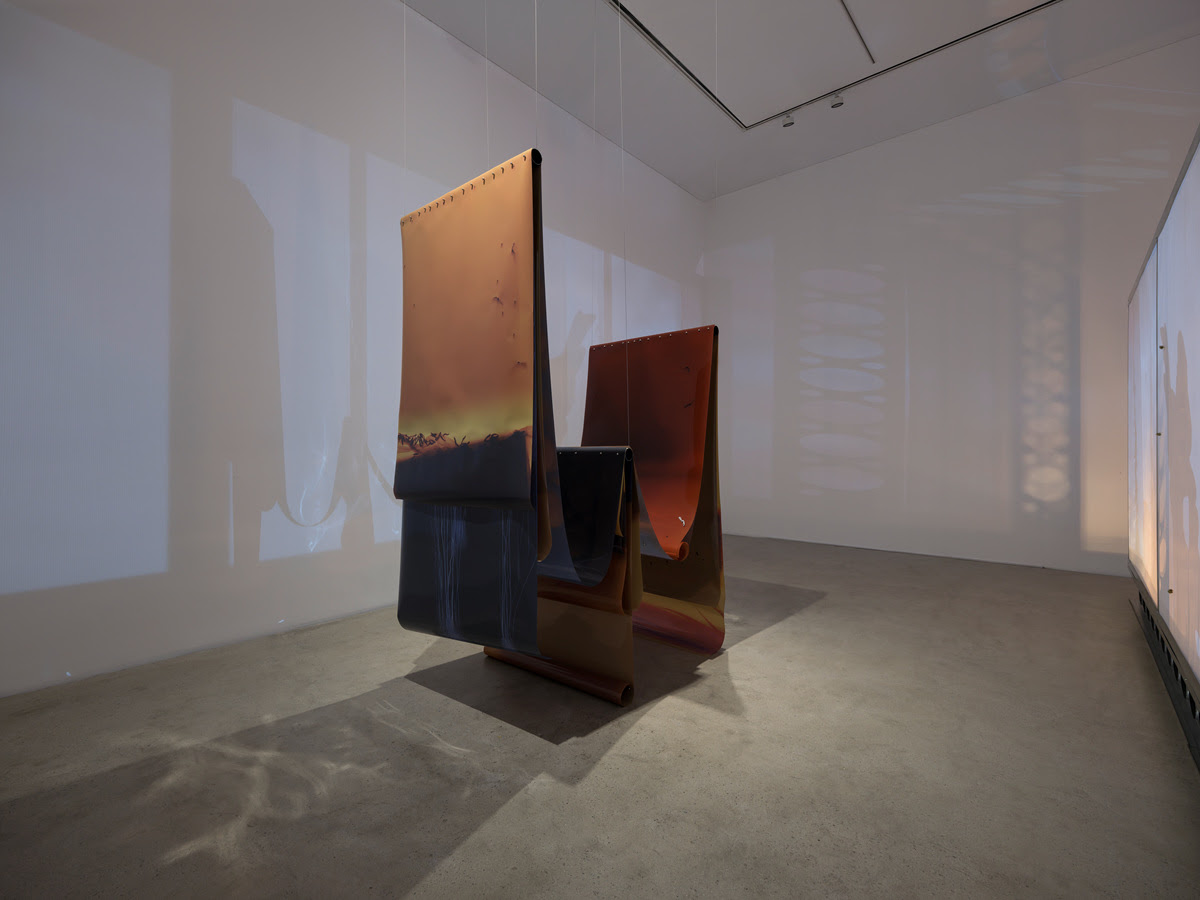
A cascade of industrial film behind the
courtyard continues to register this time. In hues of pink, purple, and yellow,
Kang calls these sheets of light-sensitive material “skins,” once again
unsettling the boundary between inside and outside.
Installation view of 《Chora》 ©Kukje Gallery
Exposed to the raw environment of the
artist’s greenhouse in upstate New York as well as her studio in the city, the
films are misused and transformed through a process she calls “tanning,”
absorbing traces of light, water, insects, and other coexisting elements,
bringing them to a type of life which simultaneously destroys the image bearing
capacity of the film. In the gallery, they continue to register their
surroundings, holding traces of the time and environment Kang has composed.