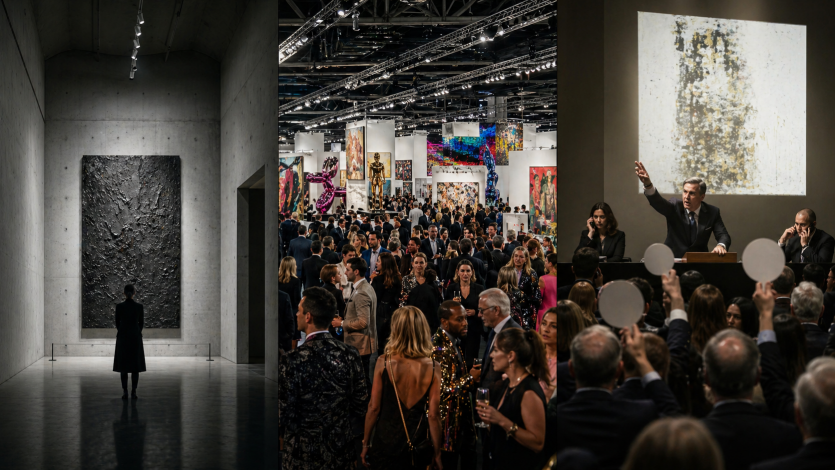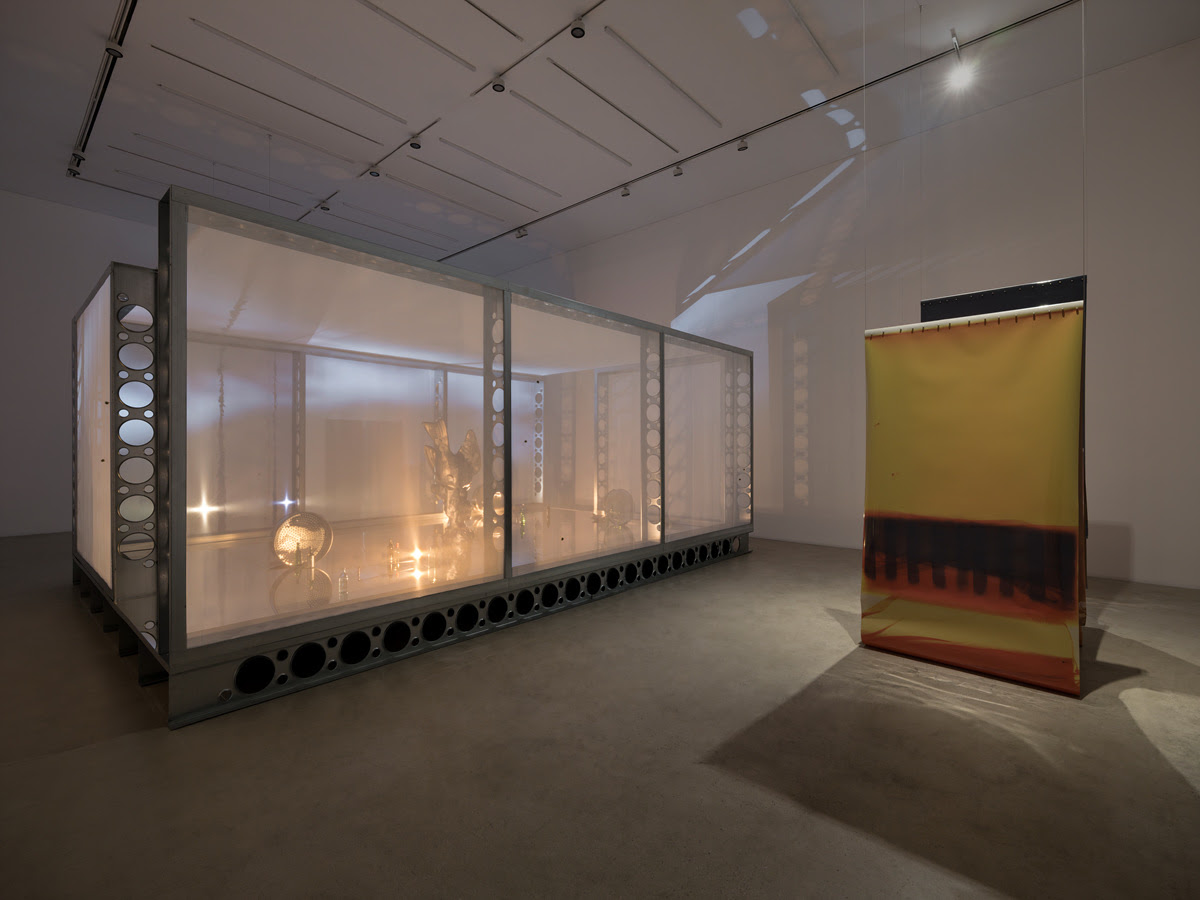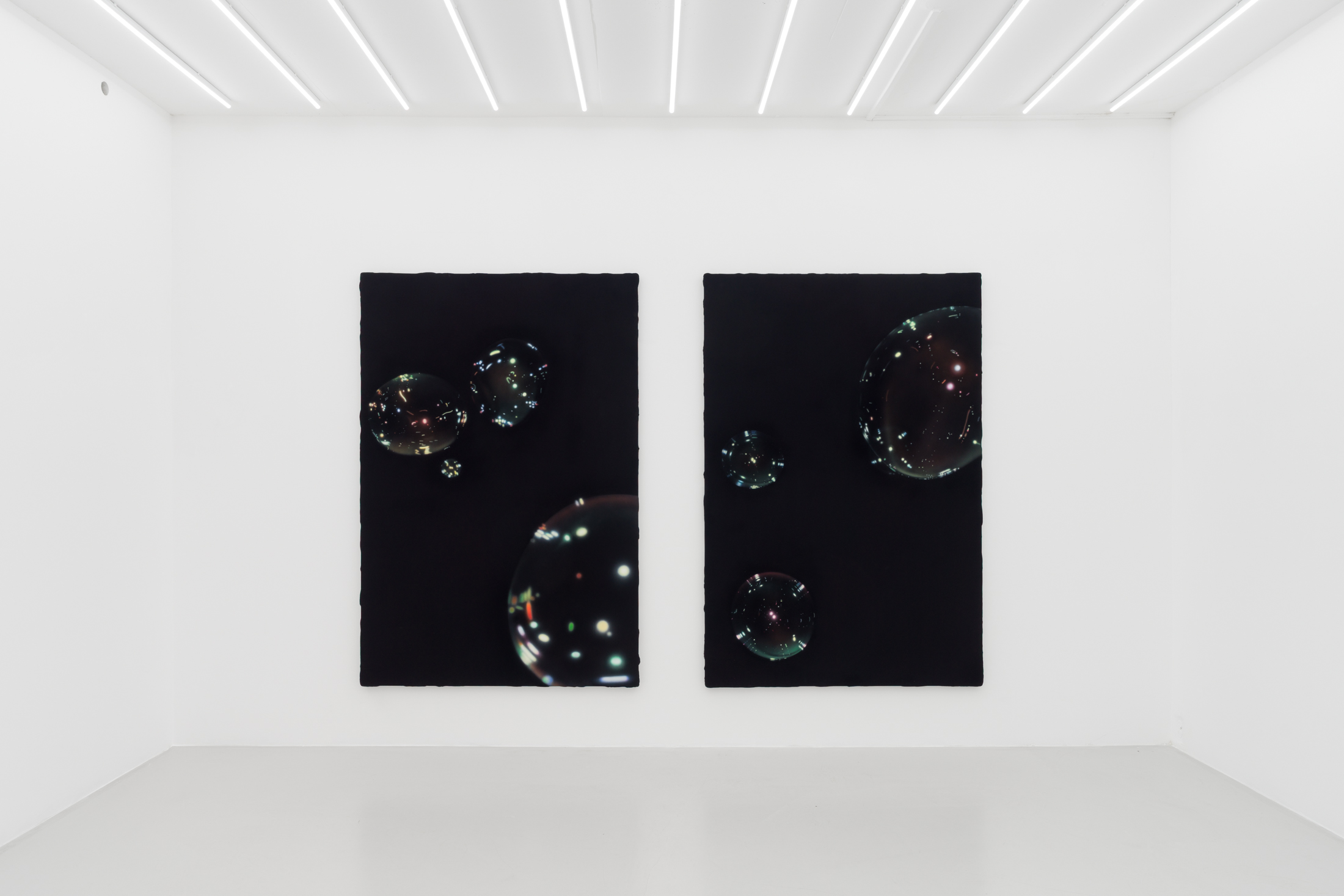

Perrotin recently
presents an exhibition marking the 10th anniversary of its Seoul branch. On the
occasion of this exhibition, we take a closer look at the current activities
and future outlook of global galleries that have established a presence in Seoul.
Since the
mid-2010s, Seoul has rapidly emerged as one of the key Asian hubs for
international galleries. This development cannot be reduced to the simple fact
that a few well-known galleries have opened branches in the city.
As galleries from
Europe, the United States, and Greater China have entered Seoul with distinct
programs and market strategies, the city has been reconfigured into a complex
platform where exhibitions, art distribution, and collector networks intersect,
rather than remaining a market solely for domestic art consumption.
The entry of
international galleries into Seoul has transformed the standards of exhibition
formats, installation quality, artist management, and collector relations. At
the same time, it has made more visible the pathways through which Korean art
is incorporated into the global art system.
Perrotin Seoul
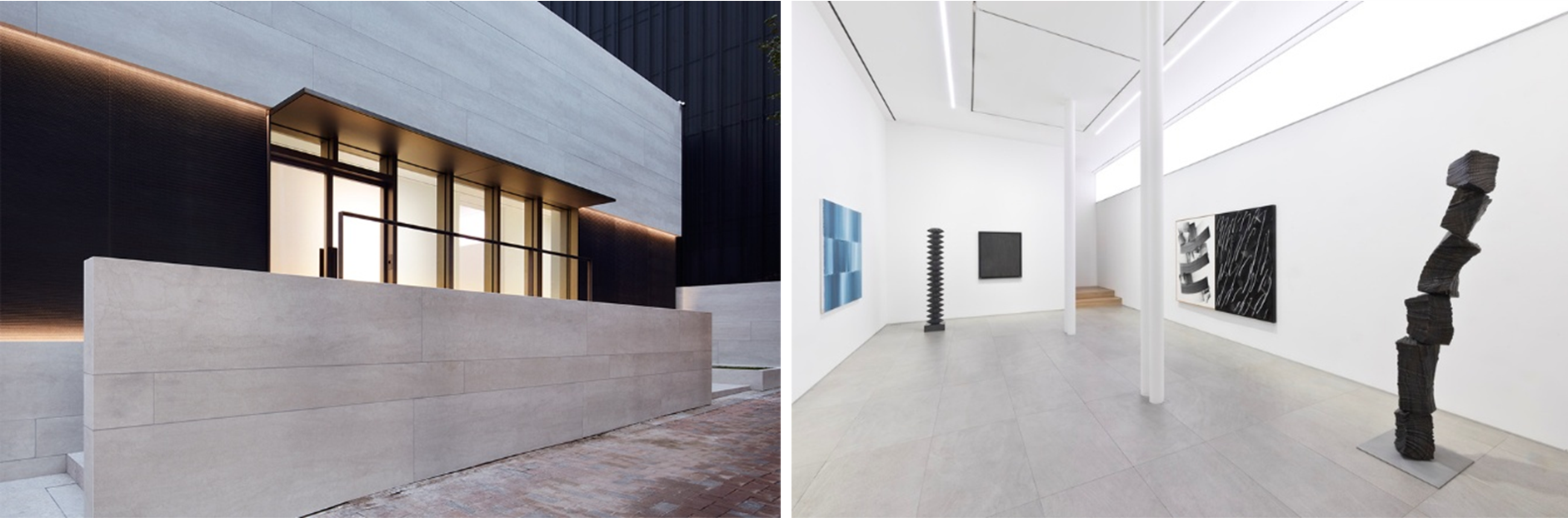
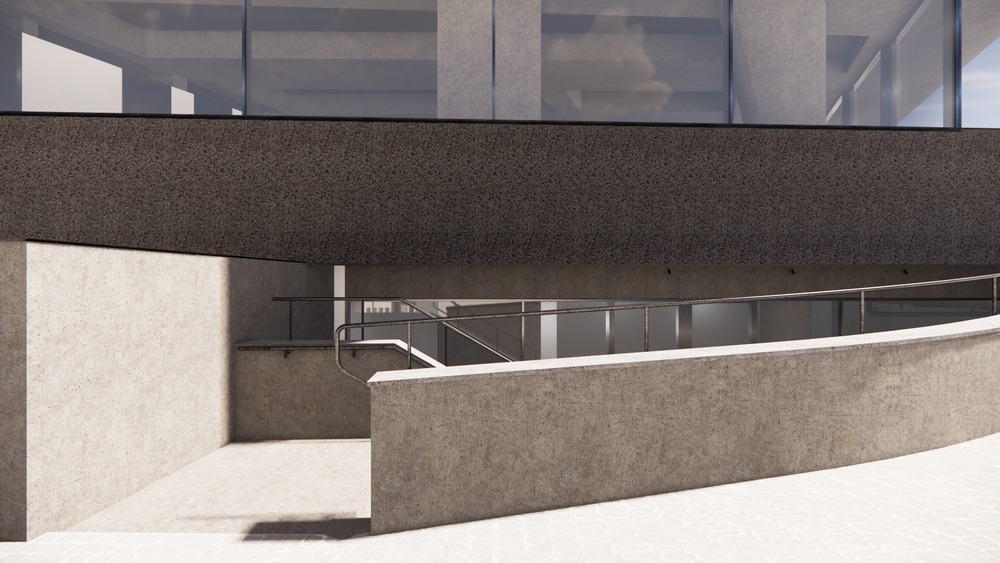
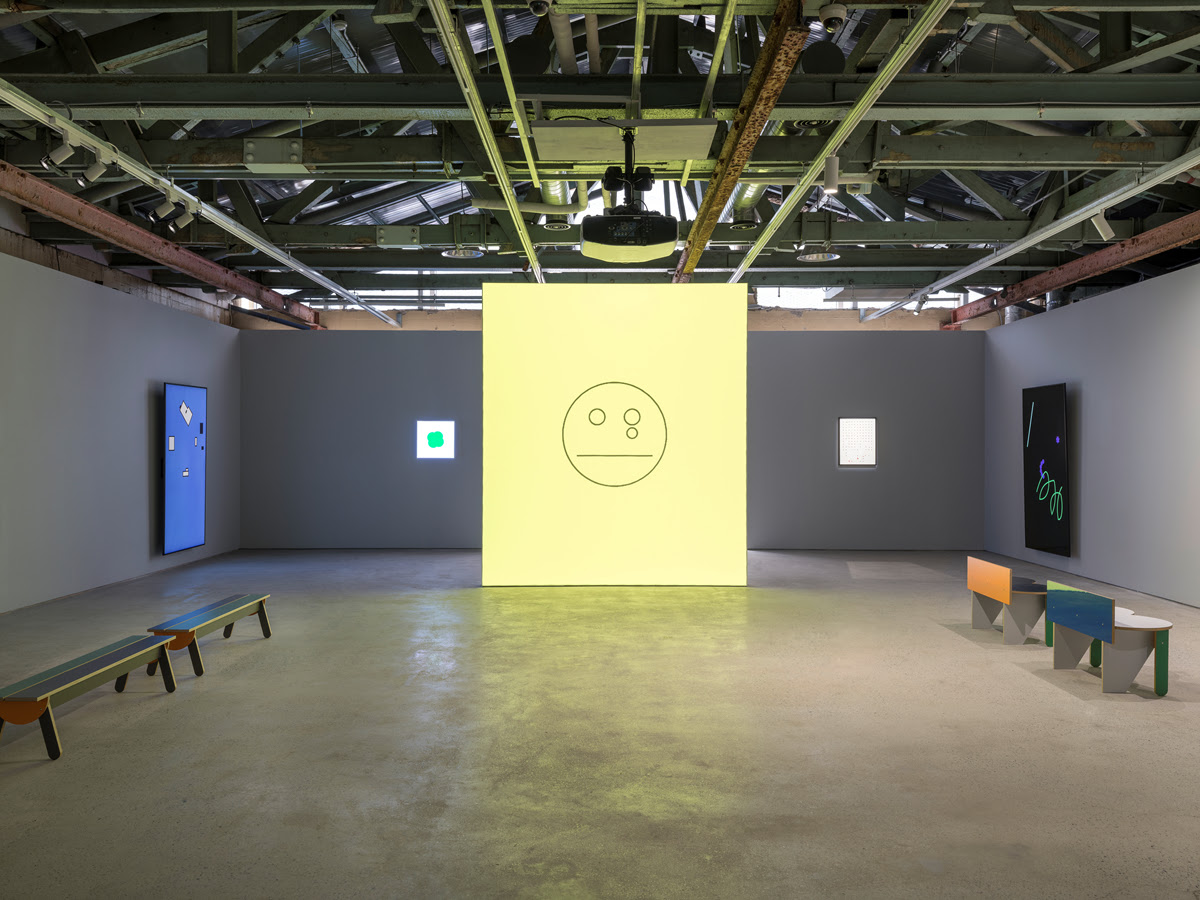
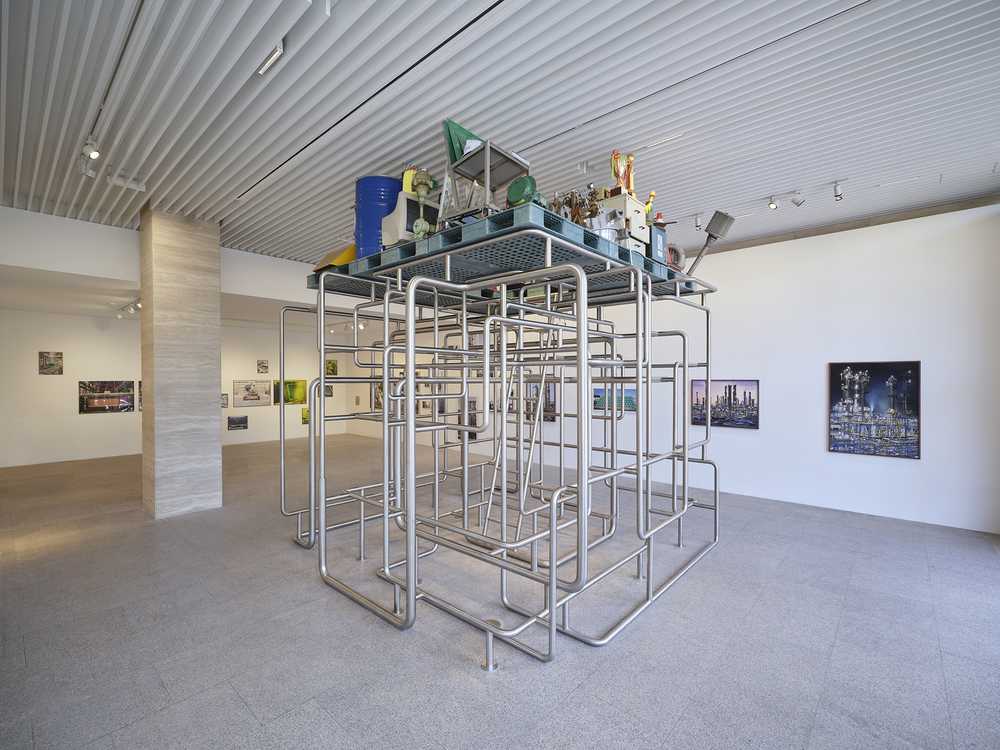
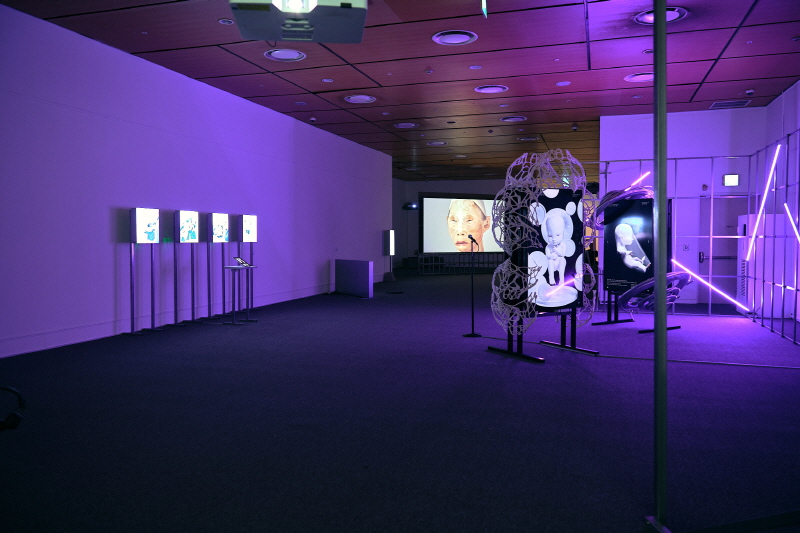
Perrotin Seoul exterior and current exhibition view / Photo: Perrotin Seoul
Perrotin Seoul,
which opened in 2016, has established itself as one of the earliest cases among
international galleries entering the Seoul market.
The space is
located at 10 Dosan-daero 45-gil, Gangnam-gu, Seoul. According to its official
introduction, Perrotin was founded in Paris in 1990 and has since expanded into
a global gallery network with locations in Hong Kong, New York, Seoul, Tokyo,
Shanghai, and Los Angeles.
Over the past
decade, the Seoul branch has built its program by presenting international and
Korean artists in parallel, and can be understood as a case that has
successfully established the operational model of a global commercial gallery
within the Seoul art market.
The current
exhibition,《10 YEARS》,
commemorates the gallery’s tenth anniversary and runs from March 17 to May 2,
2026. Centered on new works by long-term collaborating artists such as Maurizio
Cattelan, Takashi Murakami, Park Seo-Bo, Lee Bae, and Shim Moon-Seup, the
exhibition reflects on the past decade while simultaneously suggesting future
directions for the program. (www.perrotin.com)
Pace Seoul
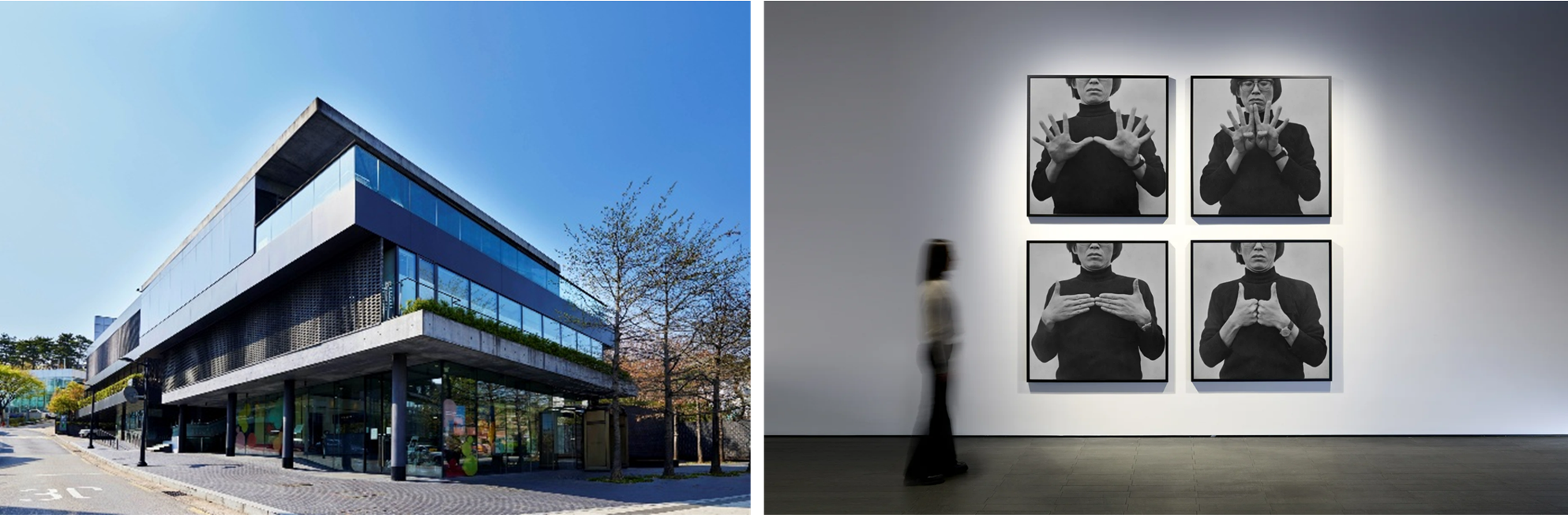
Pace Gallery Seoul exterior and current exhibition view / Photo: Pace Seoul
Pace Seoul
entered the city in 2017 and is currently located at 267 Itaewon-ro,
Yongsan-gu, Seoul, in the Le Beige Building.
From its early
establishment, Pace was one of the few international galleries to be based in
Hannam-dong. Through its relocation and expansions in 2021 and 2022, the
gallery has developed its Seoul space into a multi-layered artistic complex.
The space
includes not only primary exhibition areas on the second and third floors, but
also a ground-floor area designed for immersive and experiential works, as well
as an outdoor courtyard. In this way, the Seoul branch functions not merely as
a sales space but as a platform for expanding curatorial programs.
The current
exhibition is Lee Kun-yong’s solo show《Body as Thought》, on view from February 5 to March 28, 2026. The exhibition marks
over fifty years of the artist’s practice and presents archival materials—including
performance videos, photographs, and working notes from the 1970s—alongside
paintings, focusing on his sustained exploration of “body and logic” within the
context of Korean experimental art. (www.pacegallery.com)
White Cube
Seoul
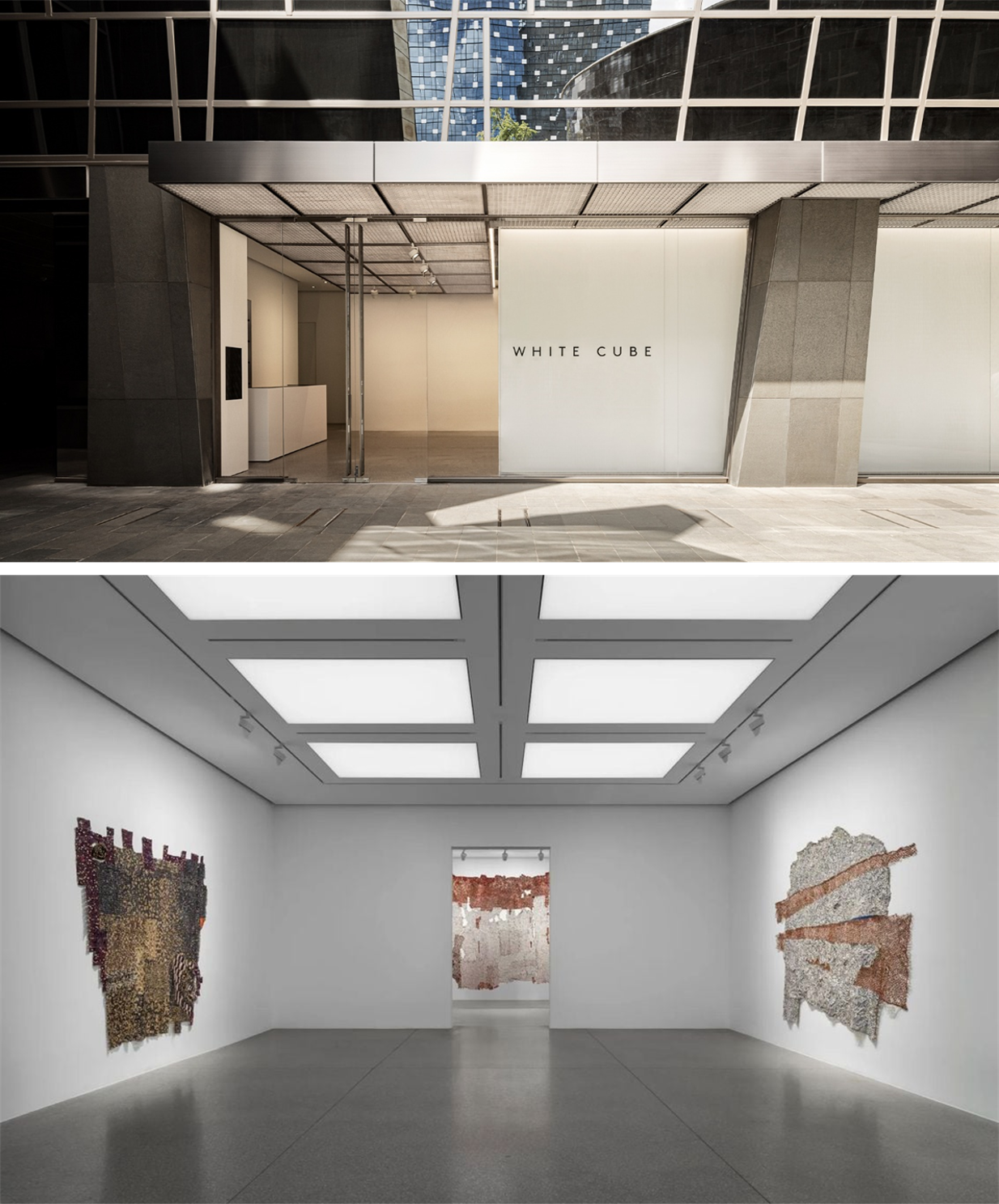
White Cube Seoul exterior and El Anatsui exhibition view / Photo: White Cube Seoul
White Cube Seoul
opened in 2023 and is located at 6 Dosan-daero 45-gil, Seoul. According to
official statements, the gallery occupies a ground-level space in central
Gangnam, near Dosan Park, SongEun, and Horim Art Center.
As a gallery that
originated in London, White Cube maintains a strong emphasis on brand identity
and a clearly defined roster of internationally recognized artists. The Seoul
branch continues this characteristic approach.
The space
operates within a 300-square-meter layout that includes exhibition galleries,
private viewing rooms, and office areas, presenting not only artists
represented by the gallery but also external artists and group exhibitions.
The current
exhibition is《LuwVor》, a solo
exhibition by El Anatsui, on view from March
18 to April 18, 2026. The exhibition highlights the artist’s transformation of
discarded metal materials into large-scale sculptural forms, focusing on works
developed since the late 1990s. (www.whitecube.com)
Lehmann Maupin
Seoul
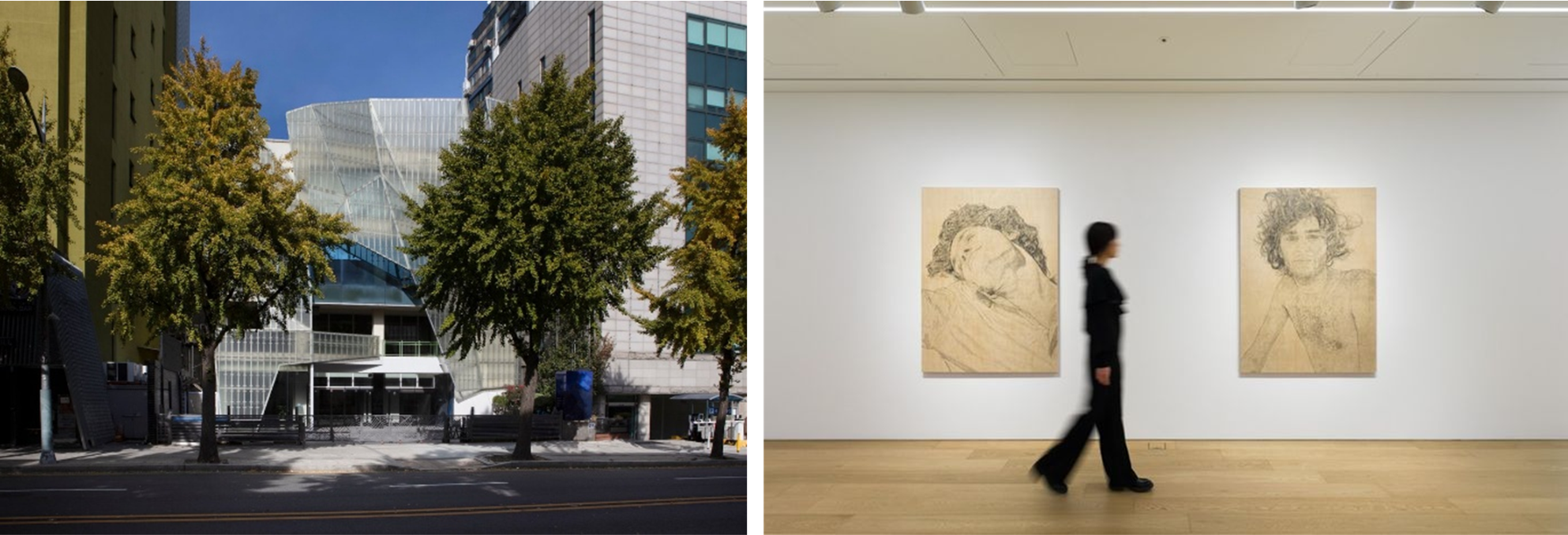
Lehmann Maupin Seoul gallery and Alex Hank exhibition view / Photo: Lehmann Maupin
Lehmann Maupin
Seoul entered the market in 2017 and is located at 213 Itaewon-ro, Yongsan-gu,
Seoul.
The Seoul space
is based on the network of a U.S. blue-chip gallery, while actively juxtaposing
Korean and Asian artists. As of March 2026, two exhibitions are being presented
simultaneously.
One is Alex Hank’s
first solo exhibition in Asia,《Only the Present Rise》, on view from March 11 to April 18, consisting of five graphite
portrait drawings that emphasize the precision and psychological tension of
figures rendered on birch plywood.
The other is《One and the Many》, a group exhibition
bringing together Chang Ucchin, Lee Ungno, and Seo Se-ok, exploring
relationships between the individual and the collective, figure and space, ink
painting and oil painting, and figuration and abstraction. In this way, Lehmann
Maupin Seoul places significant emphasis not only on internationally marketable
programs but also on the recontextualization of modern and contemporary Korean
artists. (www.lehmannmaupin.com)
Esther
Schipper Seoul
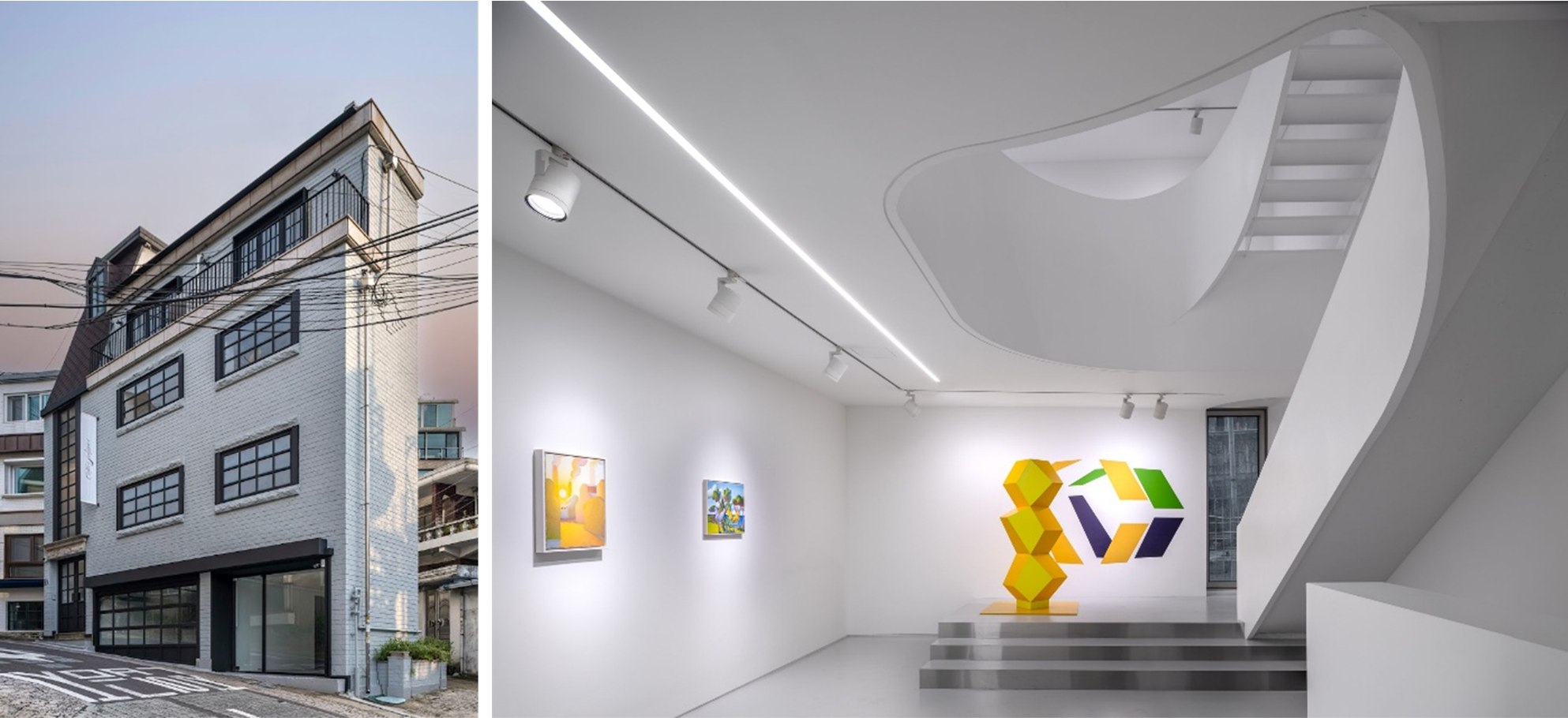
Esther Schipper Seoul and exhibition view / Photo: Esther Schipper
Esther Schipper
Seoul was established in 2022 and has been operating in a new location at 24
Hannam-daero, Yongsan-gu since 2025.
The gallery
occupies four floors within a five-story building in Hannam-dong and has
clearly articulated its direction to combine long-term collaboration with the
Seoul community, international solo exhibitions, and curated projects connected
to the Korean context.
As a Berlin-based
gallery, Esther Schipper is characterized by a strong emphasis on conceptual
art, media, and theory-driven exhibitions. The Seoul branch maintains this
orientation while actively attempting to connect with Korean artists and
locally grounded projects
The current
exhibition is《Form into Color》,
a solo exhibition by Michaela Yearwood-Dan, on view from March 3 to April 25,
2026. (www.estherschipper.com)
Thaddaeus
Ropac Seoul
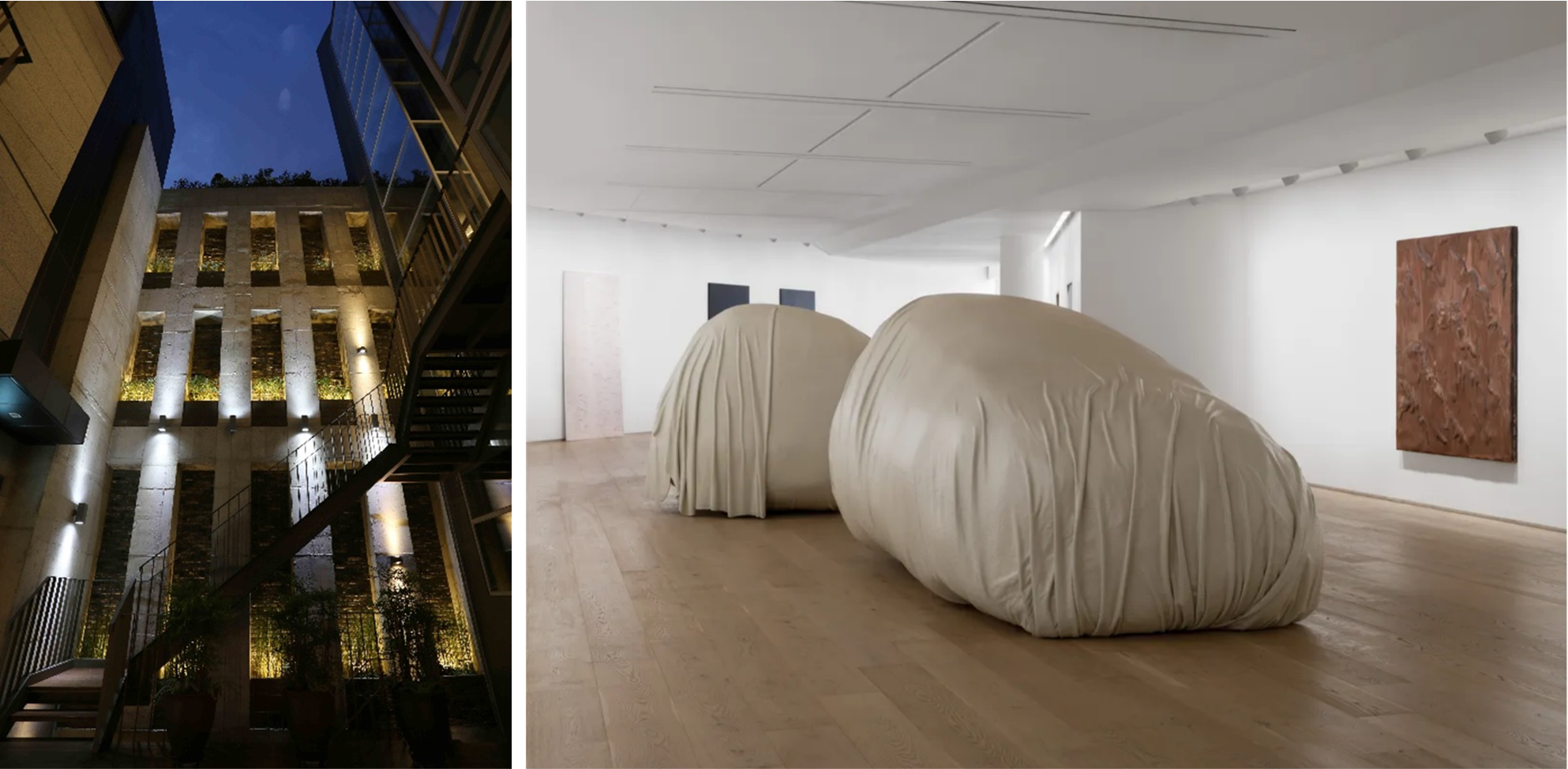
Thaddaeus Ropac Seoul exterior and current exhibition view / Photo: Thaddaeus Ropac
Thaddaeus Ropac
Seoul opened in 2021 and is located at 122-1 Dokseodang-ro, Yongsan-gu, Seoul,
in the Porthill building (floors 1–2).
The space is
positioned as a bridge connecting the art-historical lineage of European modern
and contemporary art with current discourses in Seoul, situated within an
architectural landmark in Hannam-dong.
Compared to other
international galleries, Ropac Seoul places relatively greater emphasis on
curated exhibitions. It has consistently presented exhibitions that reposition
Korean and Asian artists within broader international discourses.
The current
exhibition,《Distancing》,
runs from February 24 to May 2, 2026. (www.ropac.net)
Tang
Contemporary Art Seoul
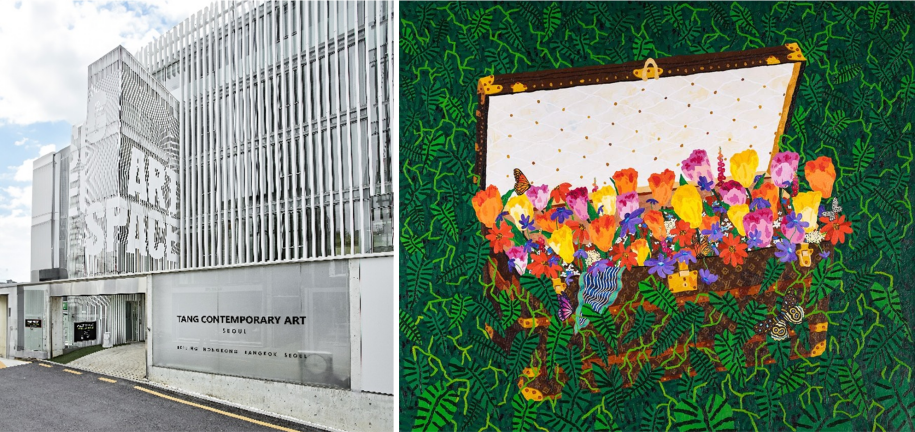
Tang Contemporary Art Seoul and exhibition works / Photo: Tang Contemporary Art
Tang Contemporary
Art Seoul entered the Korean market in 2022 with the opening of a new space in
Gangnam. The gallery is located at B2, 6 Apgujeong-ro 75-gil, Gangnam-gu,
Seoul.
Operating through
a network connecting Beijing, Hong Kong, Bangkok, and Seoul, Tang Contemporary
Art focuses on building intra-Asian market connections, differing from Western
blue-chip gallery models.
The Seoul space
began with Zhao Zhao’s solo exhibition in 2022 and has since developed a fluid,
regionally networked program by presenting artists from China, Korea, and
Southeast Asia together.
A solo exhibition
by Cooper,《Still Blooming》, is
scheduled to open on March 28, 2026. (www.tangcontemporary.com)
Gladstone
Seoul
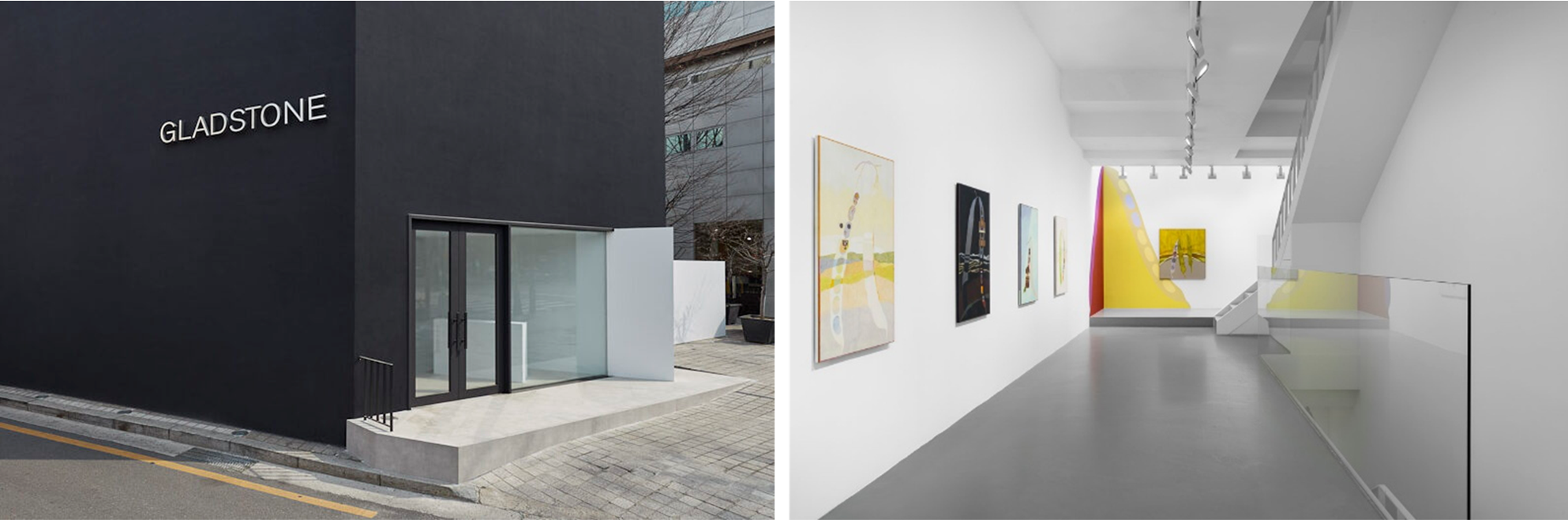
Gladstone Gallery Seoul and exhibition view / Photo: Gladstone Gallery
Gladstone Seoul
has been operating since 2022 and is located at 760 Samseong-ro, Gangnam-gu,
Seoul.
Seoul is
presented alongside New York and Brussels as one of the gallery’s key
locations, and Philippe Parreno’s 2022 exhibition《Mineral
Mutations》was introduced as having taken place in the
gallery’s “new Seoul space.”
Gladstone Seoul
is characterized by a relatively restrained exhibition program that focuses on
presenting individual artists with depth, aiming to establish a stable,
long-term presence for its artists in Seoul.
The most recent
exhibition in Seoul was Kaspar Bosmans’ solo exhibition《Peas, Pod》, on view from January 29 to March
14, 2026. (www.gladstonegallery.com)
Characteristics
of Seoul Branches and Their Impact on the Korean Art Scene
These
international galleries do not operate in the same way.
While Perrotin
and White Cube excel in directly transferring global brand visibility and
artist recognition into Seoul, Pace builds experiential programs through
architectural expansion. Lehmann Maupin operates by combining modern and
contemporary Korean art with international programs.
Esther Schipper
and Thaddaeus Ropac emphasize discourse-driven and curated exhibition formats,
while Tang Contemporary Art positions Seoul not as an extension of the Western
art market but as a node within an intra-Asian network.
Gladstone, by
contrast, maintains a selective and concentrated exhibition structure. These
differences demonstrate that Seoul is no longer a singular market of
consumption but has evolved into a complex art city where brand-driven,
curatorial, and network-based strategies coexist.
The entry of
international galleries into Seoul has directly influenced the pathways through
which Korean contemporary art enters the global stage. On the positive side,
Korean artists have gained greater access to international gallery networks,
collectors, and institutional exhibitions, while Seoul itself has become a
primary point of contact for global audiences encountering Korean art.
However, if these
connections become overly dependent on the selection mechanisms of
international galleries, the independent global strategies of Korean galleries
may be weakened. Ultimately, what matters is not simply the presence of
international galleries, but how Korean galleries refine their own programs,
cultivate artists over the long term, and build independent international
networks.
International
galleries in Seoul have elevated the standards of the market, but at the same
time, they have come to demand a higher level of strategy and structure from
the Korean art scene.