
Between K-pop and Global Pop
BTS emerged in Korea and developed within
the cultural and industrial framework of K-pop. Yet the market in which its
music is produced and consumed, as well as its audience and influence, moved
beyond Korea’s geographical boundaries long ago.
Is BTS, then, K-pop? Or should it be
understood as a global pop act in its own right?
BTS has received five Grammy nominations to
date without a win. This alone, however, is not enough to conclude that the
Grammys have failed to recognize K-pop.
At the 2026 Grammy Awards, “APT.” by
BLACKPINK member ROSÉ and Bruno Mars was nominated for both Record of the Year
and Song of the Year. “Golden” from 《KPop Demon
Hunters》 was also nominated for Song of the Year
and Best Pop Duo/Group Performance, among other categories. Music associated
with K-pop was no longer confined to a separate peripheral field; it had
entered the Grammys’ major pop categories.
Then, in June 2026, the Recording Academy
announced the introduction of Best Asian Pop Music Performance
beginning with the 2027 Grammy Awards—an official category encompassing K-pop,
J-pop, C-pop, and other forms of Asian pop.
The category prioritizes musical form over
the nationality or ethnicity of the performer and requires the meaningful use
of one or more Asian languages. Songs performed entirely in English remain
eligible for other existing categories rather than this one.
The creation of an Asian Pop category
represents institutional recognition of the growth and distinctiveness of Asian
popular music. At the same time, it separates music already produced and
consumed worldwide by placing it once again within the regional category of “Asian.”
Recognition and separation occurring
simultaneously.
K-pop is both global pop and Asian Pop.
Neither name alone can fully account for this complex reality.
The essential issue is not which name is
correct. Music already moves across national borders, while the institutions
that explain and evaluate it are still searching for new standards.
Asian contemporary art faces a remarkably
similar situation.
Asian artists already operate as producers
of Contemporary Art within museums, biennials, galleries, and art markets
around the world. Yet their work continues to be described through regional
labels such as “Asian Art,” “Chinese Art,” “Japanese Art,” and “Korean Art.”
If Contemporary Art is now produced
simultaneously across the world, why is some art simply called Contemporary Art
while other art still requires a geographical qualifier?
Temporal Concepts and Regional
Classifications
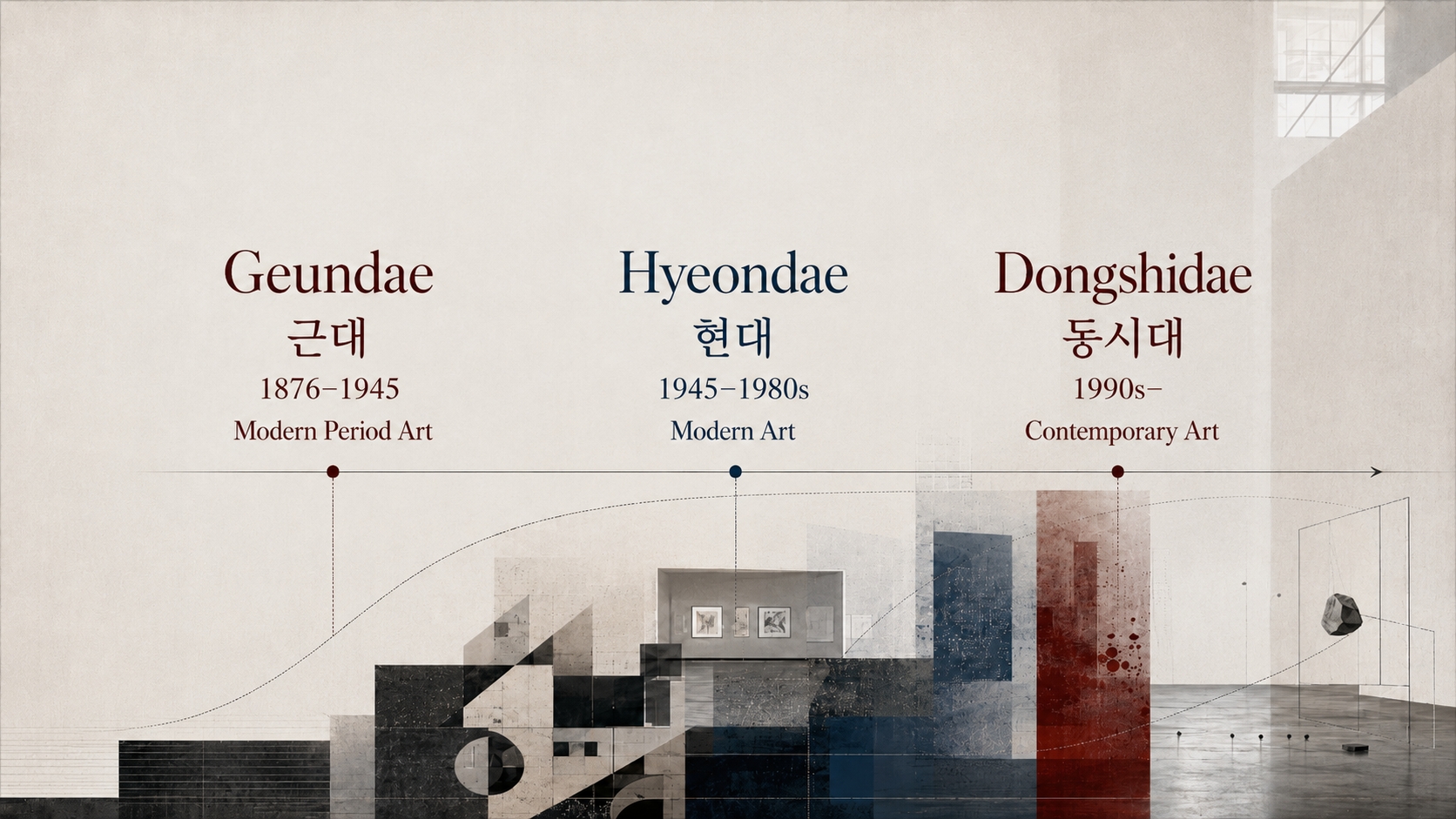
Modern Art and Contemporary Art describe
specific historical transformations, temporalities, institutions, and
discourses. “Asian Art,” by contrast, is a classification based primarily on
geography and civilizational history.
The two concepts do not operate on the same
conceptual level.
One is a historical and institutional
paradigm; the other is a regional framework for collection and research. The
problem lies in the way these fundamentally different categories have
functioned within the international art world as a hierarchy between the “universal”
and the “regional.”
The concepts and canons of Modern Art that
we use today—and the museums, criticism, markets, and educational systems that
support them—were formed largely around Europe and the United States.
Different modern arts and forms of
modernism, of course, existed in other parts of the world during the same
period. Hence the need to speak not of a single modernism but of multiple
modernisms.
During the process of modernization, Asian
countries actively adopted systems first institutionalized in the West: art
schools and museums, exhibitions and criticism, distinctions between painting
and sculpture, the professional identity of the artist, and the structure of
the art market. Given the concentration of industrial, financial, academic, and
geopolitical power in the West at the time, this was to some extent
unavoidable.
But who established a system first and who
should remain its permanent standard are entirely different questions.
The situation changed dramatically after
the dissolution of the Cold War and the acceleration of globalization in the
1980s and 1990s. Biennials, museums, galleries, and markets spread across the
world, diversifying the places in which art was produced, exhibited, collected,
and studied.
A global art world that had largely
followed a blueprint drawn by New York, London, Paris, and Berlin began to give
way to multiple, simultaneously operating “art worlds.”
The production of Contemporary Art is now
globally dispersed.
The dispersal of production, however, does
not necessarily mean the dispersal of power.
The Expansive Category of “Asian
Art”
“Asian Art” is neither a single art
movement nor a unified style. Nor is “Asia” itself a single cultural sphere.
Korea, China, Japan, India, Indonesia,
Thailand, the Philippines, and Vietnam possess different histories, languages,
religions, political systems, colonial experiences, and processes of
modernization.
The Metropolitan Museum of Art’s Department
of Asian Art alone covers an area extending from Afghanistan and India through
Southeast Asia to China, Korea, and Japan. It encompasses more than twenty
present-day nations and approximately five thousand years of history.
“Asian Contemporary Art,” by contrast, is a
comparatively recent concept that developed more fully after the 1990s through
exhibitions, biennials, scholarship, publishing, markets, and archives.
The necessity of regional research is
clear.
It provides the historical context for
understanding how different processes of modernization, colonialism, war, and
political change shaped art. It also offers a foundation for discovering and
documenting artists and works long overlooked by Western-centric art history.
The name “Asian Art” is therefore not
inherently problematic.
The issue is the function and power of the
name.
As a category for studying the histories
and artistic developments of a region, it can be useful. But once it becomes an
identity framework that prescribes what Asian art should be, a category of
research becomes a boundary of interpretation.
The term “Asian Art” may
indicate where and under what historical conditions art was produced, but it
should not determine what that art must be.
The Asymmetry Between the
Universal and the Regional
Modern Art and Contemporary Art, despite
having developed largely around Europe and the United States, were long used
without geographical qualifiers.
Art from other regions, by contrast, was
described as Chinese Contemporary Art, Japanese Art, Korean Art, or Southeast
Asian Art.
Terms such as Western Art, European
Modernism, and American Art are, of course, also widely used today. It would
therefore be inaccurate to claim that all Western art has invariably been
treated as a placeless universal.
Nevertheless, because the dominant
narratives of global art history were constructed around Europe and the United
States, Western art tended to become the standard, while art from other regions
was required to explain its relationship to that standard.
Asian modern and contemporary art has long
been interpreted according to when it encountered Western modernism, how it
transformed it, and how closely it resembled or differed from particular
Western art movements.
Comparison itself is not the problem.
Western modern art had a real and substantial influence on the formation of
modern art in Asia.
The problem is the one-way direction of
comparison.
The art of Tokyo, Beijing, and Seoul is
explained through Paris and New York, while the art of Paris and New York is
rarely explained through Tokyo, Beijing, or Seoul. It is a relationship between
a center that does not need to account for its universality and a periphery
continually required to explain itself.
Who Still Sits on the Throne?
Asia already produces countless artists and
artworks, museums and biennials, galleries and markets.
Yet the authority to determine what
constitutes important art, which artists enter the international canon, and
which exhibitions are recorded as art-historical events has not been evenly
distributed.
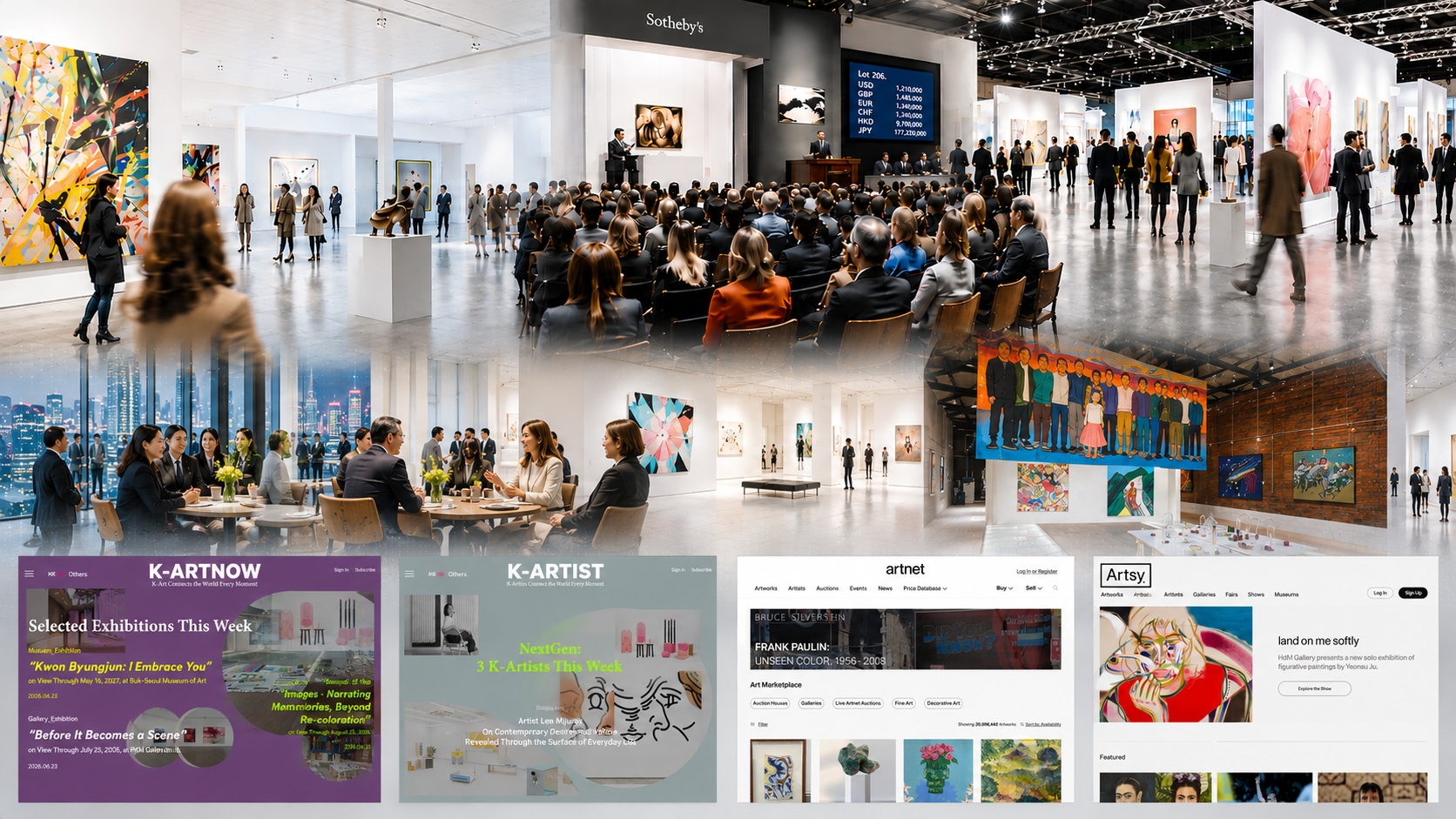
Acquisition and exhibition by leading
museums, invitations to major biennials, representation by international
galleries, English-language criticism and academic publishing, the global
auction market, and the choices of influential collectors—all play decisive
roles in determining the international value and art-historical position of a
work.
A substantial part of this institutional
system continues to operate around Europe and the United States.
The sites of production have
become multipolar, but the power of recognition and canonization has not yet
become sufficiently multipolar.
If the works and exhibitions produced
across Asia are regarded as truly “international” only after being selected by
major Western institutions and markets, Asia remains both a producer and an
object awaiting recognition.
Today’s throne no longer resides in a
single city or country. It exists within a complex network of museums,
biennials, universities, publishers, galleries, and markets.
Yet the geography, language, and
institutional foundations of those occupying that throne remain profoundly
uneven.
Orientalism as Representation,
Classification, and Power
It is at this point that Edward Said’s
concept of Orientalism becomes relevant again.
Said’s theory, however, must be applied
cautiously to contemporary art in East and Southeast Asia. The principal
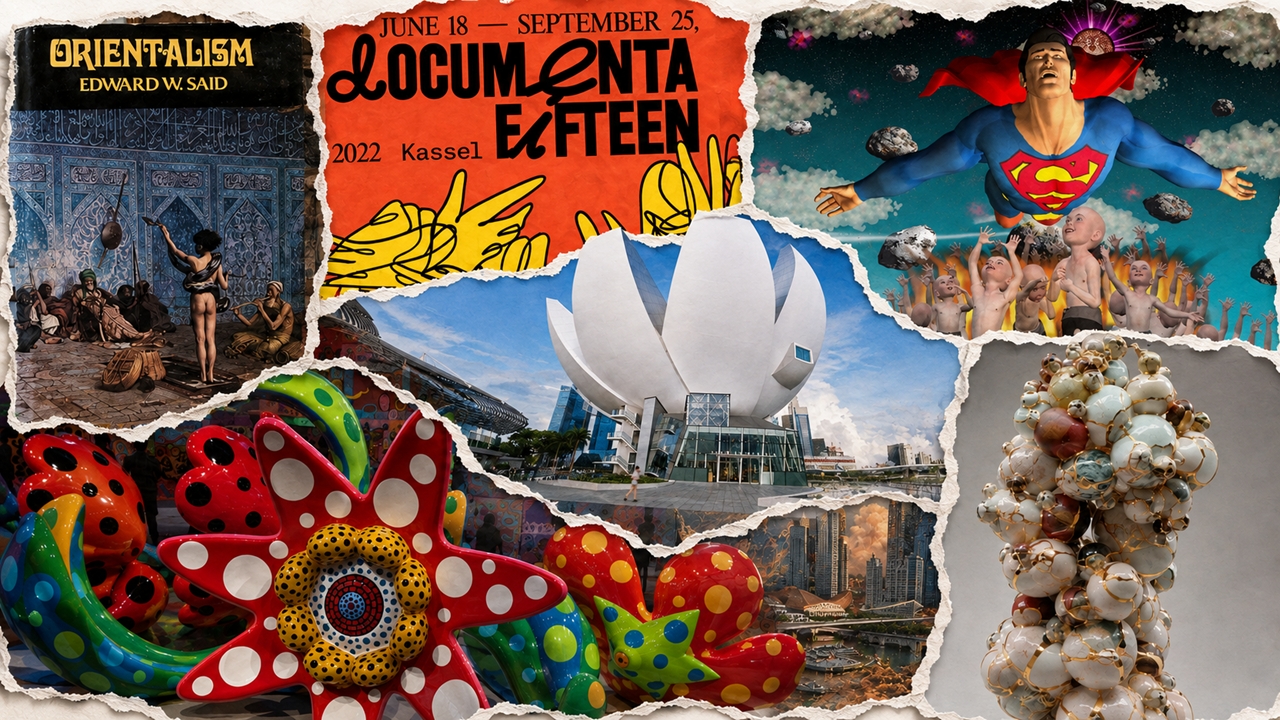
historical focus of his 1978 book 《Orientalism》 was the relationship between Europe and the Middle East and Islamic
world.
What Asian contemporary art requires today
is not a mechanical extension of Said’s geographical framework, but a renewed
examination of the relationship between representation and
knowledge, classification and power.
If Western artists are primarily asked
about their individual forms, concepts, and art-historical genealogies, while
Asian artists are first asked about tradition and nation, colonialism and
religion, politics and community, regional background becomes more than
context. It becomes a predetermined interpretive frame.
Chinese artists become automatically
associated with Chinese politics, Japanese artists with tradition and popular
culture, Korean artists with division and Confucianism, and Southeast Asian
artists with colonialism and community.
Many Asian artists genuinely address these
subjects. Their work emerges from actual histories and realities of
considerable importance.
The problem arises not when artists choose
to speak about these issues, but when audiences and institutions expect them to
do so and interpret their work accordingly.
When regionality becomes a framework that
determines a work’s meaning in advance, the complexity and alternative
possibilities of the individual work are diminished.
Experiments and Failures Since
1989
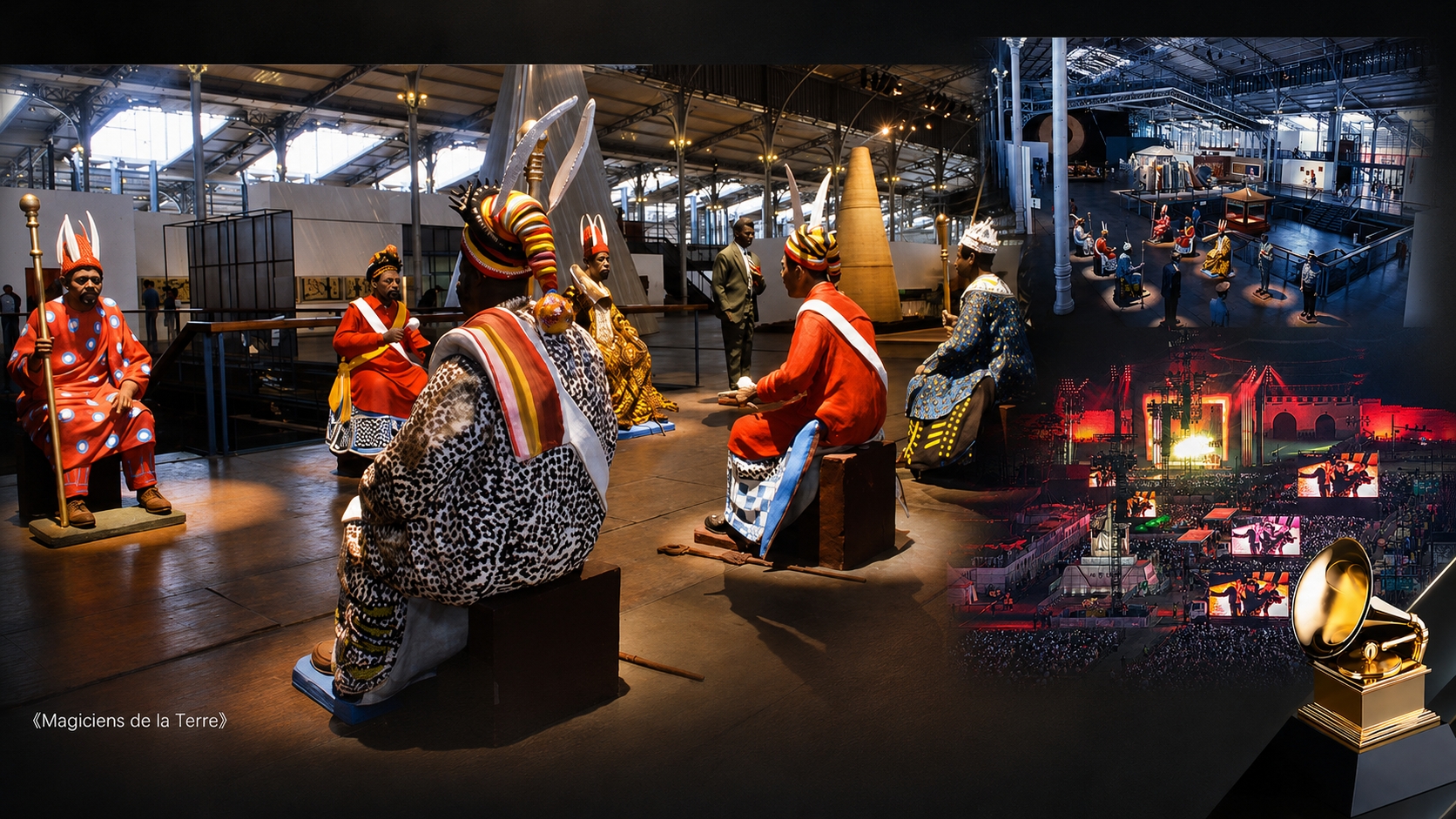
《Magiciens de la Terre》, presented in 1989 at the Centre Pompidou and the Grande Halle de
la Villette in Paris, was a landmark attempt to expand the scope of
international contemporary art beyond the West.
Approximately half of its one hundred
participating artists came from outside the Western art world. For its time,
this was a significant effort to bring artistic practices previously excluded
from international visibility into a single exhibition.
Yet the exhibition also attracted
substantial criticism. In attempting to overcome Western-centrism, it was
accused of representing non-Western art once again through cultural difference,
ritual, spirituality, and regional specificity.
Its central lesson remains clear.
Exhibiting the world’s art in
one place is not the same as understanding different forms of art as equal
intellectual and art-historical subjects.
Since then, countless biennials,
international exhibitions, and museums have continued to revise their
approaches. MoMA’s C-MAP initiative—Contemporary and Modern Art Perspectives—which
conducts long-term research into modern and contemporary art beyond North
America and Western Europe, is one institutional effort to reconsider the
limits of the established canon.
Western art institutions do not possess a
complete answer either.
Shared Confusion and Unequal
Authority
It is too simplistic to describe the issue
of Asian contemporary art and Orientalism as a conflict in which the West
possesses a distorted gaze and Asia must overcome it.
The global art world has changed too
rapidly.
Western museums, universities, biennials,
and markets are revising the categories and systems of classification they have
used for decades.
Asia faces its own contradictions. It
argues for liberation from Western-centric standards while continuing to
measure international recognition largely through major Western museums,
biennials, galleries, and markets.
It criticizes the West for demanding
something recognizably “Asian,” while strategically emphasizing tradition,
regional identity, and political history to distinguish itself on the
international stage.
Both the West and Asia are searching for a
language capable of explaining this new reality.
Shared confusion, however, does not mean
equal power.
The authority to classify, recognize, and
assign international value remains asymmetrically distributed.
The confusion is shared, but
the power is not equally dispersed.
The Cycle of Self-Orientalism
Orientalism is no longer produced
exclusively from the outside.
Asian artists, galleries, curators, and
institutions also learn which images and narratives are most readily
understood, selected, and circulated within the international art world.
As a result, traditional images and
materials, religion and philosophy, political history and social trauma may be
used less as expressions of a work’s actual concerns than as signs of an
internationally recognizable identity.
This is self-Orientalism:
the process through which Asian subjects internalize external expectations of
what appears “Asian” and repeat or reinforce those expectations in pursuit of
international visibility and recognition.
This phenomenon cannot simply be reduced to
the opportunism of individual artists.
When international exhibitions and markets
repeatedly select certain regional images, producers learn the criteria of
selection. Through the recurring expectations of those who select and those who
seek to be selected, identities such as “Chineseness,” “Japaneseness,” and “Koreanness”
can solidify into international brands.
Contemporary Orientalism is therefore no
longer a simple system in which the West unilaterally constructs images of
Asia.
It is a circular structure jointly produced
by institutional classifications, market demands, curatorial and critical
language, the strategies of regional art worlds, and the choices of artists
themselves.
A fixed identity produced
jointly by the external gaze and internal strategy.
Regionality as Resource and
Boundary
The answer is not to abolish “Asian Art” or
erase the regional identities of artists. That would merely create another form
of standardization.
All art is produced within a specific time
and place.
History and language, politics and society,
religion and everyday life, personal memory and collective experience are
essential artistic resources.
Regionality itself is not the problem.
The distinction lies between
beginning from a region and becoming confined by it.
When a work emerging from a specific
regional history expands into new questions about humanity and society,
technology and nature, memory and power, it no longer remains the art of that
region alone.
Conversely, the use of internationally
fashionable forms and concepts does not automatically make a work global.
The task is not to choose between
regionality and universality. It is to begin with a region’s specific
experiences and produce new questions, forms, concepts, and languages that the
world does not yet possess.
Beyond Producing Artworks:
Producing Discourse
If Asia produces artworks while continuing
to receive the concepts and criticism that explain and historicize them from
elsewhere, the fundamental structure of power will remain unchanged.
A growing number of artists and works is
not enough.
Artistic production must be supported by
the intellectual infrastructure necessary for research and criticism,
publishing and translation, exhibition histories and archives.
Asia’s internationalization can no longer
be measured solely by how extensively it enters New York and London. Asian art
communities must research, translate, and exhibit one another directly while
building multidirectional relationships with art communities across the world.
The objective is not to replace one center
with another.
It is to transform the structure in which
one center classifies everyone else.
From “Asian Art” to a Producer
of Global Contemporary Art
Asian contemporary art is not yet free from
Orientalism.
But it is no longer enough merely to assess
the persistence of Orientalism or to repeatedly identify the failures of the
West.
The reality of global art has already
changed.
The world has moved from an era in which
the concepts and institutions of Modern Art and Contemporary Art were formed in
the West and adopted by Asia to one in which different regions simultaneously
produce artworks and markets, museums and biennials.
Yet a substantial gap remains between
artistic production and the recognition of value, and between the global
expansion of regional art worlds and the redistribution of power.
This requires an approach that accepts the
historical achievements of Western modern art as part of a shared global
inheritance without treating them as the only standard. It also requires the
use of Asian histories and regional experiences as essential resources without
allowing them to become self-imposed boundaries.
Above all, it requires the capacity to
produce not only artworks but also the concepts, criticism, research, and
documentation through which they are interpreted and historicized.
Only under these conditions can “Asian Art”
cease to signify another regional art observed and classified by the West.
Asia can become not merely an
object of global contemporary art, but an active producer of the concepts,
values, and directions that shape it.
The question now returns to Korea.
What must Korean contemporary art produce
within this changing landscape?
How can Korea’s histories and experiences
be expanded into new artistic languages?
Who will produce the concepts and
discourses alongside the artworks?
Who will document, research, criticize,
translate, and share them with the world?
The final installment will examine the
concrete realities and choices facing Korean contemporary art.
How Can Korean Contemporary Art
Move Beyond Orientalism?
References
Edward W. Said, Orientalism,
Pantheon Books, 1978.
Edward W. Said, Culture and
Imperialism, Alfred A. Knopf, 1993.
John Clark, Modern Asian Art,
Craftsman House / University of Hawai‘i Press, 1998.
Terry Smith, What Is
Contemporary Art?, University of Chicago Press, 2009.
Melissa Chiu and Benjamin Genocchio, eds., Contemporary
Art in Asia: A Critical Reader, MIT Press, 2011.
Peter Osborne, Anywhere or Not
at All: Philosophy of Contemporary Art, Verso, 2013.
Hans Belting, Andrea Buddensieg, and Peter
Weibel, eds., The Global Contemporary and the Rise of New Art
Worlds, MIT Press / ZKM, 2013.
Michelle Antoinette and Caroline Turner,
eds., Contemporary Asian Art and Exhibitions: Connectivities and
World-Making, ANU Press, 2014.
Claire Hsu, “Asia as Method, Archive as
Method,” MoMA post, 2014.
Centre Pompidou, Magiciens de
la Terre: A Look Back at a Legendary Exhibition, 2014.
The Museum of Modern Art, Contemporary and
Modern Art Perspectives (C-MAP).
The Metropolitan Museum of Art, Department
of Asian Art.
Recording Academy, BTS Artist Profile.
Recording Academy, 2026
GRAMMY Awards Winners & Nominees.
Recording Academy, “Five
New Categories and Rule Updates Take Effect for 2027 GRAMMYS”, 2026.
Jay Jongho Kim graduated from the Department of Art Theory at Hongik University and earned his master's degree in Art Planning from the same university. From 1996 to 2006, he worked as a curator at Gallery Seomi, planning director at CAIS Gallery, head of the curatorial research team at Art Center Nabi, director at Gallery Hyundai, and curator at Gana New York.
From 2008 to 2017, he served as the executive director of Doosan Gallery Seoul & New York and Doosan Residency New York, introducing Korean contemporary artists to the local scene in New York. After returning to Korea in 2017, he worked as an art consultant, conducting art education, collection consulting, and various art projects.
In 2021, he founded A Project Company and is currently running the platforms K-ARTNOW.COM and K-ARTIST.COM, which aim to promote Korean contemporary art on the global stage.