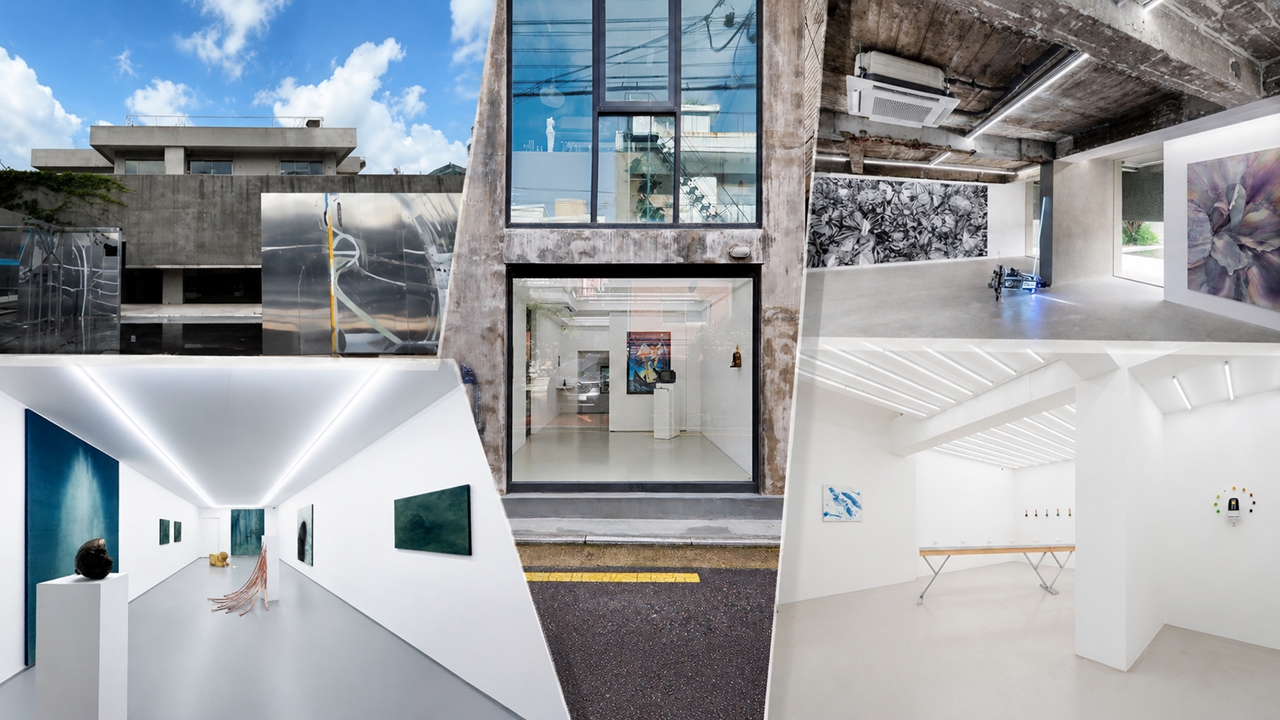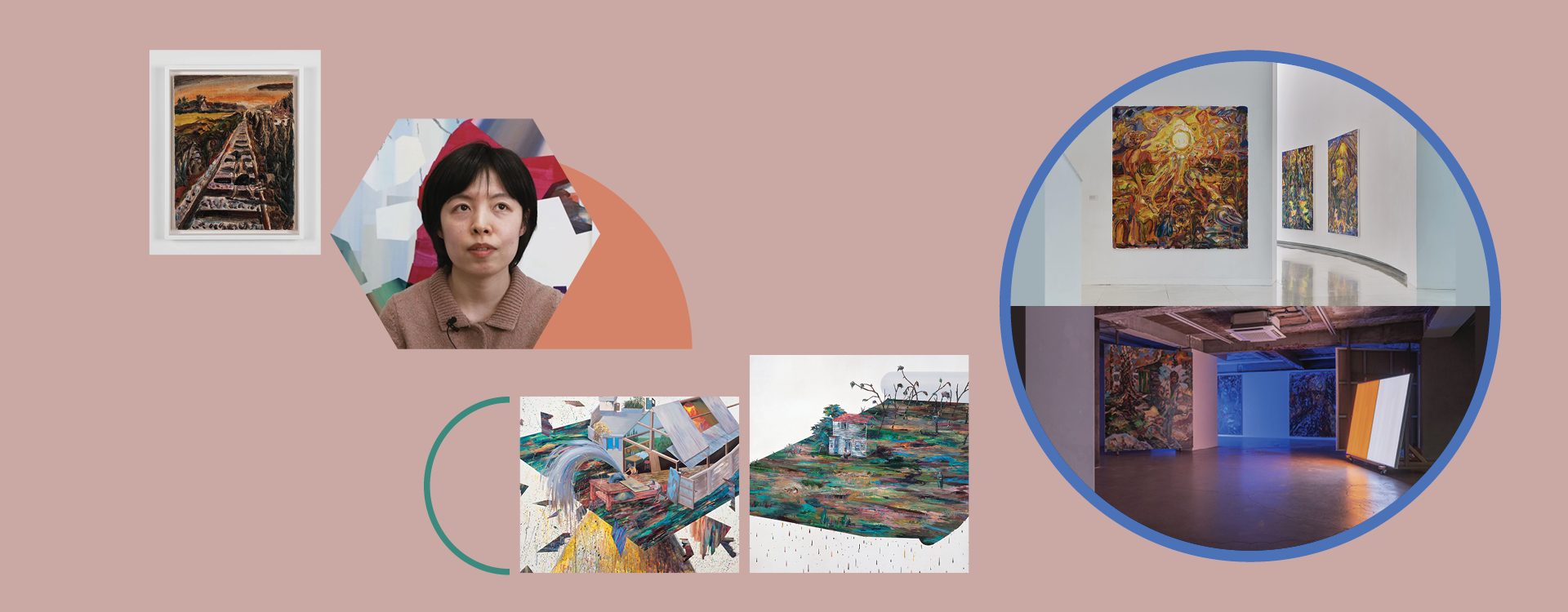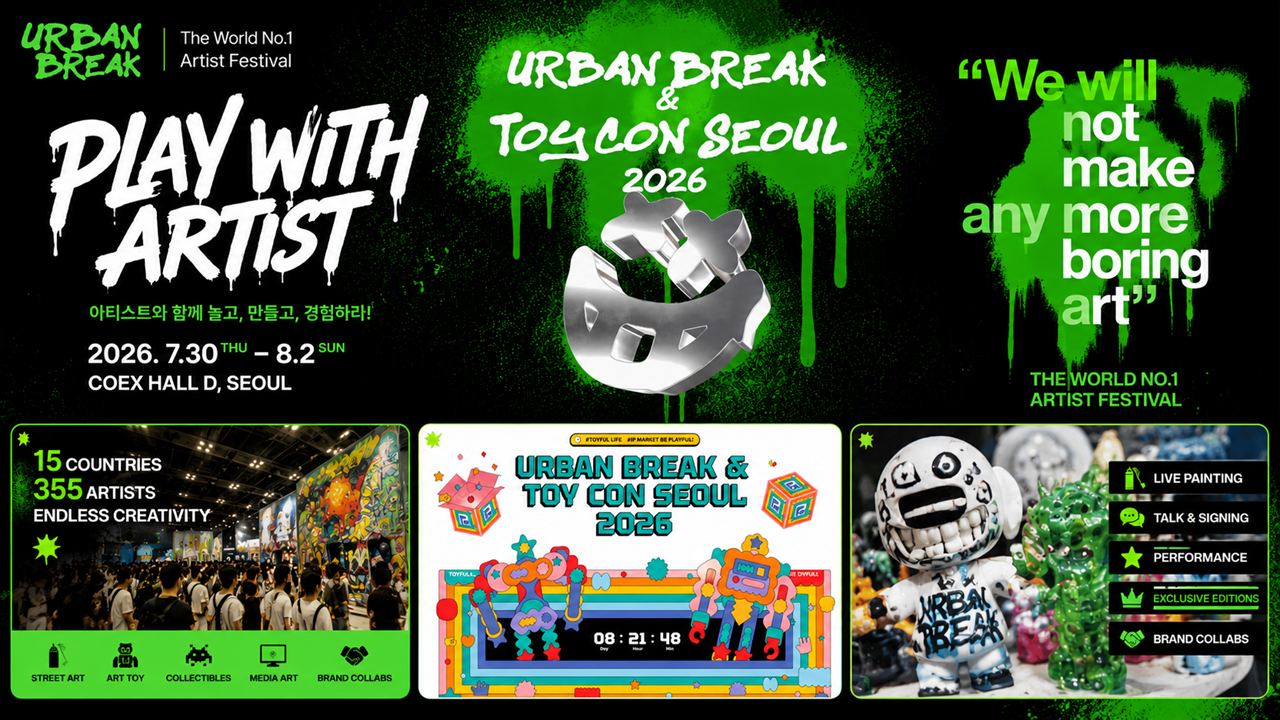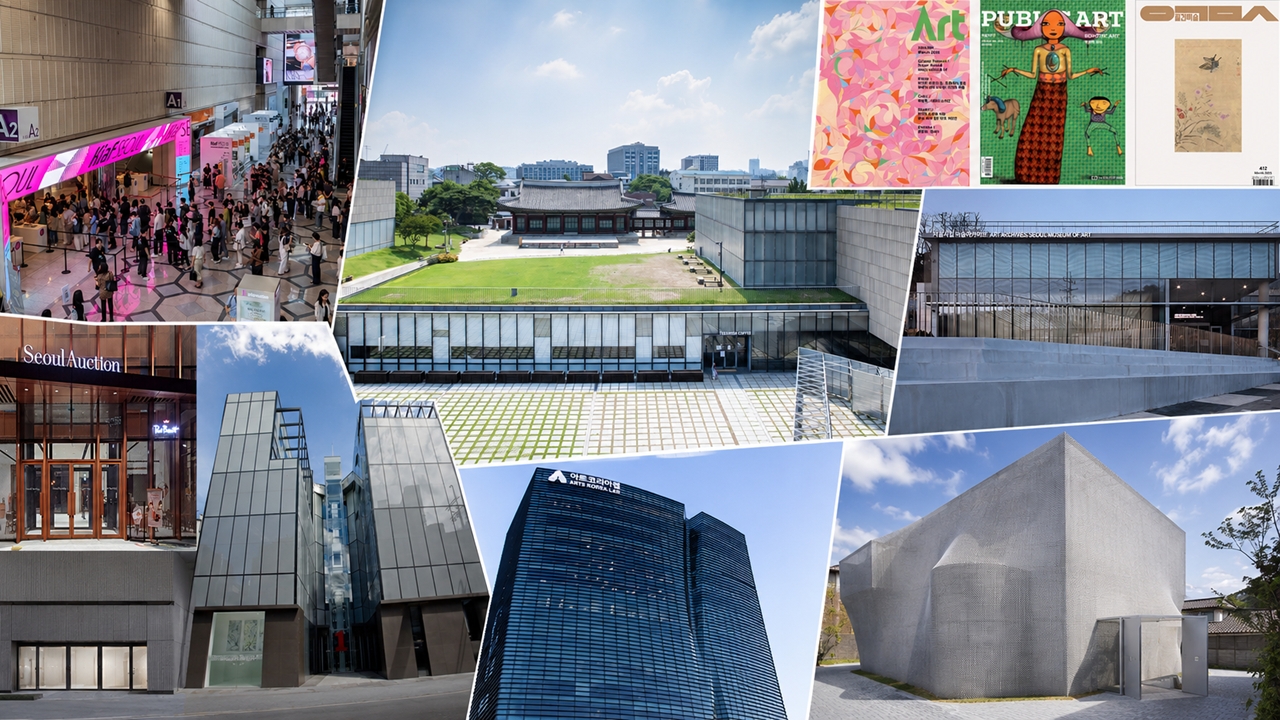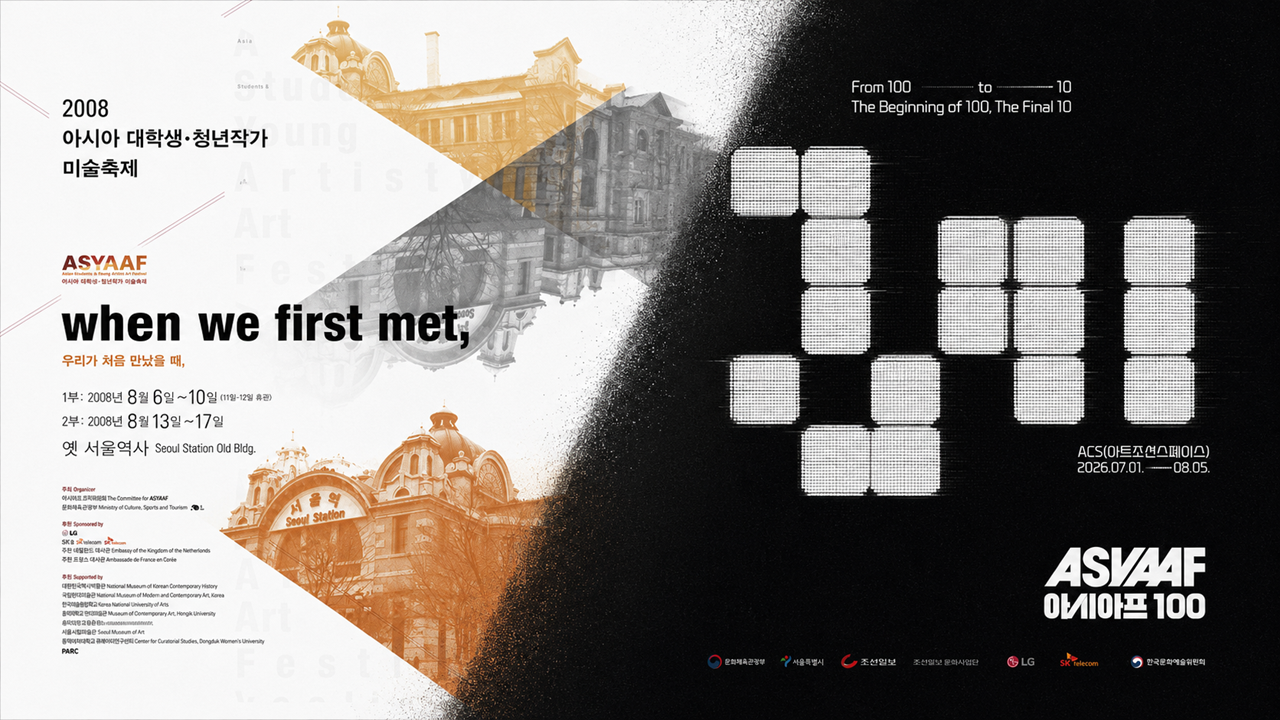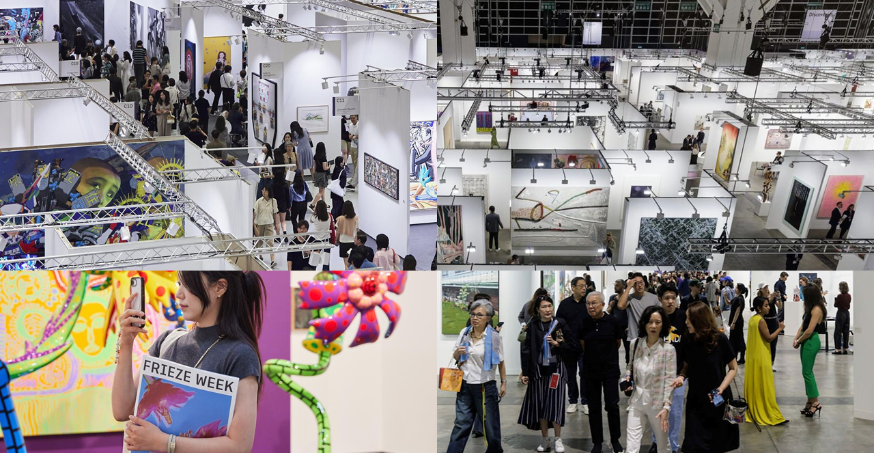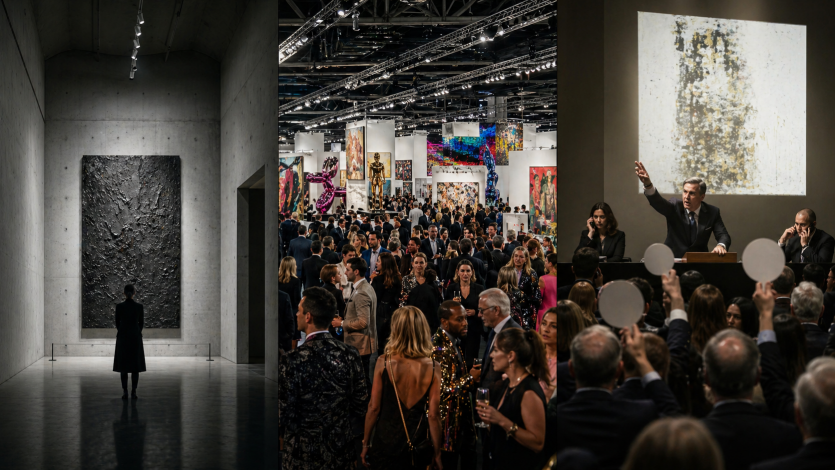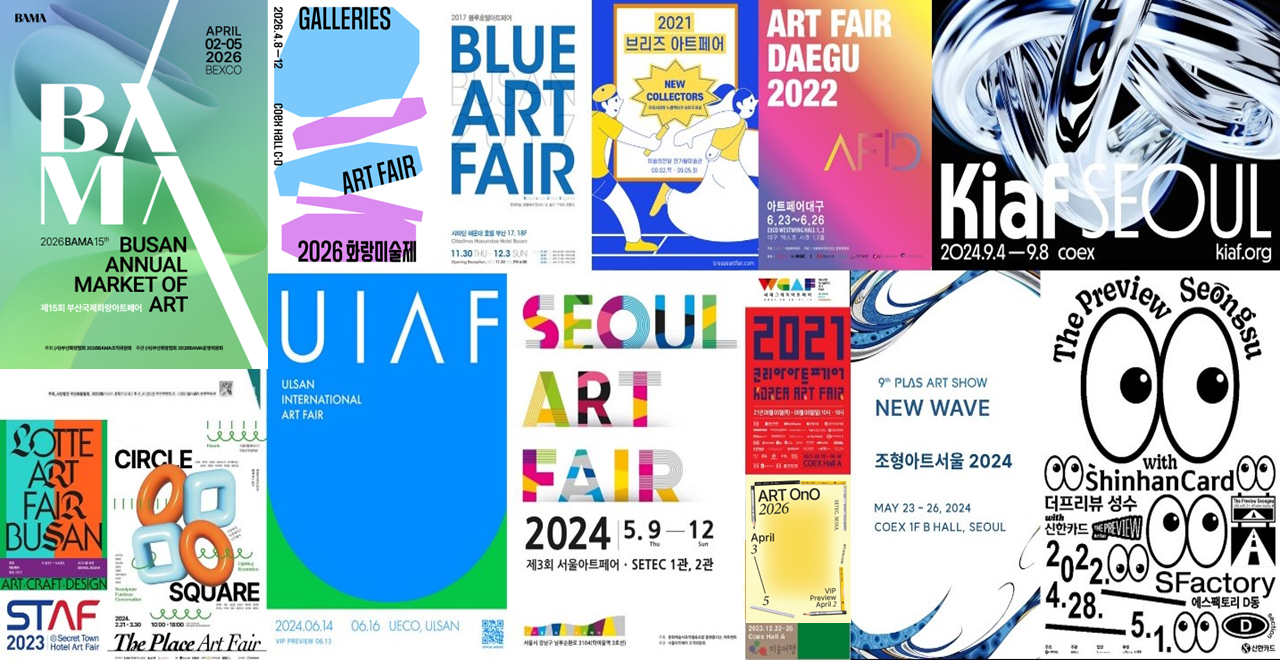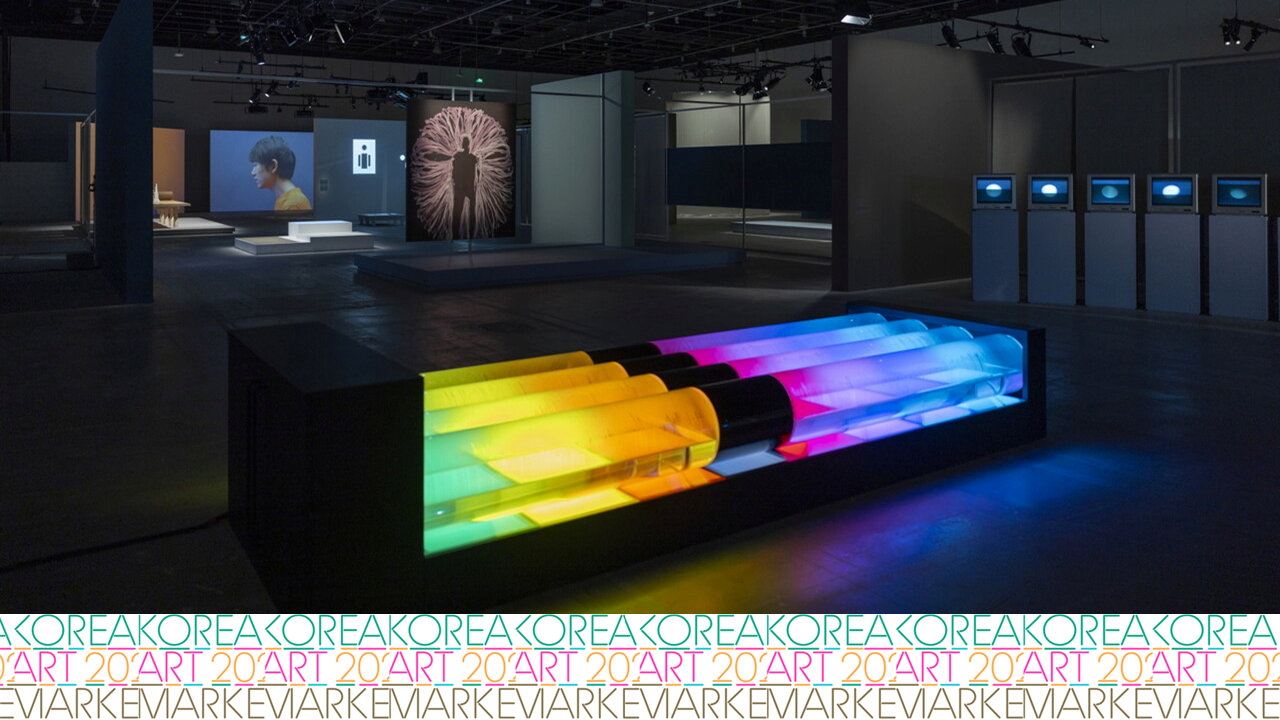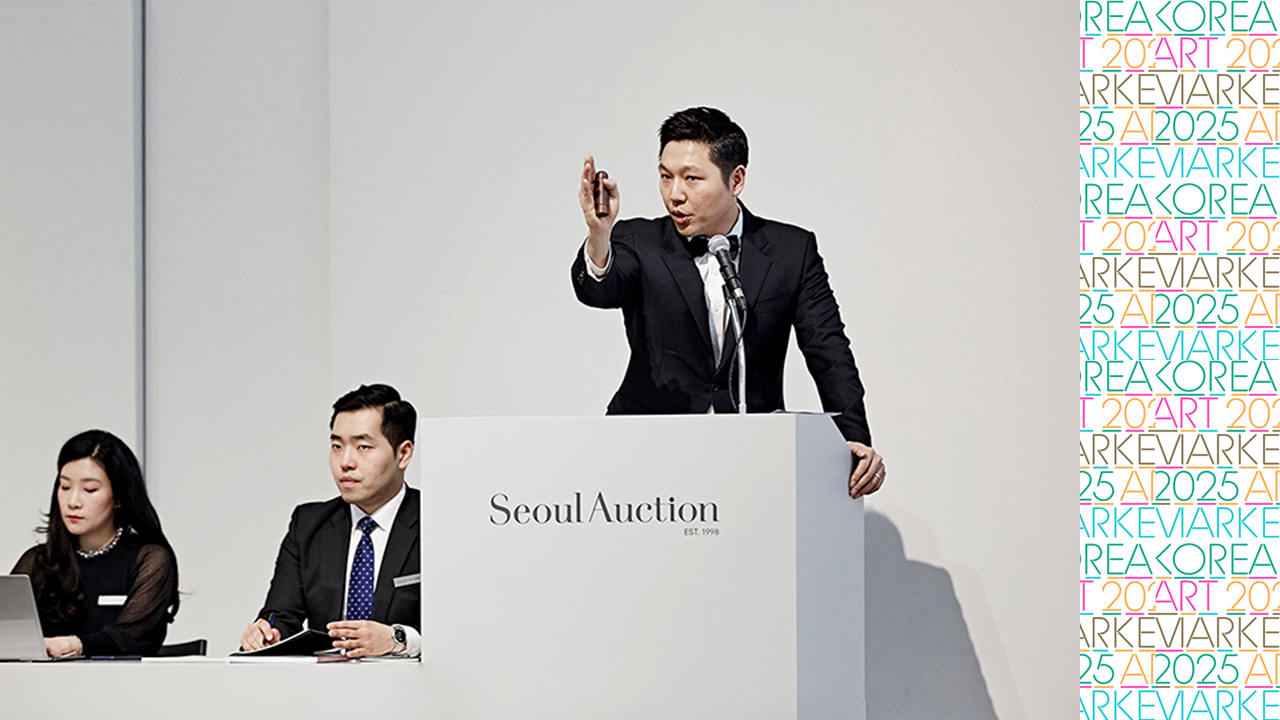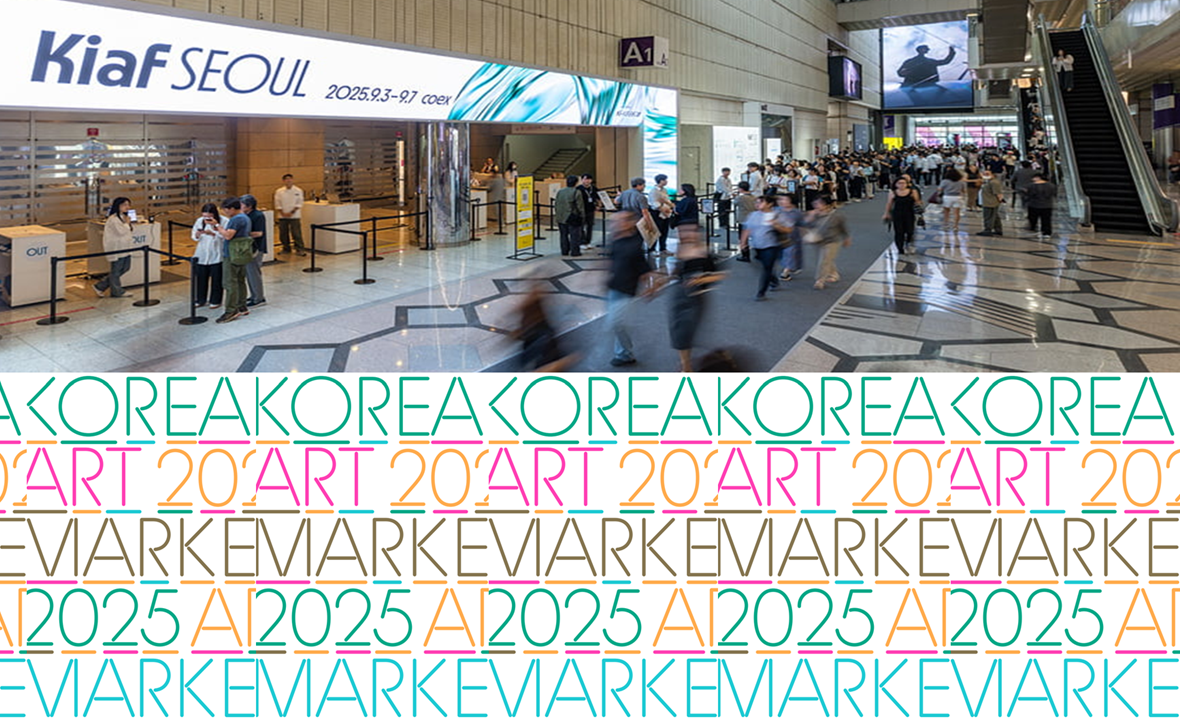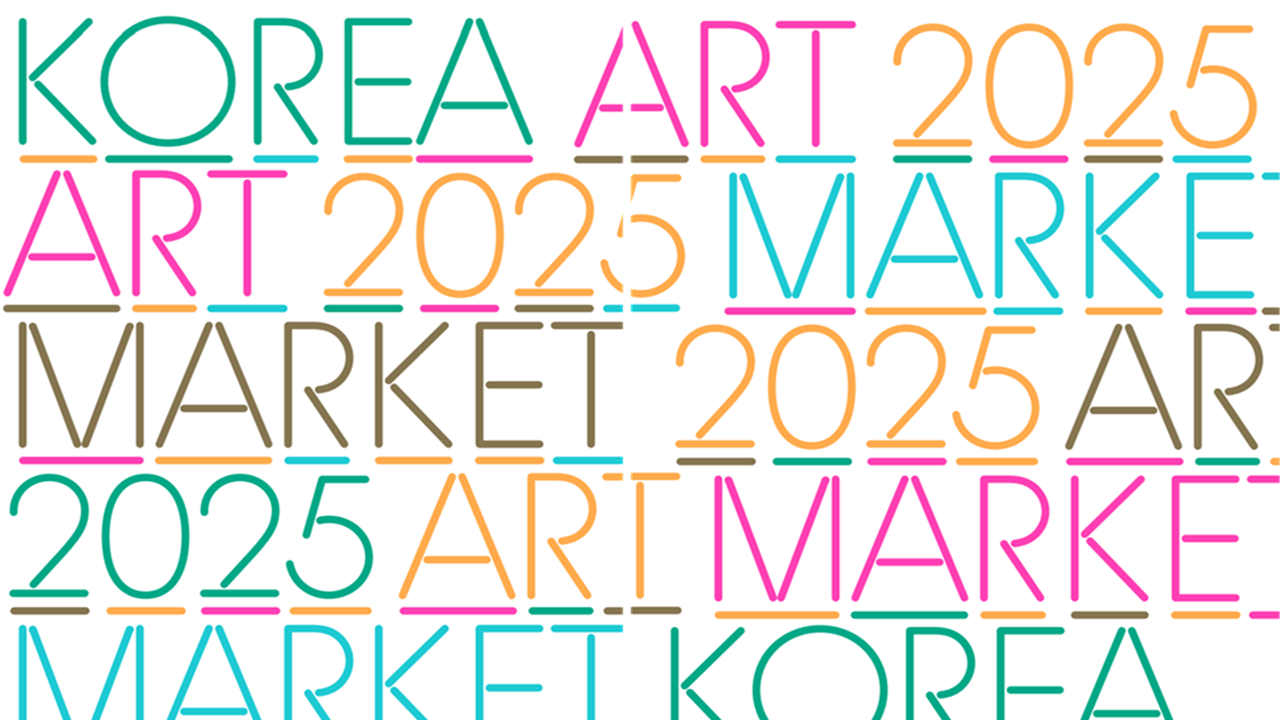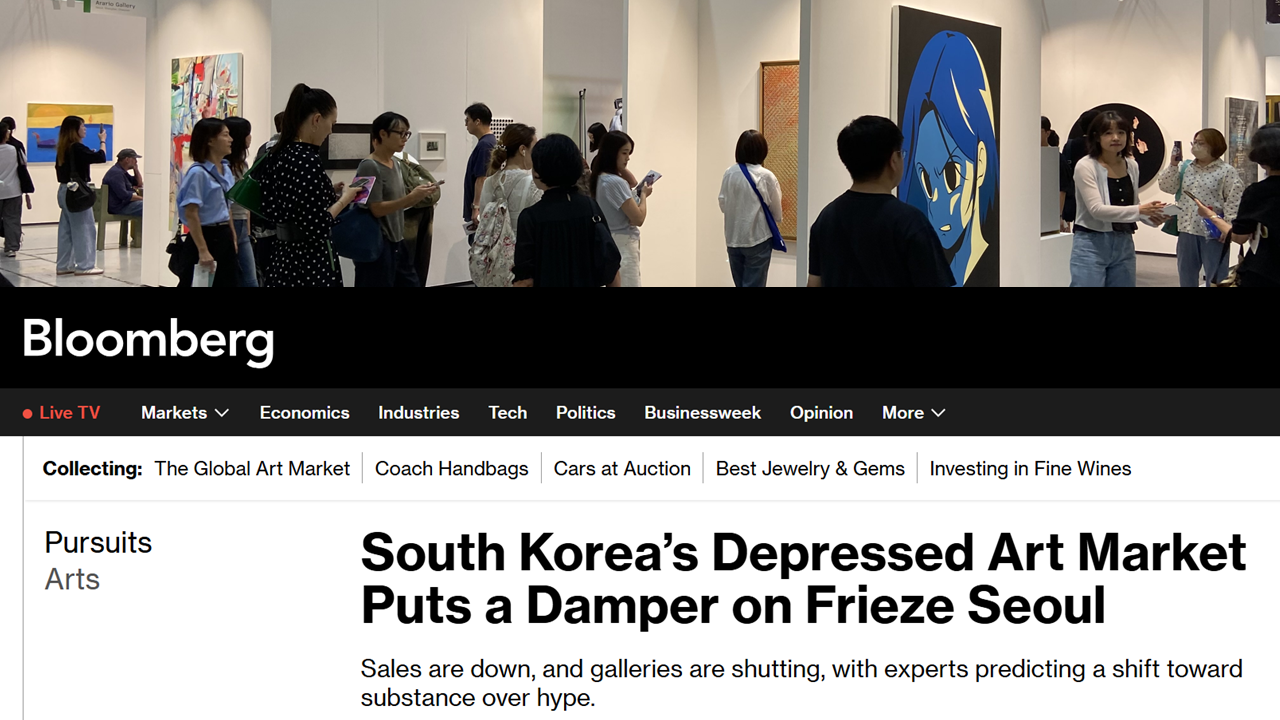
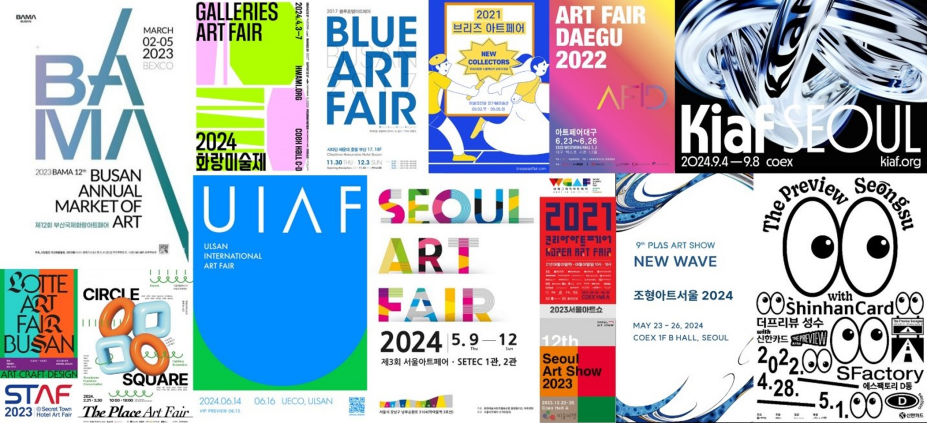
Various art fairs currently taking place across Korea / Photo: K-ARTNOW
One of the most
striking phenomena in the recent Korean art world is the rapid increase in the
number of art fairs. Not only in Seoul, but across the country—in Busan, Daegu,
Ulsan, Jeju, Cheongju, and elsewhere—art fairs of differing scales and
characters are being held throughout the year. In April of this year alone, as
many as four or five art fairs took place almost simultaneously.
On the surface,
this appears to signal the vitality of the market. In fact, art fairs are one
of the most efficient market mechanisms, as they bring together galleries,
artists, collectors, and visitors in a single place within a short period of
time, while enabling sales, promotion, and network formation all at once.
However, it is
necessary to be cautious about interpreting the mere increase in the number of
art fairs as evidence of market growth. What matters is not the number, but the
function. More fundamental than the question of how many fairs are being held
is the question of what roles these fairs are actually performing within the
Korean contemporary art market. What is needed now is not a simple assessment
of popularity, but a structural evaluation.
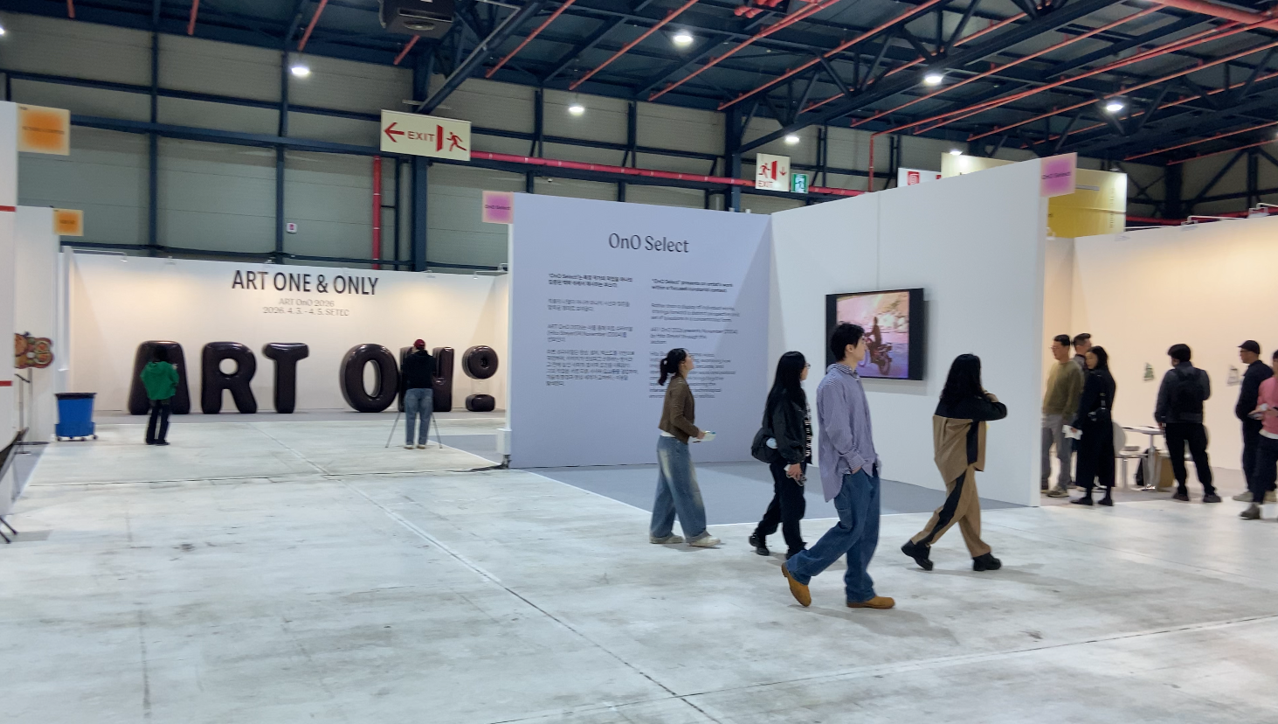
2026 Art OnO VIP Opening view / Photo: K-ARTNOW
An art fair is
not, in its essence, simply a sales event. It is a kind of market platform in
which galleries and collectors meet directly over a given period of time,
artists gain visibility within the market, and the flow of prices, responses,
and demand can be observed in a concentrated form.
Particularly in
the primary market, it functions as a channel through which a gallery’s program
and an artist’s position are made visible externally, while secondarily serving
as an opportunity to expand future possibilities for exhibitions, collections,
criticism, and institutional connections. The raison d’être of an art fair,
therefore, does not lie simply in being “an event where a lot gets sold.” Its
purpose lies in organizing the flow of the market, concentrating selection, and
connecting relationships.
From this
perspective, many of Korea’s current art fairs appear to be increasing in
parallel without having yet sufficiently established distinct functions and
hierarchies among themselves. Some fairs are meaningful in that they expand
points of contact between emerging artists and new collectors; others
contribute to activating regionally based gallery ecosystems; still others aim
to serve as platforms for expanding international networks.
The problem is
that when fairs of similar formats continue to multiply without these differing
purposes and roles being clearly distinguished, the overall efficiency of the
market may decrease rather than increase its concentration.
An increase in
the number of art fairs means a wider range of choices, but it also means that
market resources and attention become dispersed. VIP and collector schedules
are limited, and galleries’ capacity to participate is not unlimited. When one
also takes into account the practical burdens of shipping, booth fees,
staffing, publicity, installation, and insurance, an excessive increase in
fairs is highly likely to lead to gallery fatigue.
This is not
merely a matter of burden on participating institutions. When too many art
fairs are repeated in similar timeframes and formats, the identity of each
individual fair weakens, and the distinctions between them within the market
become blurred. In the end, as the number of art fairs increases, the market
does not necessarily expand; its density may instead decline.
At this point, it
is also necessary to reexamine the recent claims made in some columns that “the
hub of the Asian art market has shifted from Hong Kong to Seoul.”
There is no doubt
that Seoul’s status has risen. Through the complex combination of international
art fairs, museums, public programs, commercial galleries, independent spaces,
and urban cultural infrastructure, Seoul has emerged as one of the most dynamic
art cities in Asia. However, to interpret this rise immediately as a “transfer
of the hub” is still premature.
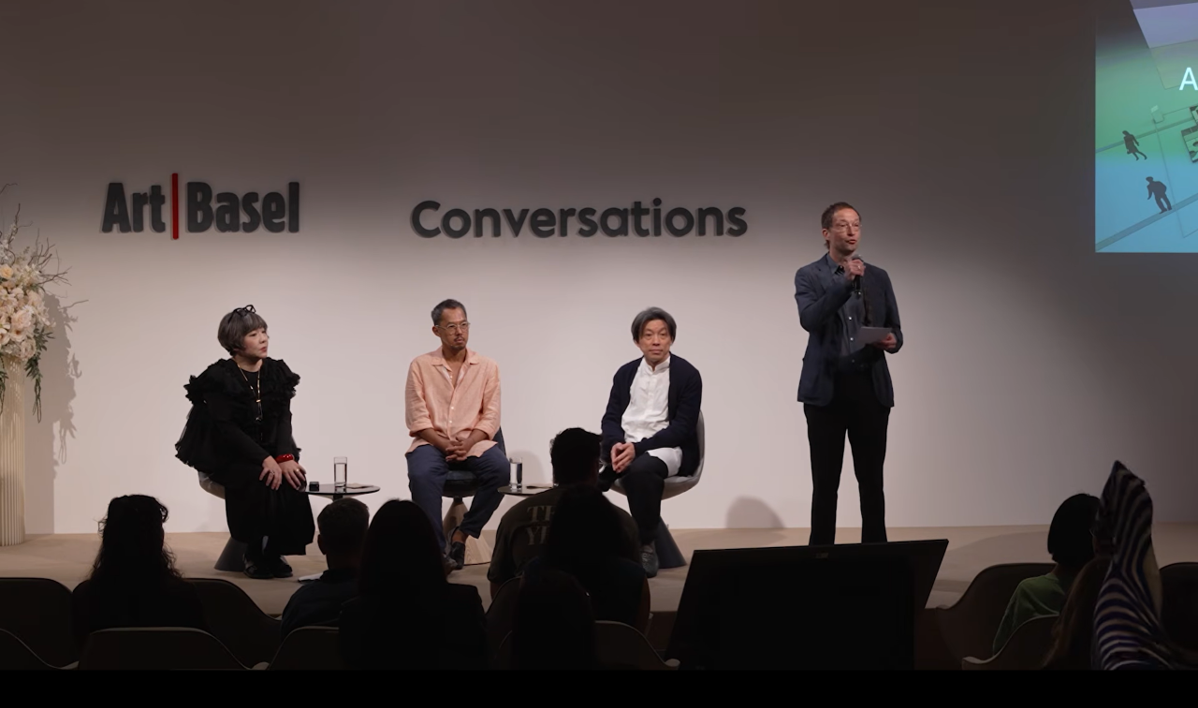
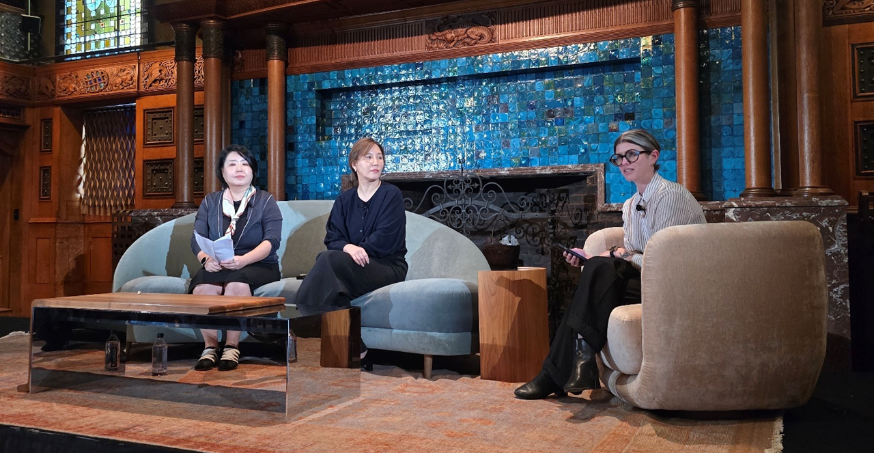
Conversations | What can art fairs do for curating?
Art Basel in Hong Kong 2026, March 27 / Photo: Art Basel Hong Kong
The reason is
simple. A hub does not merely mean a city that attracts attention or hosts many
events. A hub refers to a structure in which year-round transactions are
sustained, and where international galleries and collectors, auctions,
logistics, finance, legal systems, and tax conditions are stably integrated.
The successful staging of a major art fair at a particular moment, and the
concentration of international attention around it, do not automatically make
that city a market hub. A hub is not an event; it is a system.
By this standard,
Seoul is certainly growing rapidly as a cultural hub, but it is difficult to
say that the structural conditions of a market hub have yet been sufficiently
accumulated.
Hong Kong, by
contrast, despite political changes and shifting circumstances, continues to
maintain its structural function in terms of transactions, logistics, capital
mobility, and international business. Therefore, to conclude that “the center
has completely shifted from Hong Kong to Seoul” would be an overly simplified
reading of reality. A more accurate expression would be that Seoul is rising
strongly, but that it is still too early to speak of a structural transfer of
the hub.
This is not
simply a matter of determining whether Hong Kong or Seoul is superior. Rather,
it is a necessary premise for viewing the Korean art market more soberly. If
the discourse of the “hub” is consumed too optimistically, it may have the
effect of obscuring the structural tasks that still remain within the Korean
art world.
What matters now
is not declaring whether “Seoul has become the center of Asia,” but analyzing
what kinds of structures Seoul and the Korean art market have actually
accumulated, and what is still lacking.
In that sense, if
we return again to the issue of Korean art fairs, what is needed now is not
quantitative expansion itself, but functional differentiation and structural
reorganization. Not every art fair needs to play the same role. On the
contrary, each fair needs to define more clearly the market position it is
meant to occupy.
One fair, for
example, should function as a platform connecting international galleries with
domestic collectors; another should serve as an entry structure linking
emerging artists with first-time collectors; and yet another may operate as a
regionally grounded model combining local cultural infrastructure and market
activity.
The problem is
that many current art fairs, rather than concentrating on such functional
differentiation, are more focused on the mere establishment of the event
itself, thereby turning themselves into mutually replaceable events.
The role that art
fairs must play in the Korean contemporary art world is clear.
First, art fairs
must be sites of transaction, but they cannot remain limited to short-term
sales alone. Sales are important, but if they do not lead to the sustainable
market formation of a gallery’s program and its artists, art fairs cannot move
beyond being one-off events.
Second, art fairs
must function as educational mechanisms for bringing in new collectors. The
expansion of the collector base remains an important task in the Korean art
market, and although many art fairs speak of this role, in reality they often
fail to move beyond the level of consumer experience toward the structural
cultivation of collectors.
Third, art fairs
must serve as mediators connecting the domestic market to the international
market. Even when overseas galleries, collectors, and institutional figures
participate, if such participation remains at the level of simple visits or
event-based appearances, it cannot be regarded as a structural connection. What
matters is repetition and continuity.
Fourth, art fairs
must also broaden the points of contact between institutions and the market. A
structure in which only the market expands on its own, without even indirect
links to museums, nonprofit spaces, criticism, publishing, and archives, is
unlikely to be sustainable over the long term.
In the end, an
art fair should not be understood as the result of the market, but as a way of
organizing the market. This means that it should not simply gather works
together for display and sale, but rather function as a structure that makes
visible how certain artists, galleries, collectors, and institutions are being
connected.
In that sense,
the problem with Korean art fairs today is not merely that there are too many
of them. The more important issue is that, despite the large number of fairs in
existence, it remains insufficiently clear what structural function each one is
performing within the market.
The Korean art
world must now decide whether it will regard art fairs simply as part of the
event industry, or redefine them as part of market infrastructure.
If it remains
with the former, new fairs under new names may continue to appear. But in that
case, the market is more likely to repeat itself than to accumulate. If, on the
other hand, it adopts the latter perspective, art fairs must move not toward
competition in numbers, but toward the refinement of roles. What matters then
is not how many are held, but what each one connects and what each one leaves
behind.
Art fairs are
necessary in the Korean contemporary art world. But that does not mean that
more is always better. Art fairs should not be indicators of market
overheating, but devices that reveal the structure of the market. What is
needed now is not more art fairs, but art fairs with clearer roles and greater
density.
Ultimately, the
maturity of the Korean art market will be judged not by the increase in the
number of events, but by what functions art fairs actually perform within the
market. And from precisely that perspective, the question that the Korean art
world must now ask is simple: art fairs are increasing, but is the structure of
the market deepening as well? If this question cannot be answered, then the
current proliferation will be closer to structural excess than to a signal of
growth.