The third theme
of《Korea Art Market 2025》focuses
on the structural transformation of art fairs in Korea.
The report
defines 2025 as “a turning point from a transaction-centered era to a
relationship-centered one.” While total sales volume declined, shifts
in participation methods and audience quality have become new
driving forces in the market.
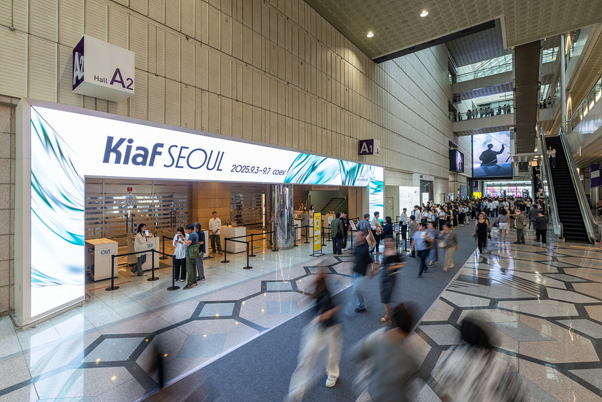
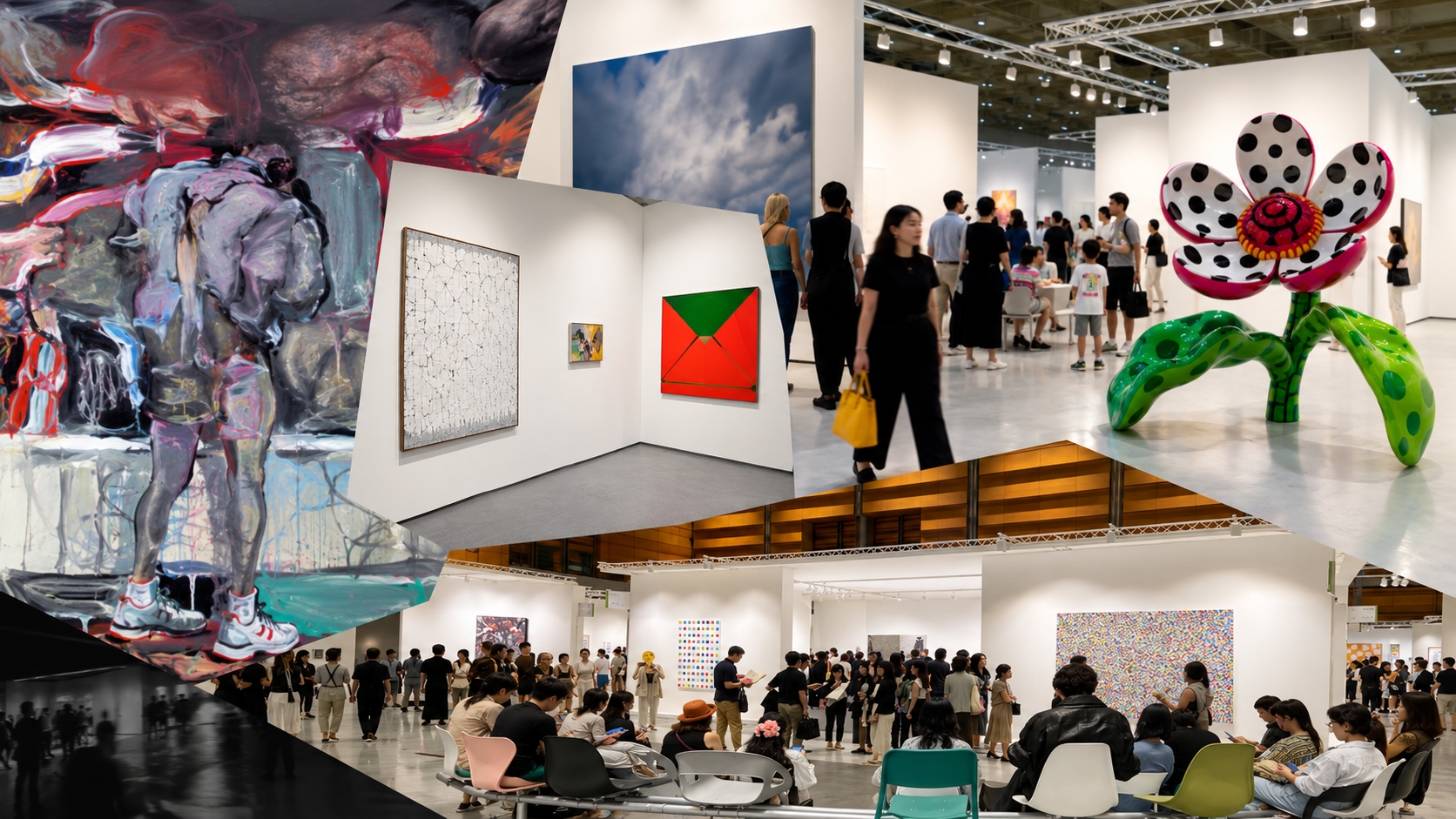
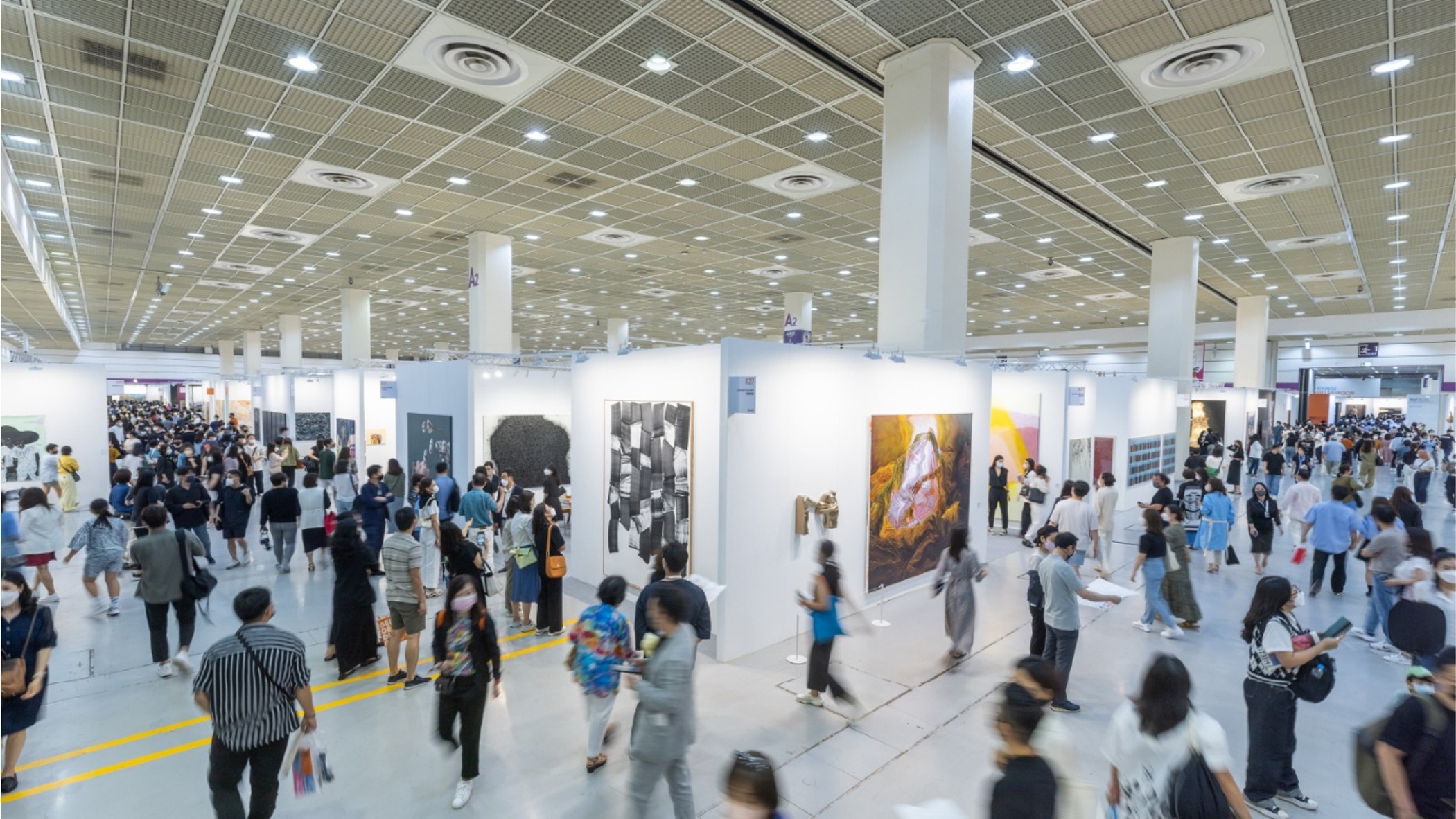
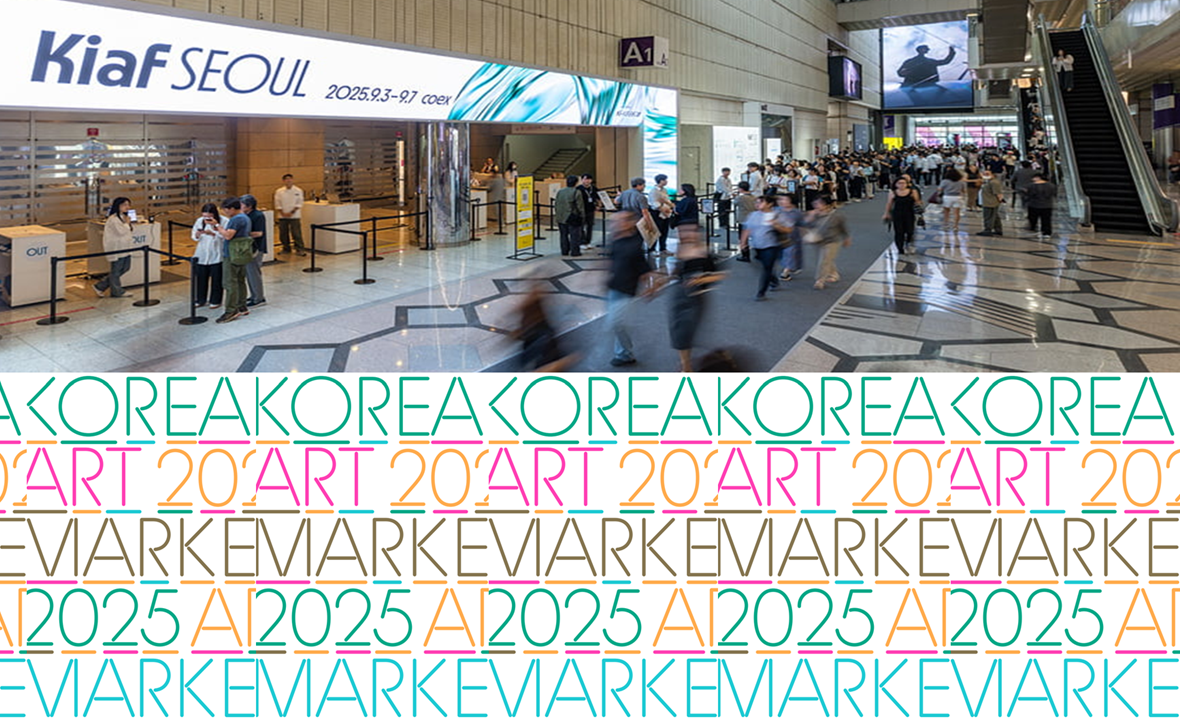
Kiaf 2025 Exhibition Scene / Photo: Kiaf
Growth in
Scale, Deepening Polarization
The total
transaction volume of major Korean art fairs in 2025 reached approximately KRW
168 billion, down 12% from the previous year. However, both the
number of participating galleries and total visitors increased.
Notably, the VIP
preview audience at the 2025 Korean Galleries Art Fair rose 30%
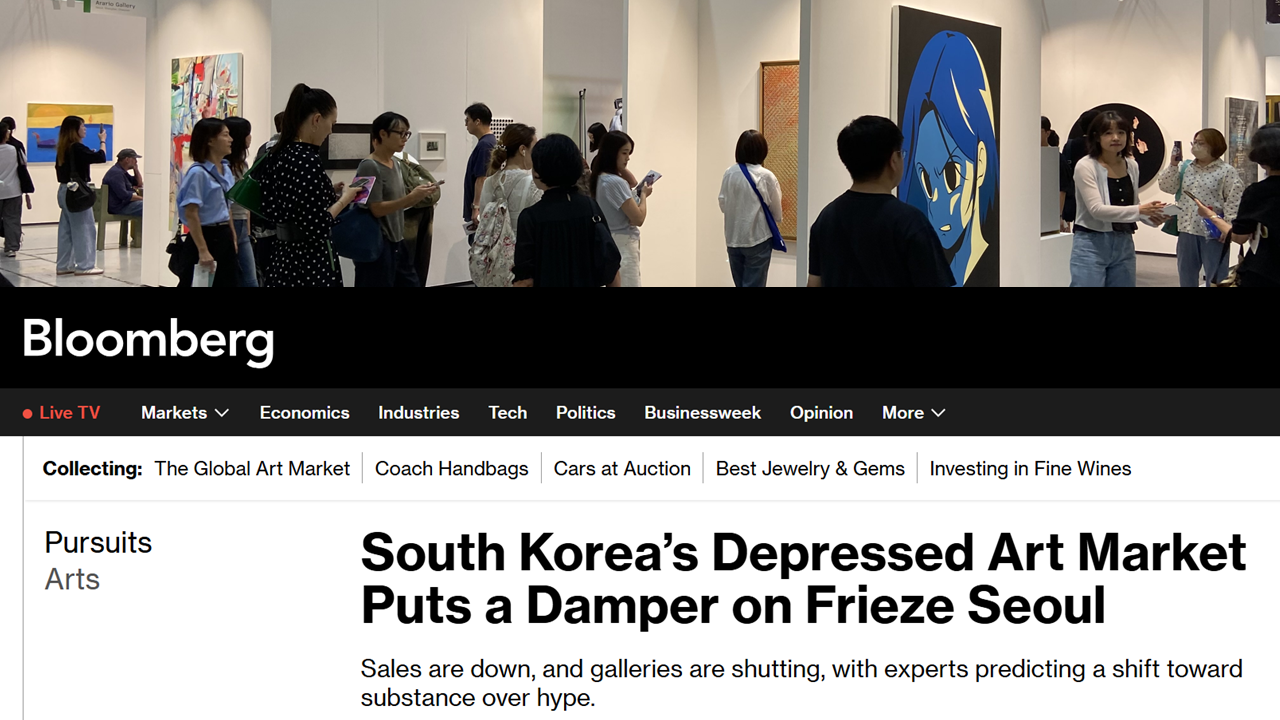
year-on-year to 6,100 visitors, while Kiaf and Frieze
Seoul attracted over 120,000 visitors combined—setting
a new record.
The report
interprets this as “structural expansion rather than monetary contraction.” While ultra-high-priced transactions decreased, mid-range works priced
between KRW 100 million and 500 million, as well as works by emerging artists,
saw increased sales, broadening the market base.
At the same time,
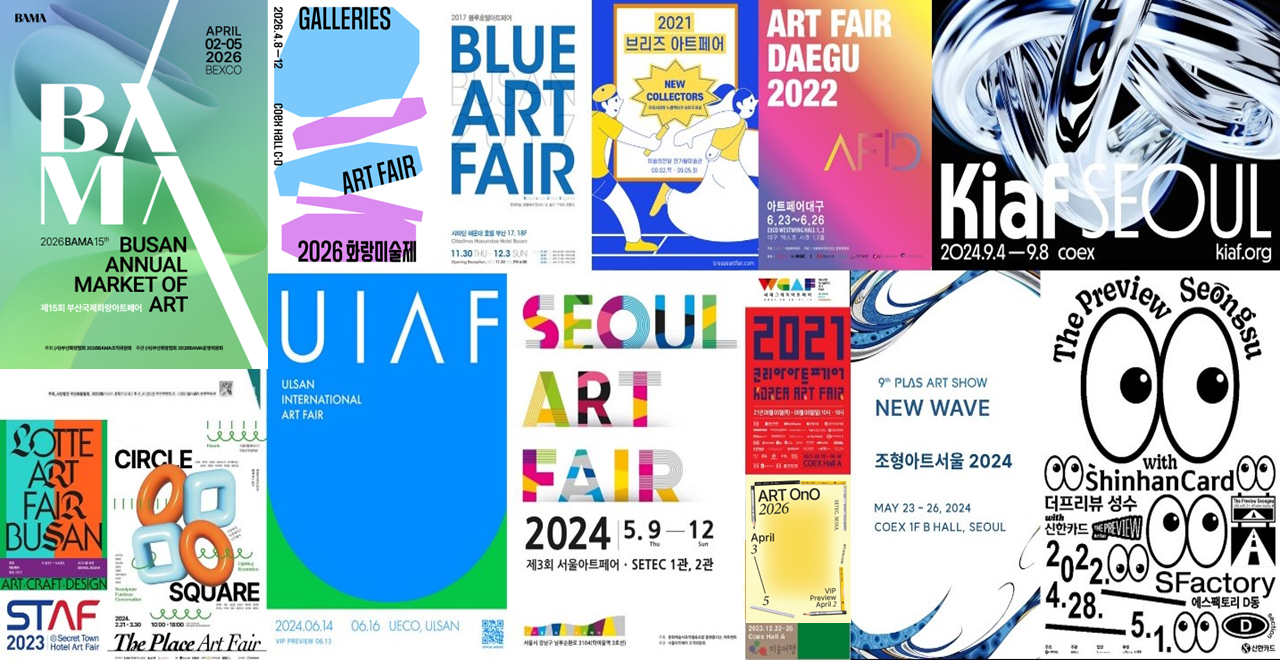
polarization between major and regional fairs has intensified. Seoul’s
large-scale fairs are pursuing globalization and luxury strategies centered on
international collectors, while regional events such as Art Busan,
Daegu Art Fair, and Jeju Art Fair emphasize locality
and accessibility, demonstrating the resilience of domestic demand.
This development
aligns with the “internal stabilization strategies” discussed in Part 2 of the
report and signals a shift toward a domestically rooted ecosystem.
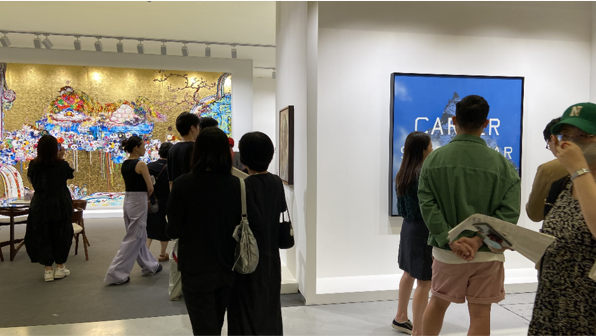
Kiaf 2025 Exhibition Scene / Photo: Kiaf
Art Fairs as
Platforms of Experience
According to the
report, the purpose of attendance has shifted from purchase to experience.
62.3% of respondents stated that they visited to “discover new artists rather
than buy artworks.”
Additionally, content
creation for social media (42%) and participation in talk programs and live
performances (31%) surpassed purchasing as primary motivations.
Professor
Hyunwoo Lee of Seoul National University’s Center for Cultural Policy
Studies notes that “art fairs are no longer short-term sales events but
experiential platforms where artists, galleries, and audiences co-create
narratives.”
This evolution
represents an “expanded form of exhibition,” showing how art is transforming
into a social experience within the urban environment.
The proportion of
MZ-generation collectors rose to 24.1%, highlighting a shift
in perception from “places of purchase” to “spaces of participation.”
They increasingly
engage not only in buying artworks but also in booth design, artist
talks, and content production—positioning themselves as co-producers
in the art ecosystem.
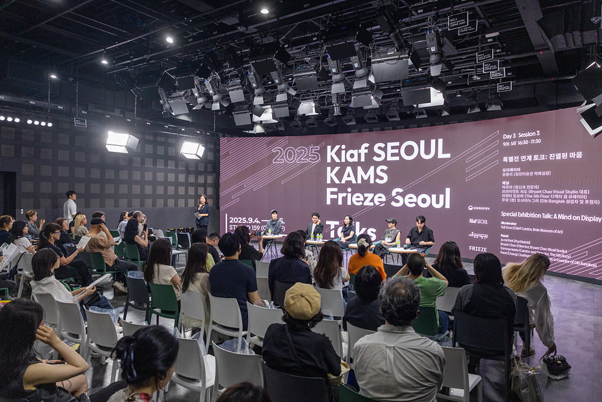
Kiaf SEOUL 2025 Lecture Program / Photo: Kiaf
Kiaf and
Frieze: Turning Points in Urban Infrastructure
In September
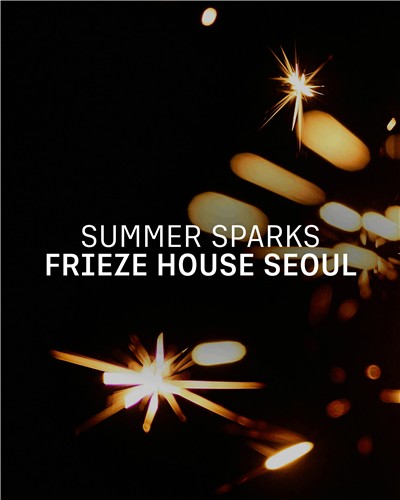
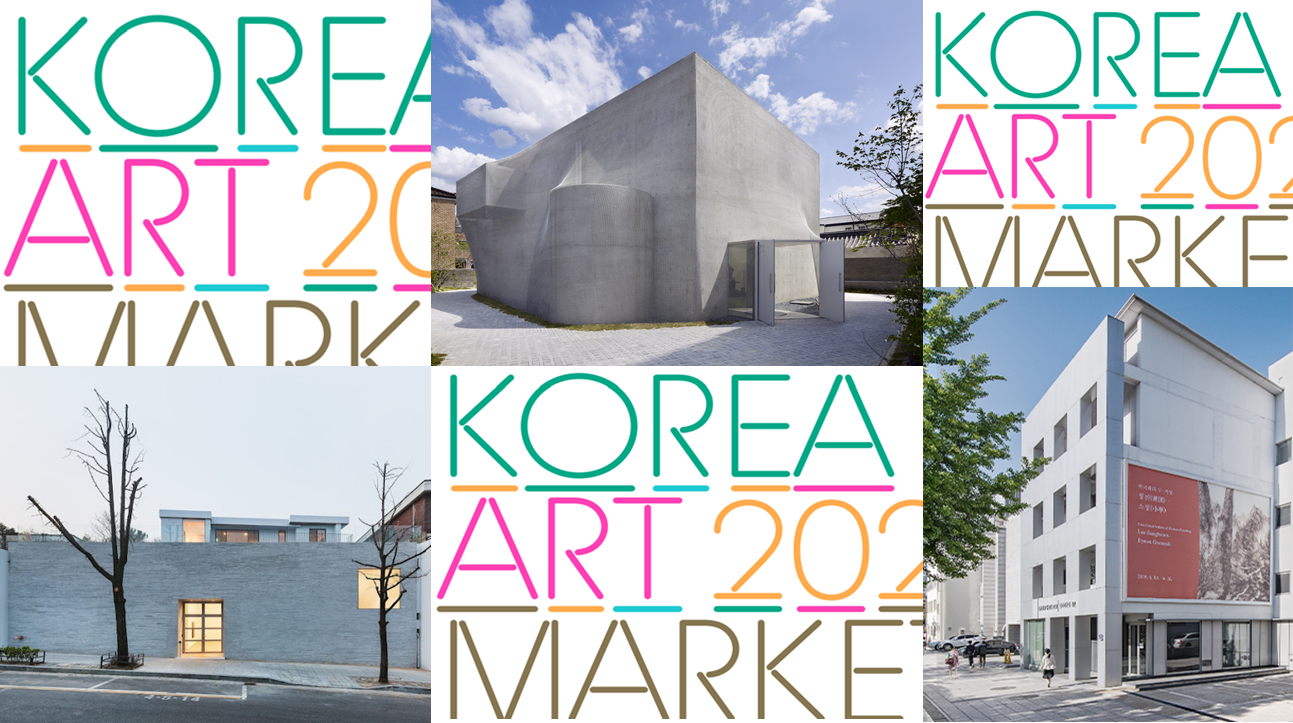
2025, Frieze House Seoul opened in Seoul’s Yaksu-dong district.
Modeled after
London’s ‘No.9 Cork Street’, this space integrates exhibitions,
seminars, residencies, and book talks into a permanent art hub—symbolizing
Frieze Seoul’s evolution from a one-time event to a sustainable urban
infrastructure.
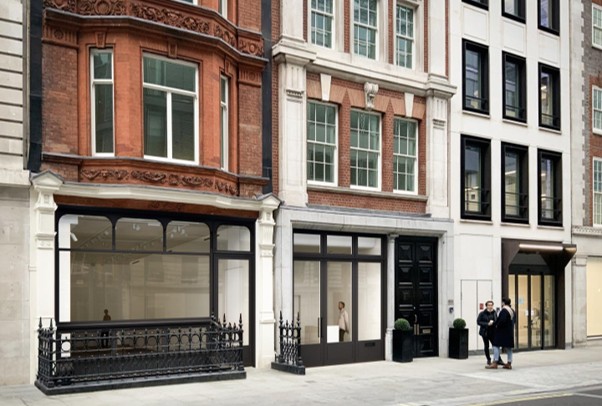
Frieze Launches First-Ever Exhibition Space in London at No.9 Cork Street (2021) / Photo: Frieze
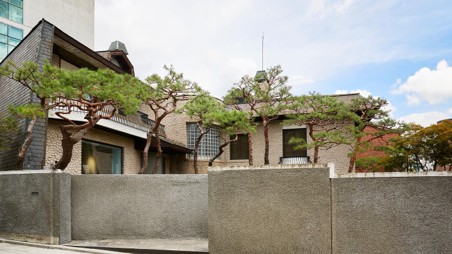
Frieze House Seoul Facade. / Photo: Frieze
Kiaf also introduced “Kiaf PLUS” in 2025, a new
section dedicated to young galleries and emerging artists, along with zones for
media art, NFTs, and AI curation.
Researcher Yerim
Hong explains that “Kiaf’s strategy is shifting from following market trends to
creating new demand structures.”
These expansions
go beyond simple sales to reshape cultural and economic structures
across cities. Seoul, Busan, and Daegu are each transforming into
integrated cultural, tourism, and industrial hubs through
their respective fairs.
Audience Data
and Stay Time: The New KPI
A notable shift
in metrics has emerged: from sales figures to engagement indicators such as
average stay time, revisit rate, participation level, and social media impact.
At Frieze
Seoul 2025, the average visitor stay reached 2.8 hours—up
45% from 2023—with 38% of visitors reporting they stayed
longer than before.
This reflects the
rise of “stay-based cultural consumption” as a new standard in the art market.
Researcher
Minseok Kim from Seoul National University’s Business Research Institute
comments, “Art markets must now measure relational density rather than
efficiency. Art fairs are functioning not as trade floors but as network
hubs.”
Tasks for
Sustainable Art Fairs
Associate
Professor Yeonhwa Joo of Hongik University identifies three key tasks for the
sustainable development of art fairs over the next three years.
1.
Strengthening support for small and mid-sized galleries.
As fairs grow
larger, entry barriers for emerging and smaller galleries rise.
The report calls
for practical support measures such as subsidized participation fees, tiered
booth pricing, and dedicated sections for new galleries.
These policies
are not merely financial aids but structural safety nets essential to
maintaining diversity in the art ecosystem.
2. Building
city-level art infrastructure linkages.
Art fairs must
evolve from temporary events into long-term “cultural infrastructures”
integrating art, tourism, and industry.
The report
suggests city-level collaboration models involving municipal governments,
museums, corporations, and the hospitality sector.
Such frameworks
can transform fairs into “urban platforms that simultaneously expand local
economies and artistic ecosystems.”
3.
Establishing digital platforms for long-term data accumulation and openness.
The report
emphasizes the need to reduce reliance on global platforms like “Ocula”
and “Artsy” and instead develop domestic, data-driven art
platforms.
This
infrastructure is crucial for both international expansion and for maintaining
the autonomy of the Korean art market.
Conclusion:
Art Fairs as Market Hubs and Cultural Platforms
《Korea Art
Market 2025》concludes:
“In 2025, art fairs have evolved from simple marketplaces to social stages
where art and cities form relationships.”
Cities are
transforming from sites of sale to sites of experience, and
audiences from consumers to participants.
Through this
shift, the Korean art market is transitioning from “the language of transaction”
to “the language of relation.” To survive, art fairs must continue evolving
into platforms where art, industry, and urban culture intersect.
Source (Download): Korea Art Market 2025 (Seoul National University Business Research Institute & Paradise Cultural Foundation, 2025).
Contributors: Minseok Kim (SNU Institute of Management
Research), Yeonhwa Joo (Hongik University Graduate School of Arts Management),
Yerim Hong (Researcher)