The《Korea Art Market
2025》report analyzes how exhibitions in 2024–2025
have evolved beyond simple art appreciation or institutional programming to
function as structural sites where audiences, artists, institutions, cities,
markets, and international networks intersect. In this process, exhibitions
have become the clearest indicators of how Korean contemporary art is
being reorganized. Their role has expanded significantly, emerging as
a central axis influencing the entire art ecosystem.
The Popular Expansion of Large-Scale
Exhibitions and Shifts in Viewing Behavior
Major museum exhibitions in 2024–2025 continued
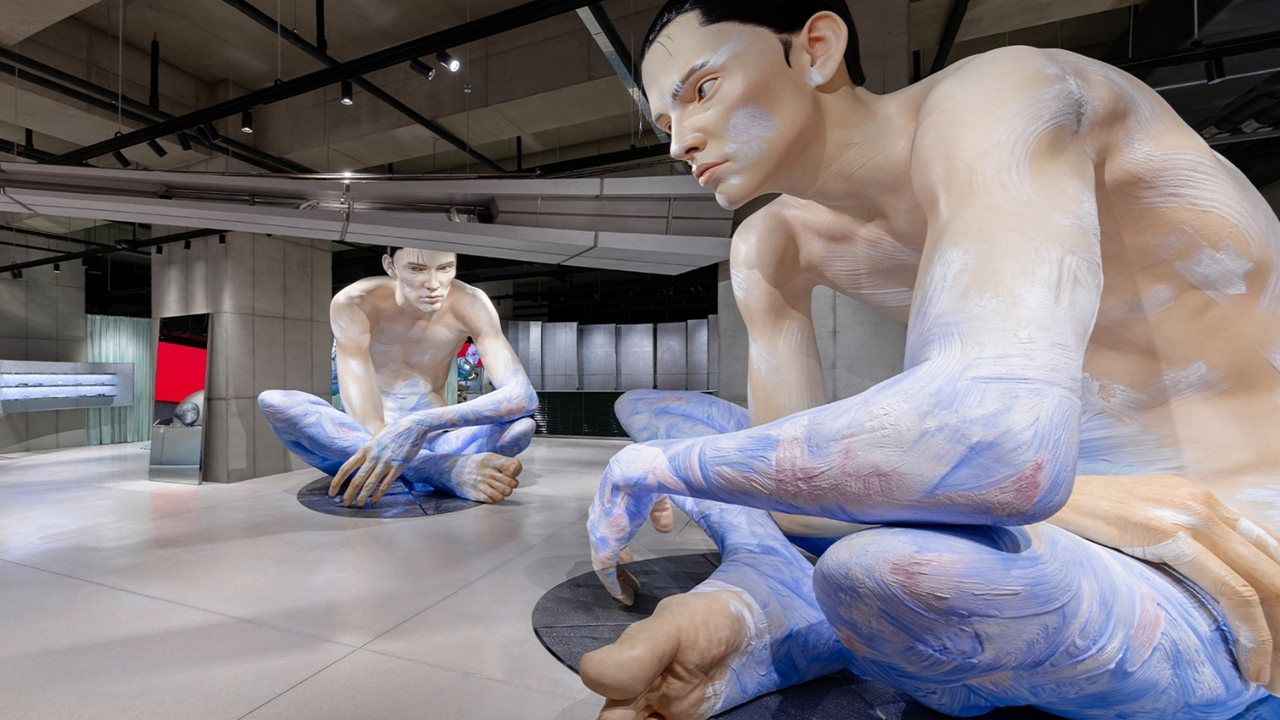
to draw substantial audiences and strengthen public interest. The Ron Mueck
exhibition at the National Museum of Modern and Contemporary Art (MMCA), Seoul,
recorded high visitor numbers and extended dwell times. The combination of
celebrity attendance, social media–driven “exhibition proof shots,” and the
now-normalized reservation system contributed to the exhibition’s absorption
into broader popular culture.
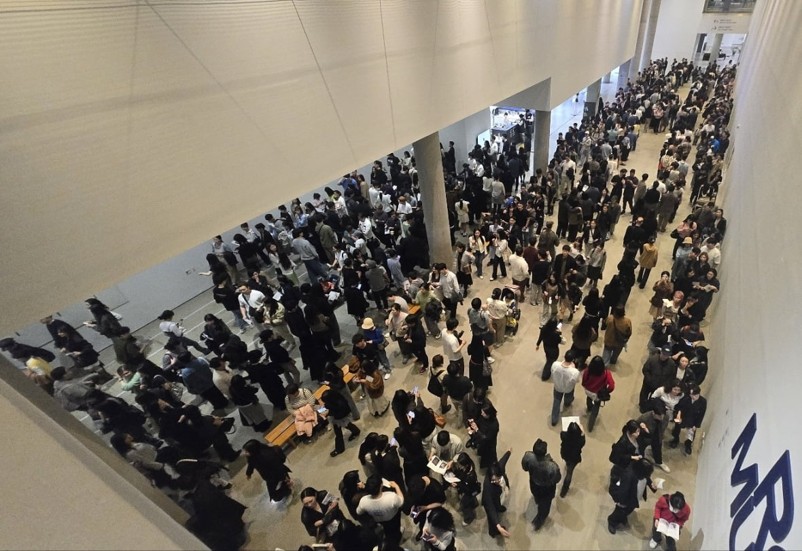
Visitors lining up for the 《Ron Mueck》 solo exhibition at MMCA Seoul. / Photo: MMCA
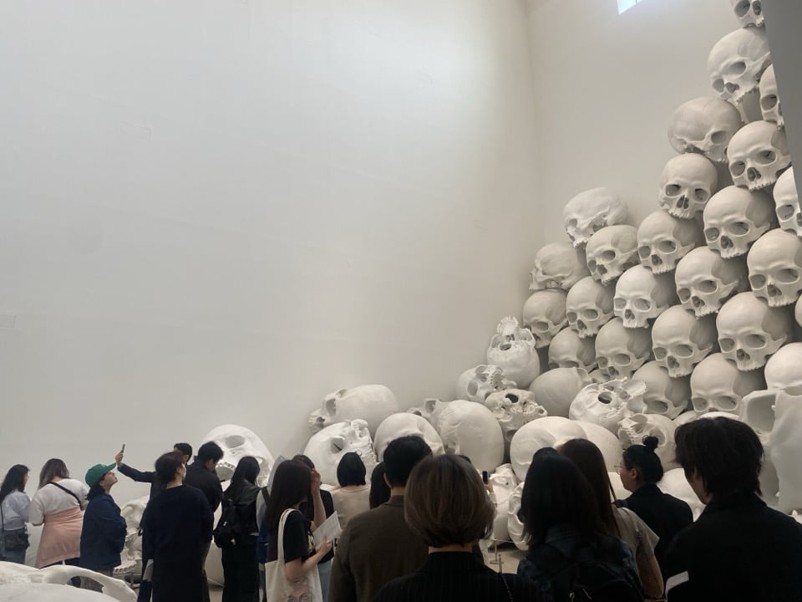
Visitors viewing 《Ron Mueck》’s representative work Mass at MMCA Seoul. / Photo: MMCA
According to the report, these changes are
closely linked to post-pandemic viewing habits and digital dissemination
structures, indicating that exhibitions are reshaping not only individual
leisure patterns but also the broader landscape of cultural consumption within
the city.
Expansion of Korean Artists’ Overseas Shows
and the Rise of Solo Exhibition–Centered Curation
The report identifies a notable increase in solo
exhibitions of Korean artists at major international institutions in 2025.
Examples include Ayoung Kim’s solo exhibition at
Hamburger Bahnhof (《Many Worlds Over》), Do Ho Suh’s exhibition at Tate Modern (《Walk
the House》), and Haegue Yang’s projects in London and
Mexico.
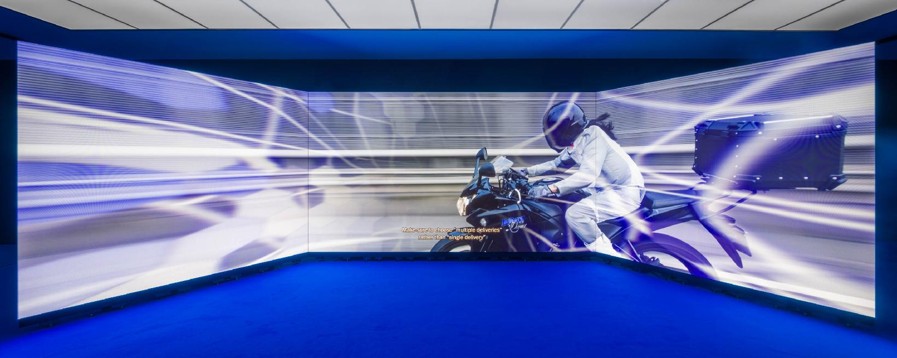
Ayoung Kim,《Many Worlds Over》, exhibition view Hamburger Bahnhof – Nationalgalerie der Gegenwart, 28.2. – 20.7.2025, Depicted: Delivery Dancer's Arc: 0° Receiver, 2024 © Courtesy Ayoung Kim & Gallery Hyundai / Nationalgalerie – Staatliche Museen zu Berlin, Photo: Jacopo LaForgia
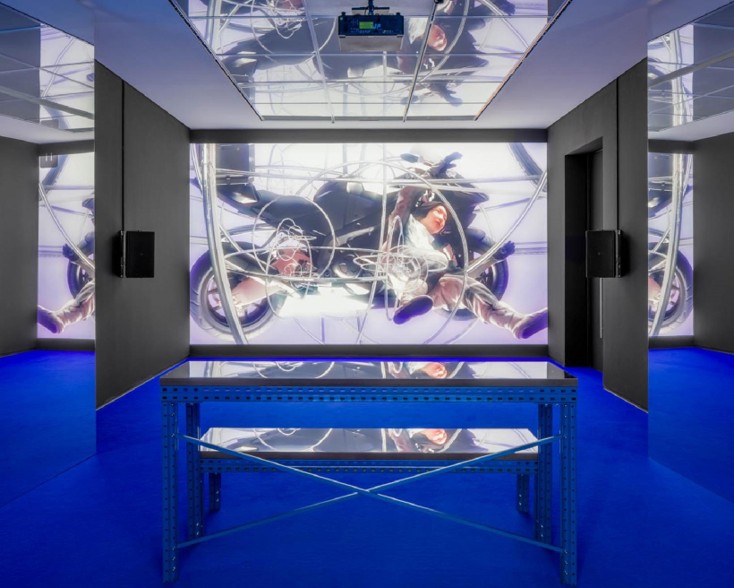
Ayoung Kim,《Many Worlds Over》, exhibition view Hamburger Bahnhof – Nationalgalerie der Gegenwart, 28.2. – 20.7.2025, Depicted: Delivery Dancer's Sphere, 2022 © Courtesy Ayoung Kim & Gallery Hyundai / Nationalgalerie – Staatliche Museen zu Berlin, Photo: Jacopo LaForgia
This shift demonstrates a departure from earlier
modes of presenting Korean art largely through group or region-based
exhibitions. Instead, institutions are placing individual practices,
methodologies, and research-driven inquiries at the center of their curatorial
agendas. The report also highlights the rising prominence of women artists in
their 40s and 50s, signaling a significant generational and discursive shift
within Korean contemporary art.
Changing Narratives in International
Exhibitions and the Emergence of Multi-Layered Curatorial Frameworks
International exhibitions have increasingly
moved away from framing Korean art through a singular national or stylistic
narrative.
Projects such as SeMA’s overseas touring exhibition《Layered Medium: We Are in Open Circuits》, the Metropolitan Museum of Art’s《Monstrous Beauty》, and New Taipei City Museum’s《Reimagining
Radical Cities》demonstrate an expanded approach—foregrounding
diverse thematic inquiries and individualized artistic practices over fixed
cultural or identity markers.
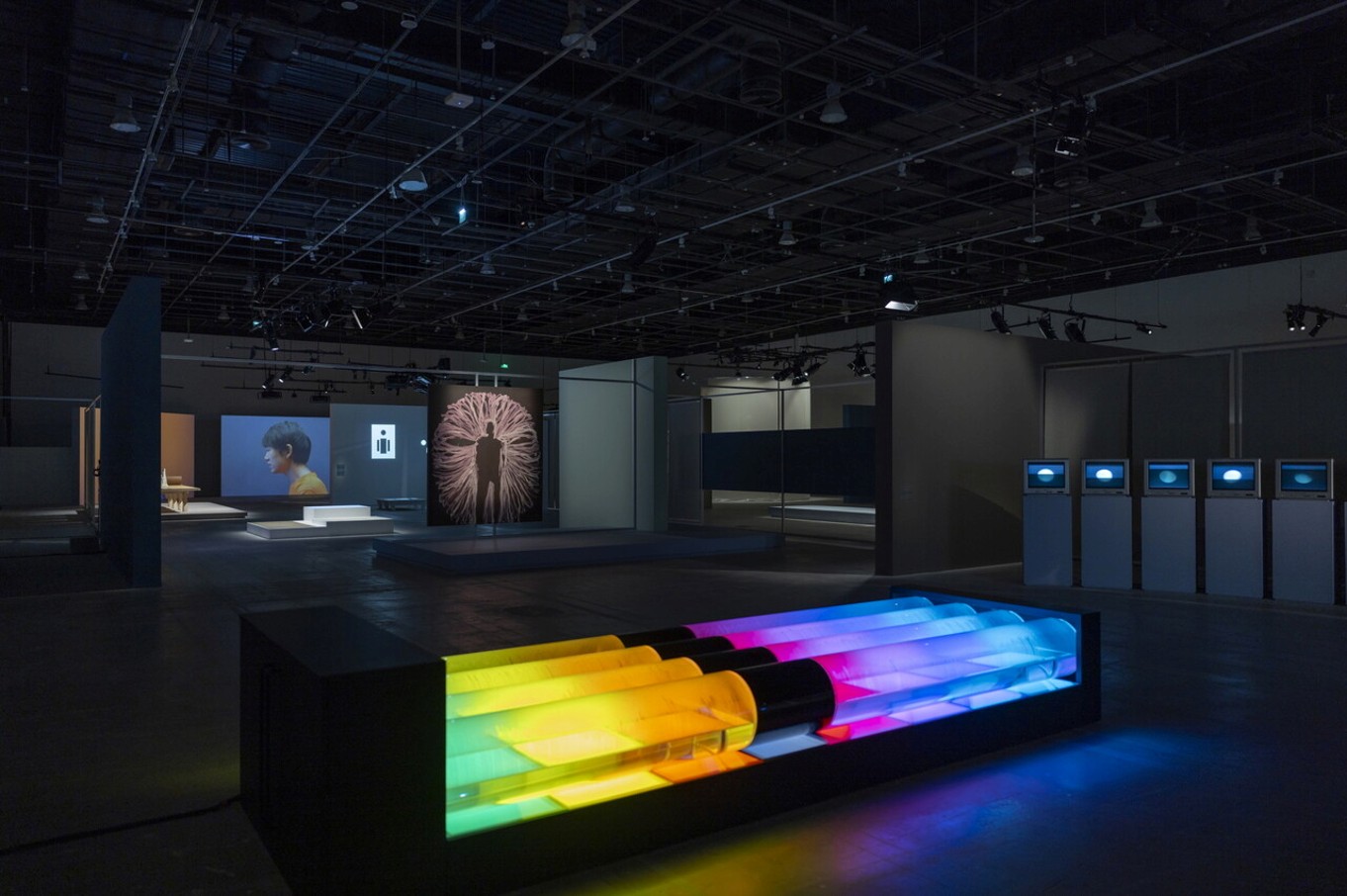
Installation view of the 2025 SeMA collection touring exhibition 《Layered Medium: We Are in Open Circuits》. / Photo: SeMA
The report concludes that such developments
represent a shift away from older curatorial modes that tended to anchor Korean
art to a single image or canonical storyline. Instead, they reveal a transition
toward more pluralistic, differentiated contemporary narratives.
Two Key Directions in Domestic Exhibitions: The
Return of Painting and the Expansion of Socially Driven Themes
Domestic exhibitions in 2024–2025 reveal two
major tendencies: a renewed focus on painting and a widening engagement with
social issues.
Painting-centered exhibitions—such as《Take My Eyes Off》at Buk-Seoul Museum of
Art,《Deep Into Abstraction – On the Way》at Seoul National University Museum of Art,《Wondersquare》at Museumhead, and《Next Painting: As We Are》at Kukje
Gallery—explored the relevance and possibilities of painting within a digital
environment.
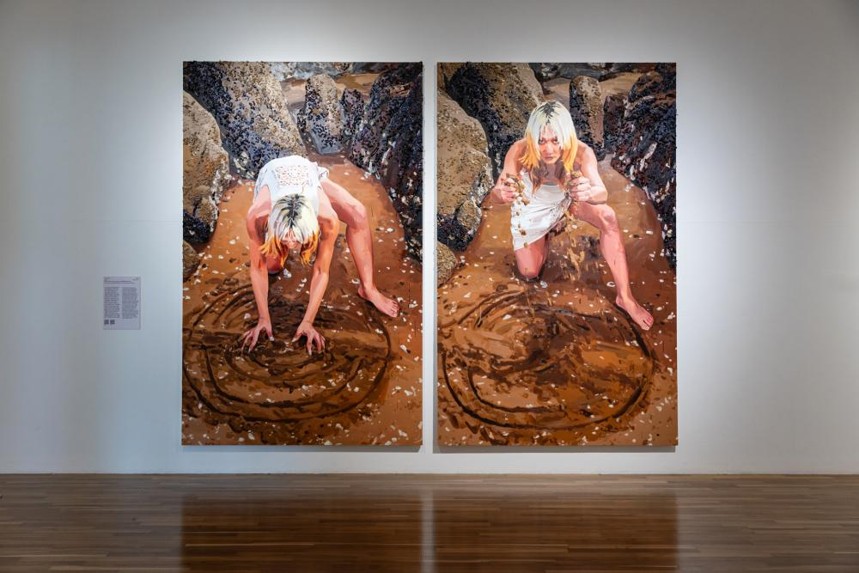
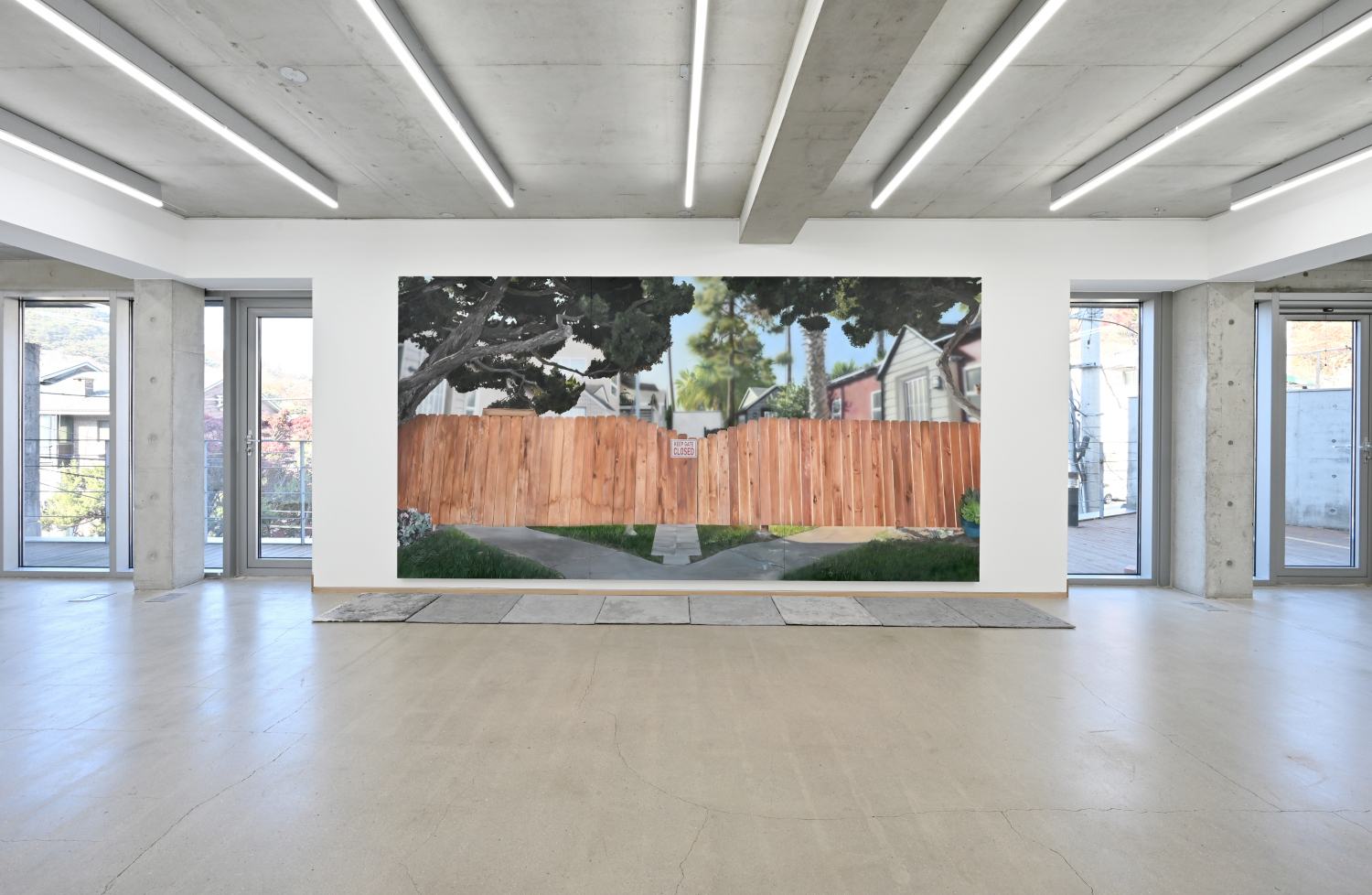
Miryu Yoon, The Spiral (2025), Installation view from《Take My Eyes Off》, Buk-Seoul Museum of Art. / Photo: Buk-Seoul Museum of Art
The Spiral portrays a trans woman tracing a spiral before a coastal cliff, as if performing a ritual.
Simultaneously, national and regional museums
expanded programming around ecology, care, local identity, and other social
themes. MMCA’s《Looking After Each Others》and Gyeongnam Art Museum’s《Something So
Incredible》foregrounded societal structures and
current issues, illustrating how museums are increasingly operating as
platforms for public discourse.
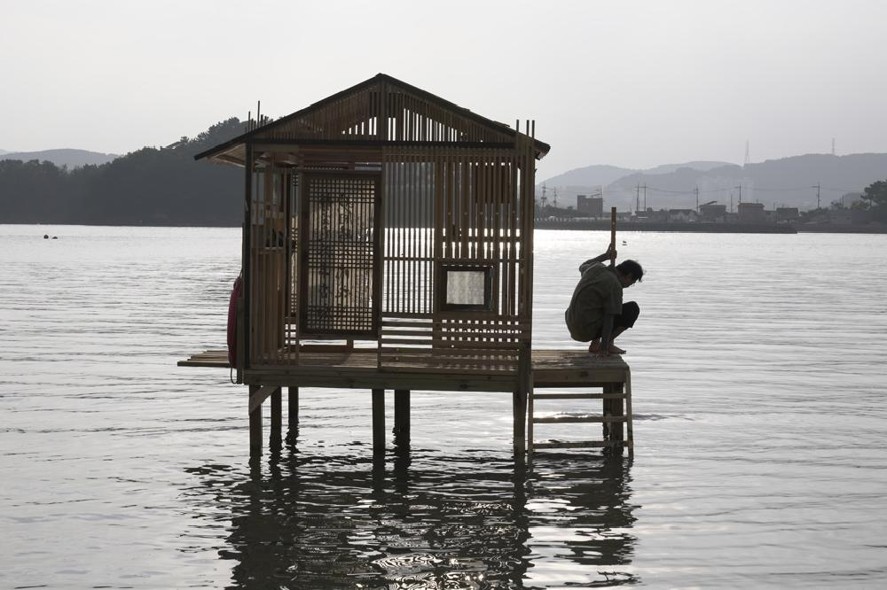
Song Sungjin, 1 Pyeong Even Not (2018/2025 re-production), collected wood, variable installation, 260 × 240 × 290 cm, from 《Something So Incredible》, Gyeongnam Art Museum. / Photo: Gyeongnam Art Museum.
Introducing International Artists and the
Influx of Global Discourses
Korean museums and galleries actively introduced
international artists, strengthening the connection between domestic audiences
and global contemporary art conversations.
Nicolas Party’s 《Dust》
at Hoam Museum of Art, James Turrell’s exhibition at Pace Gallery Seoul, and
Mona Hatoum’s exhibition at White Cube Seoul offered Korean audiences direct
engagement with ongoing global discourses.
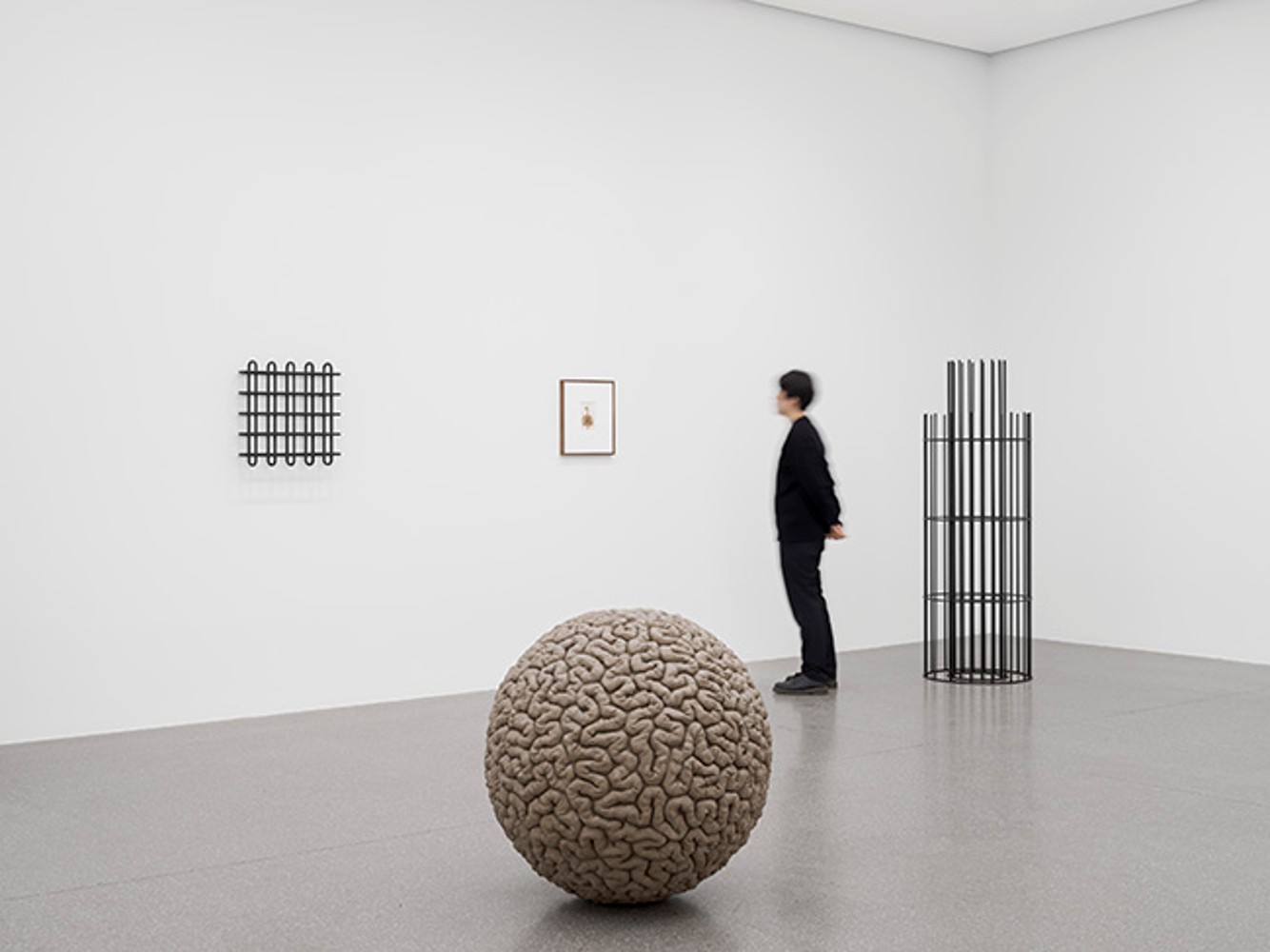
Installation view of《Mona Hatoum》/ Photo: White Cube Seoul
According to the report, these exhibitions
broaden the curatorial scope of Korean institutions while elevating the overall
level of international connectivity within the domestic art ecosystem.
The Expanding Role of Exhibitions and the
Formation of Structural Contact Zones
The report underscores that exhibitions now
operate as structural contact zones where artist careers, institutional
identities, urban cultural strategies, international networks, and market
dynamics intersect.
Exhibitions are no longer isolated institutional programs;
they have become platforms with measurable influence across the entire art
ecosystem—shaping artist visibility, institutional positioning, audience
perception, and even market trajectories.
Outlook: The Consolidation of an
Exhibition-Centered Ecosystem
The report anticipates that the
exhibition-centered structure will strengthen further.
The expansion of solo-exhibition-driven programming, the stabilization of
research-based curatorial practices, the rise of socially and regionally
embedded themes, the blurring of boundaries between
painting/installation/media, the tightening of collaborations with overseas
institutions, and the growing role of regional museums are all cited as major
directions.
Together, these developments indicate that the
Korean art ecosystem is undergoing a systematic reconfiguration—one in which
exhibitions increasingly operate as the decisive engine shaping the field’s
future direction.