
On view at Namdaemun Theater in Seoul, a former
cinema recently renovated and reopened as a multipurpose cultural space, from
September 19 to December 31, 2026, 《A World called World Literature》 invites visitors to reflect on how books have shaped the way we read the
world.
Goethe’s Faust, Part One,
published by Reclam in Germany; Aristotle’s Metaphysics from
Britain’s Everyman’s Library; and Irwin Shaw’s The Young Lions
from Eulyoo Publishing’s world literature collection reveal publishing cultures
across different periods and languages. By tracing the history of bringing
literature and knowledge to readers through book series, the exhibition invites
us to consider the scope of what we have come to accept as ‘world literature’
and how that category took shape.
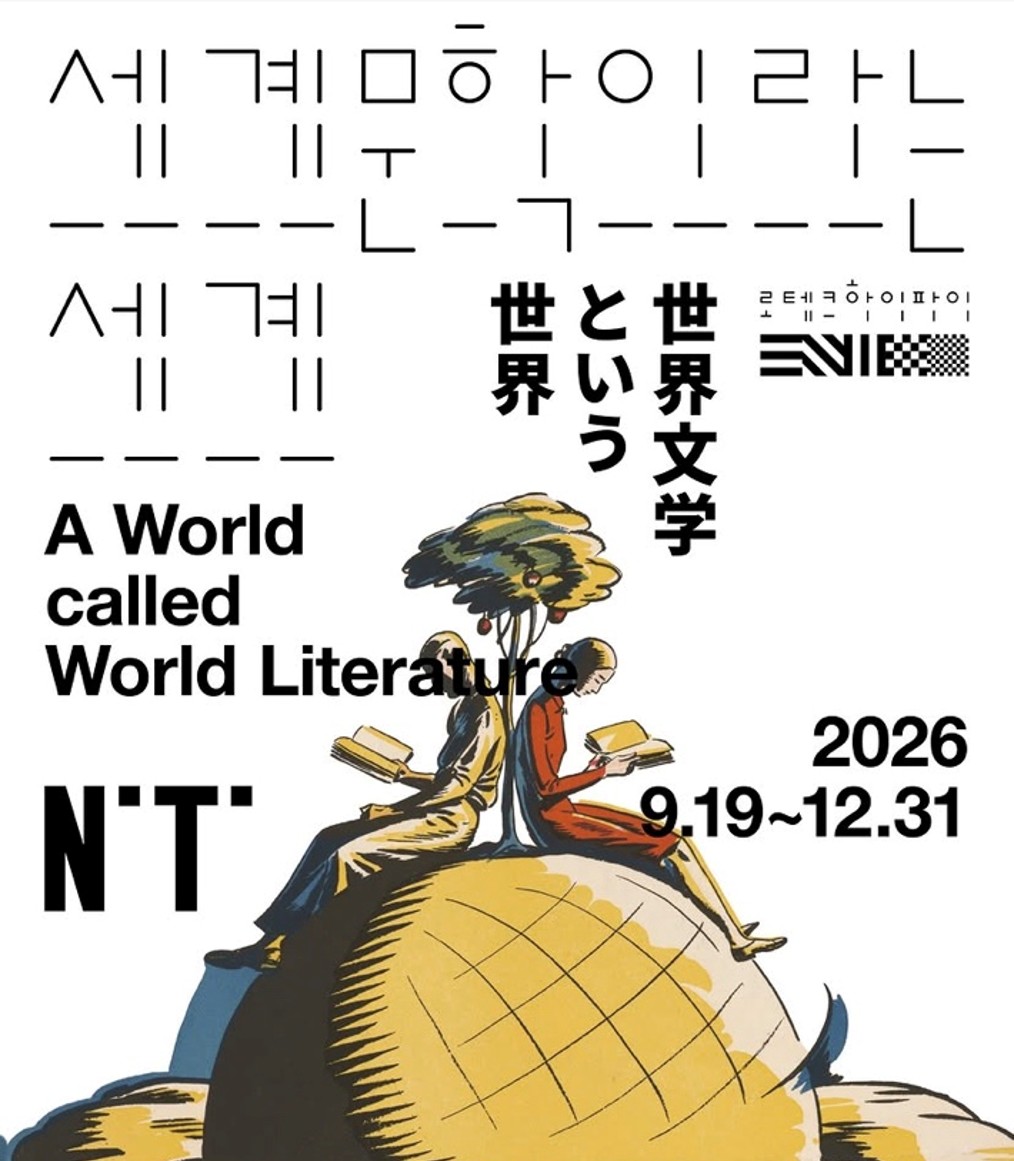
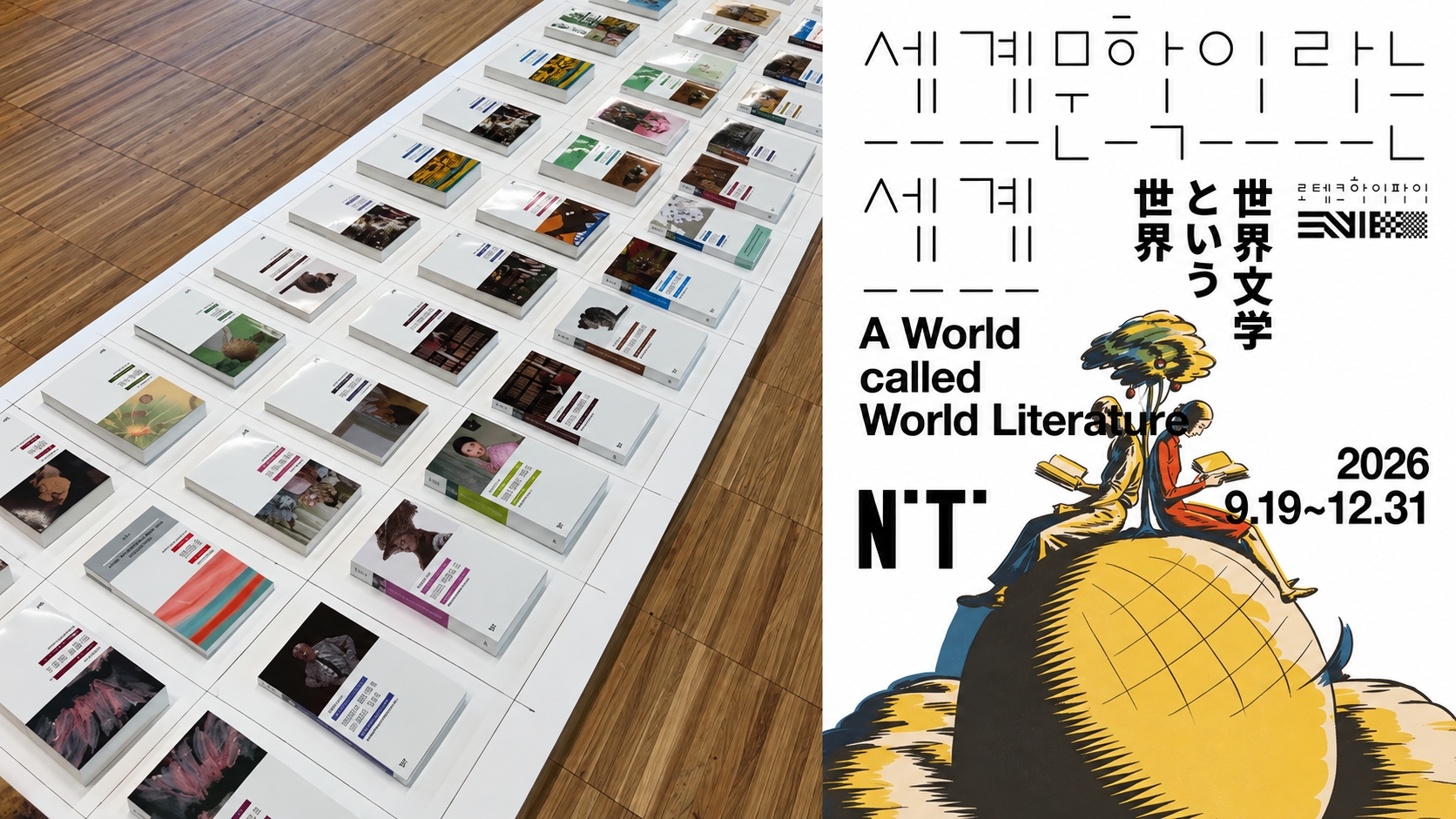
Exhibition poster for 《A World called World Literature》. Image courtesy of Namdaemun Theater.
Viewed together, these books turn the
exhibition’s title into a question: through what choices were the works we
recognize as world literature translated and published? Shifting our attention
from their contents to their covers, volume numbers, and bindings brings into
view the people and institutions that have shaped world literature.
The First and
the Thousandth Volumes
In 1867, Reclam launched its
Universal-Bibliothek in Leipzig, Germany, with Goethe’s Faust, Part
One as its first title. Published in inexpensive, compact editions,
the series expanded from German and European literature to include ancient
texts and philosophy. Reclam’s account of its history explains how changes in
copyright terms and advances in production technology made this broad
circulation possible.
Founded in Britain in 1906, Everyman’s Library
likewise sought to bring the classics to a wide readership. In 1956,
Aristotle’s Metaphysics was published as volume 1000. The
edition presented in the exhibition bears ‘No. 1000’ on its cover. The number
marks the series’ thousandth volume rather than the end of its publication.
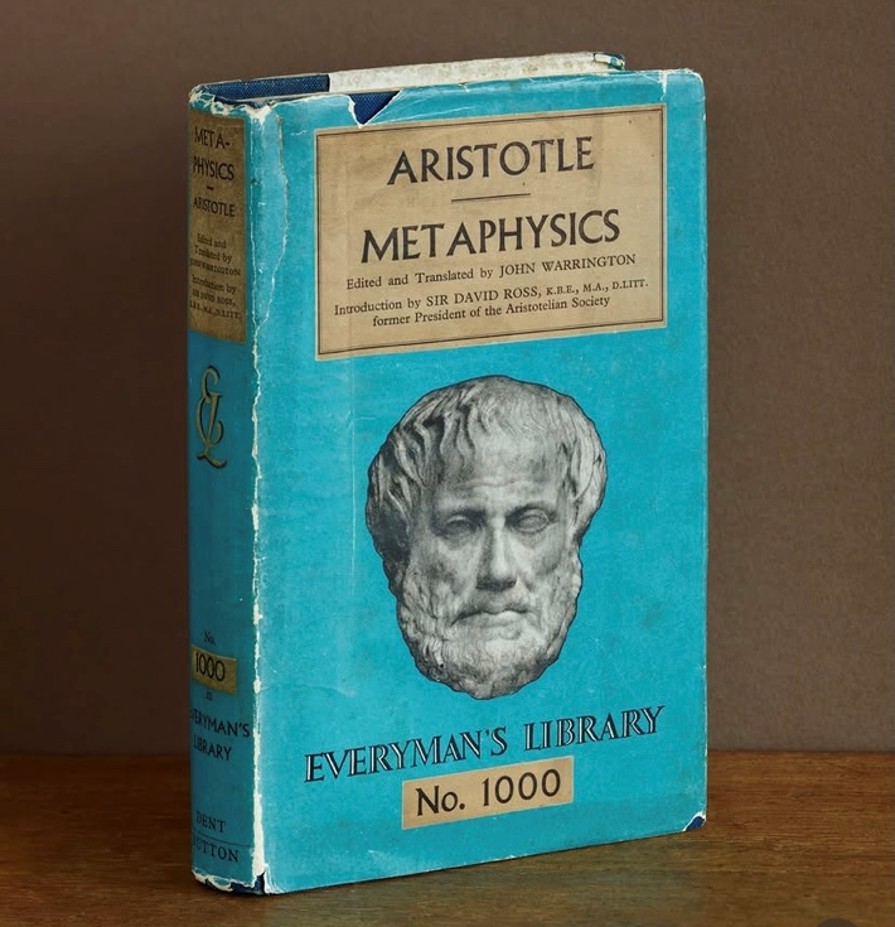
Aristotle, Metaphysics, Everyman’s Library No. 1000. Image courtesy of Namdaemun Theater.
The photographed copy of Metaphysics
offers a way into the exhibition. The inclusion of philosophy in the series
shows how closely literature and general education have been connected
throughout publishing history. Selecting literary works and defining the
knowledge readers should have become part of the same publishing project.
Considering Reclam’s first volume alongside
Everyman’s thousandth also gives volume numbers a significance of their own.
They assign each book a place within a series and alert readers to a larger
catalogue. The sequence of books makes visible the range of the world a
publisher has selected as worth reading.
World
Literature Catalogues across Countries
The practice of bringing the world’s literature
together in a single series developed in many countries. Reclam in Germany and
Everyman’s Library in Britain are prominent examples. In France, the ‘Bibliothèque
de la Pléiade’, launched in 1931 and taken over by Gallimard in 1933, has
published literary works in editions with scholarly editing and annotations.
Despite differences in price, readership, and editorial approach, these series
share a commitment to selecting works and building catalogues intended to
remain in circulation.
In Japan, the name Sekai Bungaku Zenshū (世界文学全集), or ‘world literature collection,’ was used for such
publishing projects. Shinchōsha began its collection in 1927 with the first
volume of Les Misérables and completed it in 1932 with a
total of 57 volumes across two successive projects. Iwanami Bunko, also
established in 1927, took Reclam’s series as a model. Multi-volume collections
and compact paperback series offered different routes to foreign literature and
the classics.
These examples provide a starting point for
considering Korean world literature collections within an international
publishing culture. European classics series, Japanese world literature
collections, and Korean collections of translated works developed literary
catalogues for different readerships and publishing environments. The
exhibition encourages reflection on how selection, translation, editing, and
design shape the category of ‘world literature.’
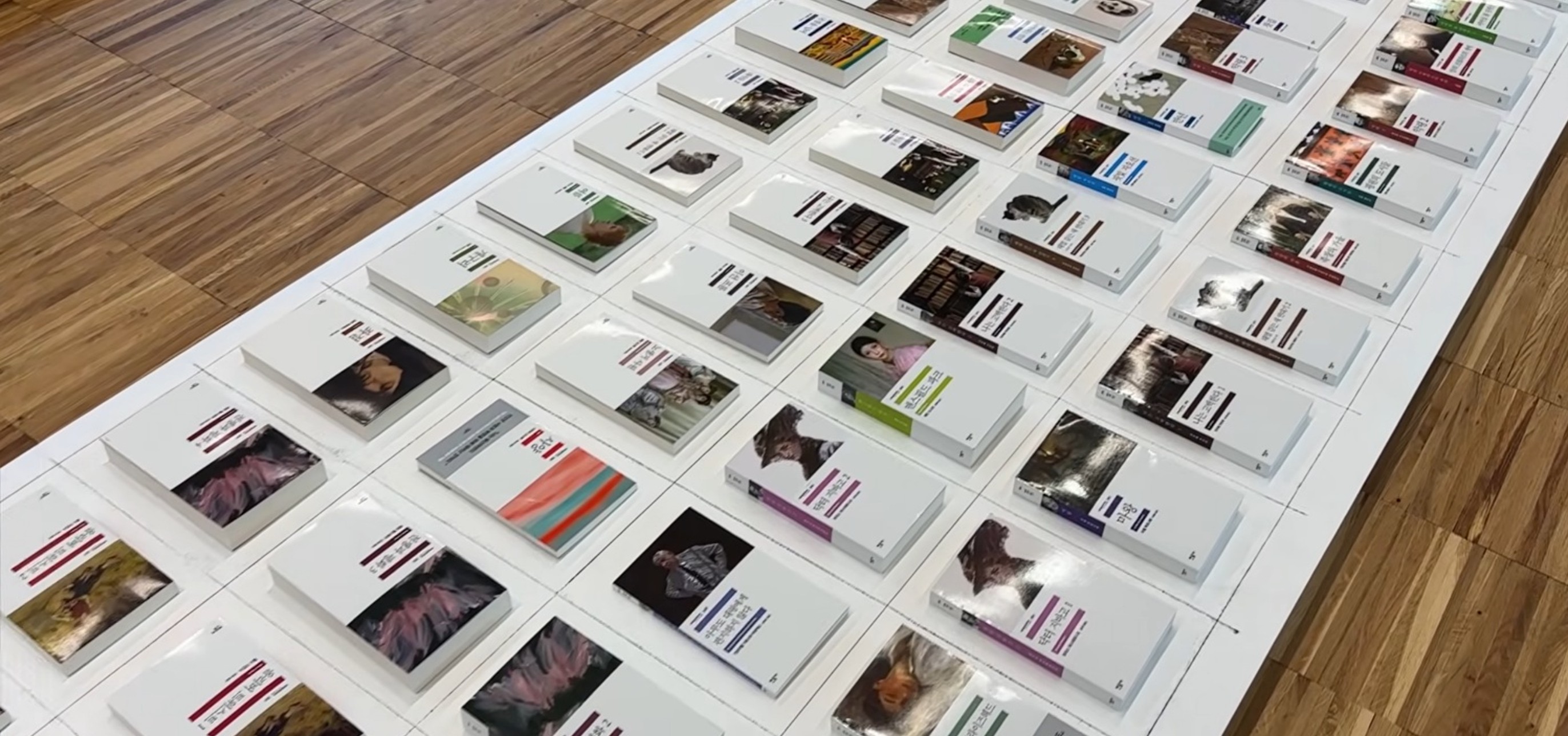
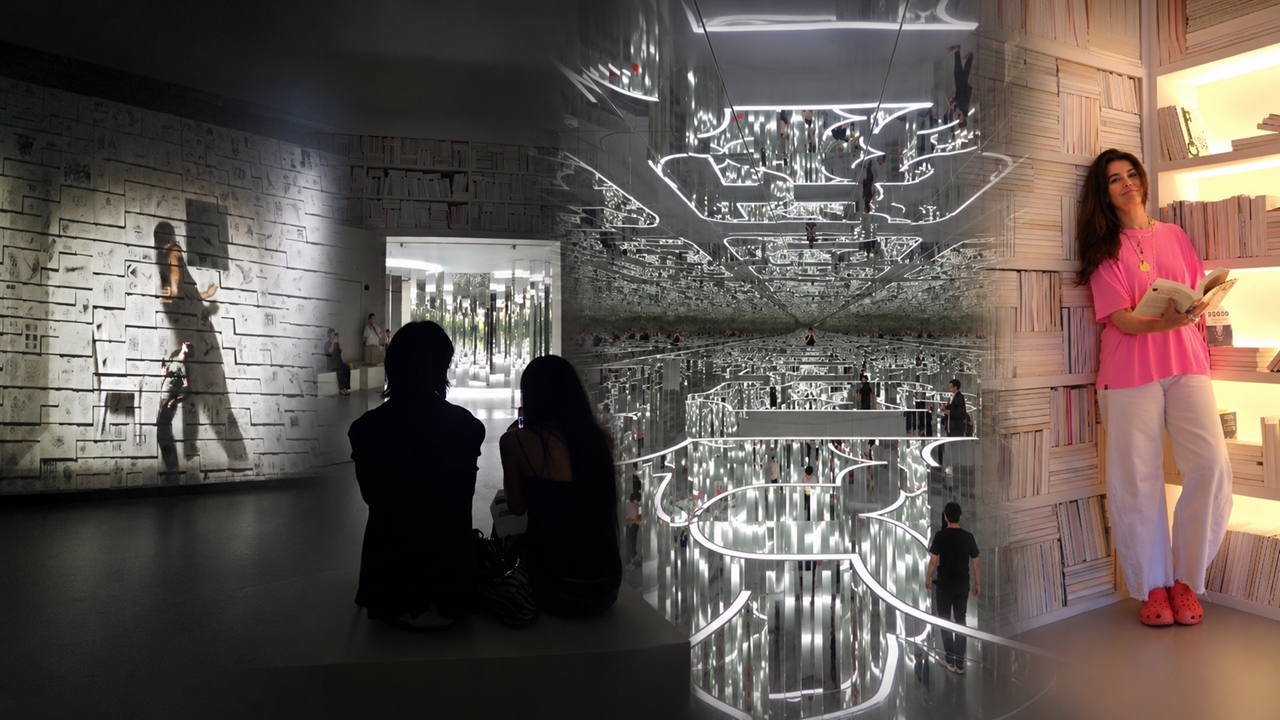
Installation view of 《A World called World Literature》 at Namdaemun Theater. Image: screenshot from a YouTube video by mihachi seoul.
The World on
Korean Bookshelves
In Korea, Eulyoo Publishing launched its world
literature collection in 1959 with Irwin Shaw’s The Young Lions
as its first volume. The collection was completed in 1975 with its hundredth
volume, a collection of German folktales and legends. The
copy of The Young Lions presented in the exhibition offers a
point of connection between foreign classics series and the publication of
translated literature in Korea.
A collection’s uniform bindings bring works
from different countries and periods into a shared visual order. Readers
encounter an individual author’s work while also encountering a catalogue
called ‘world literature.’ Books arranged side by side on a shelf give the
scope of literature a visible form. The experience of cultural education shaped
by world literature collections in Korea can also be understood as a culture
created jointly by catalogues, translation, and book design.
A collection’s table of contents becomes an
important resource in this context. Examining which countries and languages are
most represented, how many women and non-European authors are included, and
which works are repeatedly translated can reveal an era’s literary interests
and selection criteria. These questions are equally useful when comparing
earlier collections with contemporary world literature series.
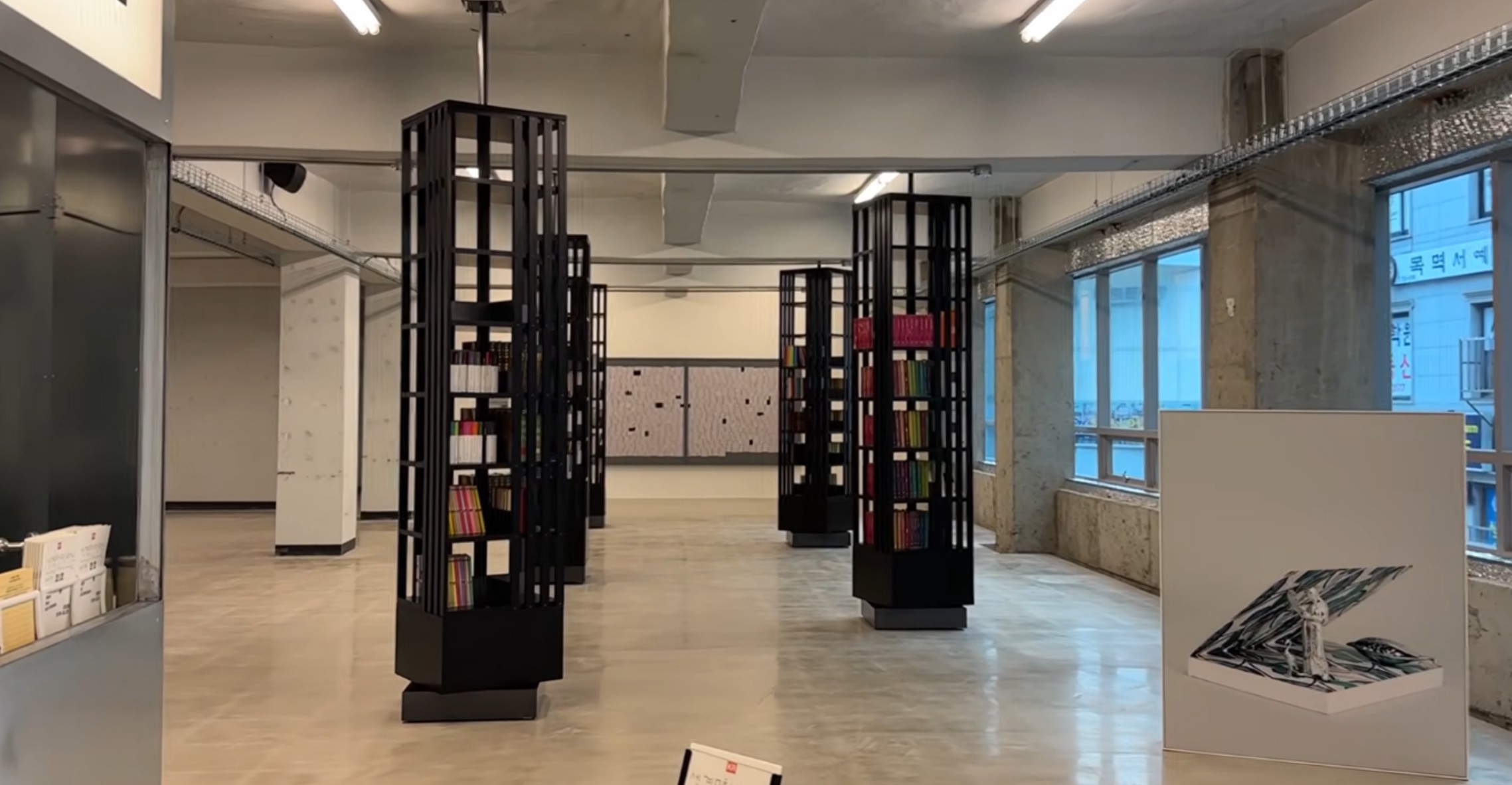
Installation view of 《A World called World Literature》 at Namdaemun Theater. Image: screenshot from a YouTube video by mihachi seoul.
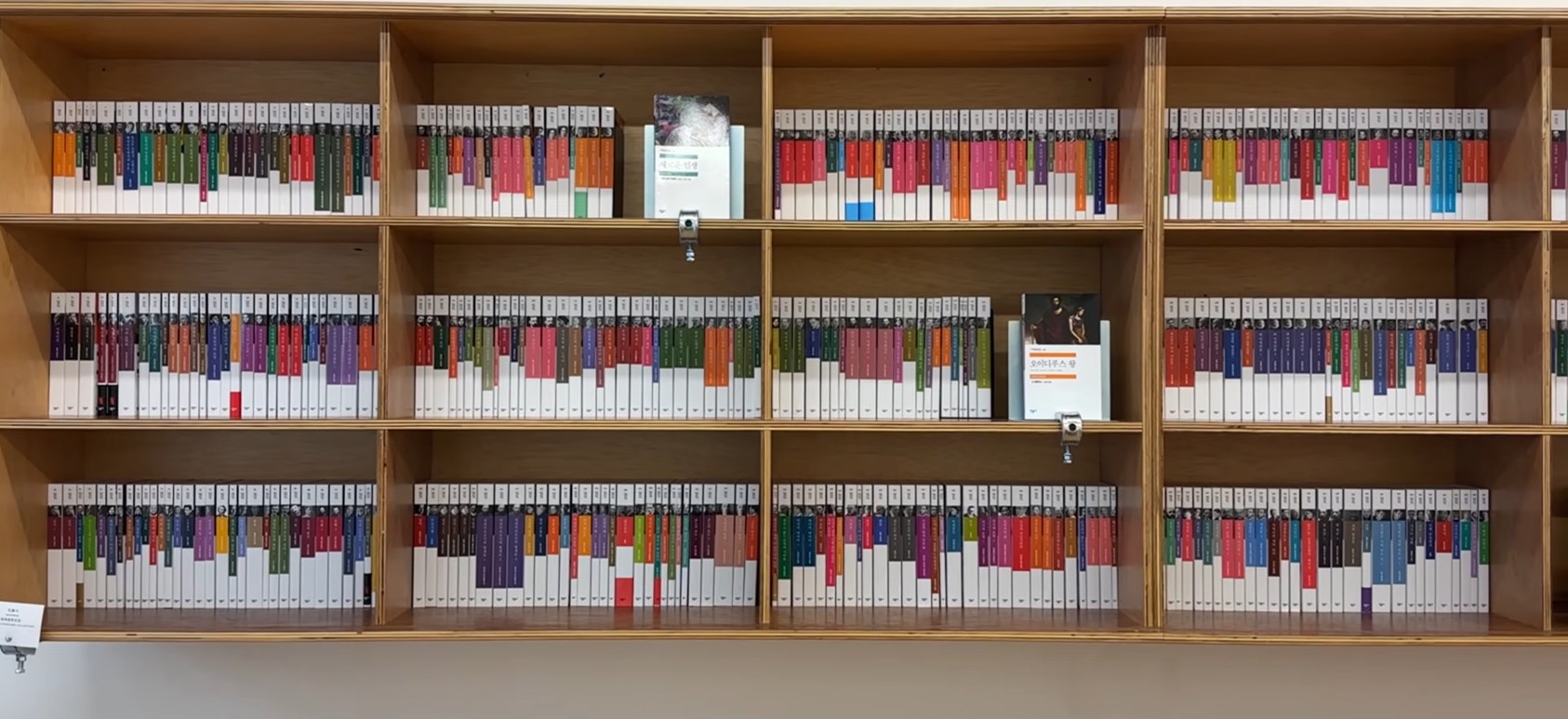
Bookshelves and books on display in 《A World called World Literature》 at Namdaemun Theater. Image: screenshot from a YouTube video by mihachi seoul.
Looking at
Literature and the Materiality of Books
Looking at books in an exhibition space
broadens the focus of reading. The turquoise cover of Metaphysics,
the portrait of Aristotle, the names of its translator and editor, and its worn
corners reveal traces of how a book was made and used. Covers, typography, and
bindings, which carry the text, also become objects of attention.
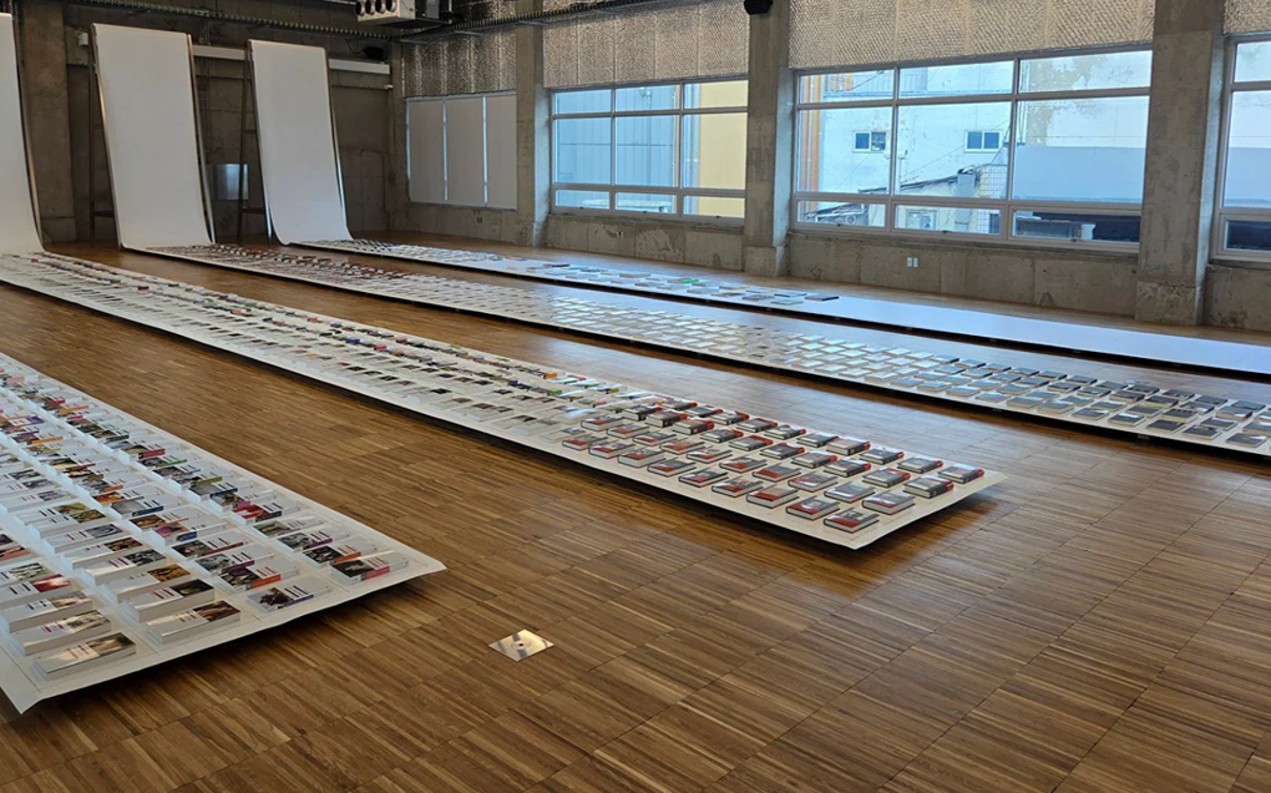
Installation view of 《A World called World Literature》 at Namdaemun Theater. Image courtesy of Namdaemun Theater.
Namdaemun Theater carries on the name and
location of the former cinema that opened in Namdaemun Market in 1959. Exposed
concrete ceilings and pipes, together with long windows, remain visible in the
exhibition space. Low display platforms on the floor and bookshelves offer
different ways of presenting books. The exhibition title on the gridded façade
and the bookshelves visible through the glass doors connect the market
streetscape with the exhibition interior. This spatial arrangement also invites
visitors to approach literature and publishing through design and visual
culture.
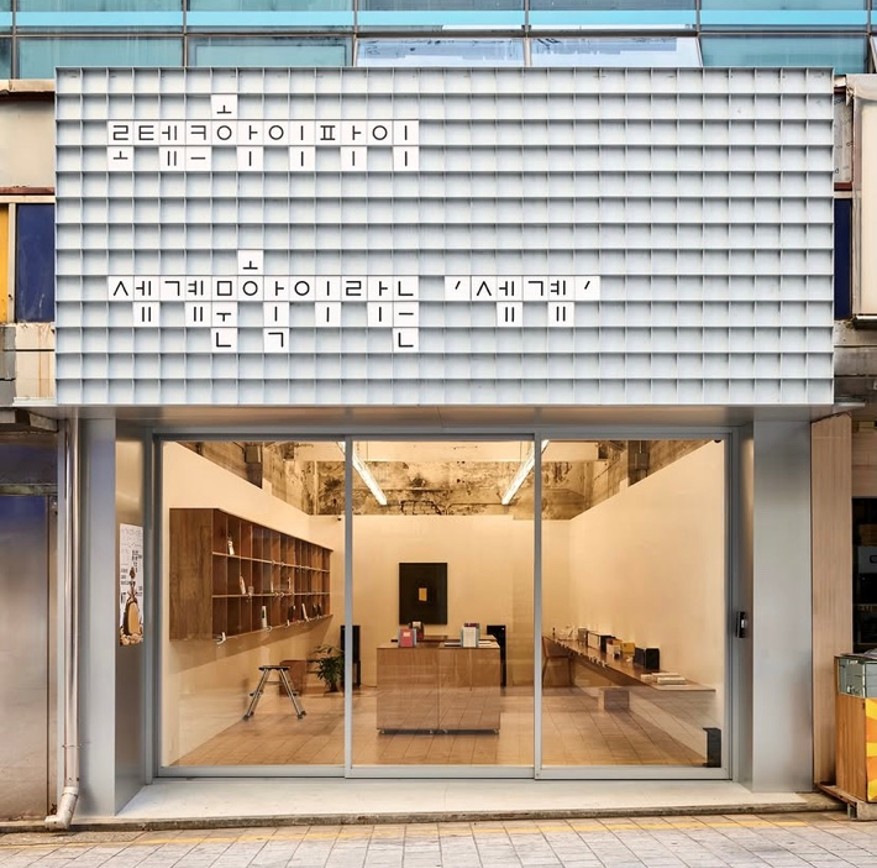
Exterior of Namdaemun Theater, where 《A World called World Literature》 is on view. Image courtesy of Namdaemun Theater.
Participating
Artists and Creators
The exhibition brings together creators working
in literature, photography, music, and spatial design. Photographer Chung
Heeseung explores the methods and limits of photographic representation,
extending her practice into text, installation, and publishing. Novelist Han
Yujoo has experimented with language and narrative form in works including To
the Moon and The Impossible Fairy Tale.
Composer
and music producer Song Youngnam works across ambient and classical music and
improvisation, while the design team Mujindongsa collaborates with artists and
develops exhibition spaces through its work with spaces and objects.
《A World called World Literature》
prompts specific questions. Through which translations and publishers’
catalogues have we encountered the literature of other societies? Which works
in those catalogues are widely read, and which remain largely unfamiliar?
Viewing books as exhibition material offers an opportunity to reconsider the
boundaries of the world literature we know and to expand the world we might
read next.
Exhibition Information
Title: 《A World called World Literature》
Dates: September 19–December 31, 2026
Venue: Namdaemun Theater
Address: 25-8 Namdaemunsijang-gil, Jung-gu, Seoul
Participants: Kang Juhong (강주홍), Kim Seungil (김승일), Kim Yuja (김유자), Kim Hwajin (김화진), Noh Gihun (노기훈), Song Youngnam (송영남), Song Seungeon (송승언), Seo Yunhu (서윤후), Seok Yundong (석윤동), Mujindongsa (무진동사), Lee Soyeon (이소연), Chung Heeseung (정희승), Han Yujoo (한유주), Hwang Inchan (황인찬)