On view at
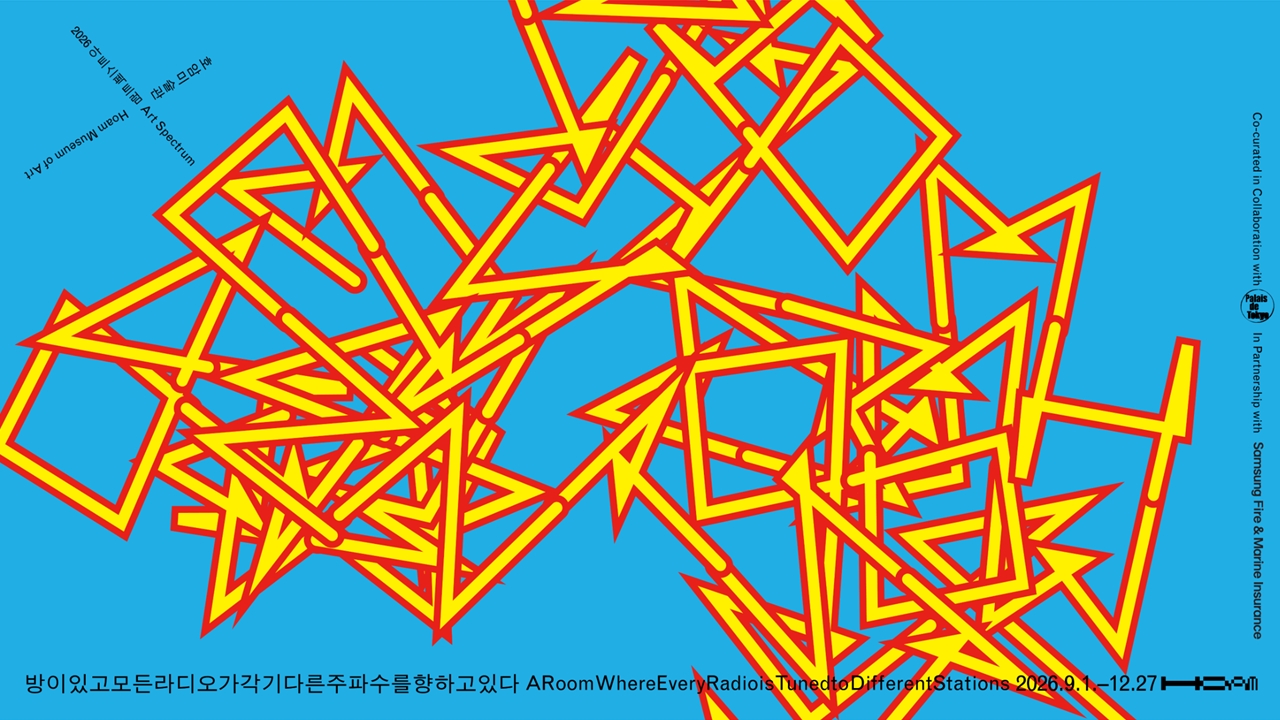
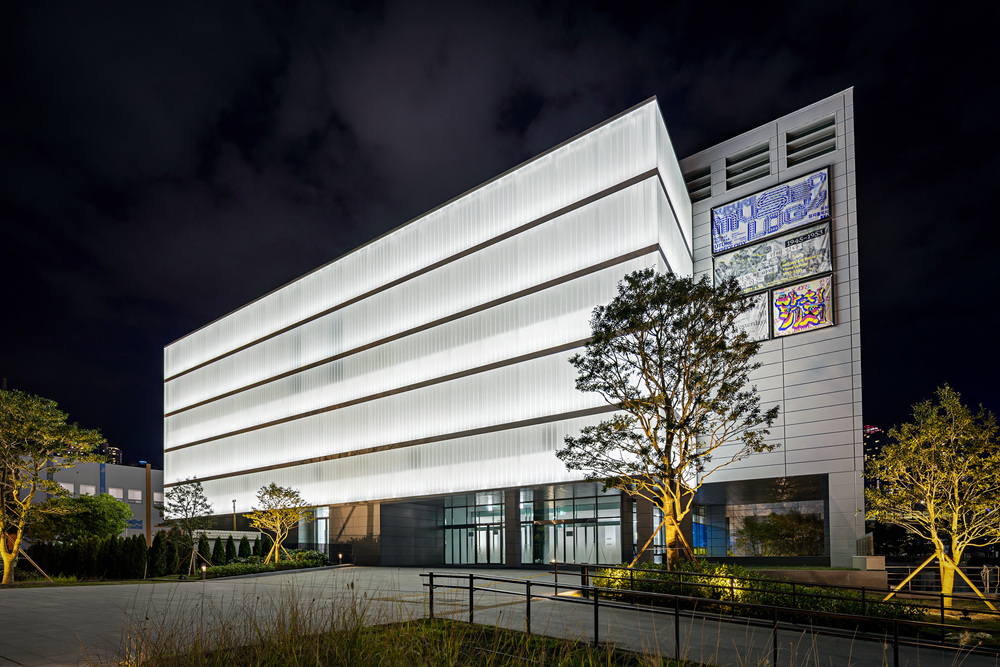
Hoam Museum of Art from September 1 to December 27, 2026, Art Spectrum: 《ARoomWhereEveryRadioIsTunedtoDifferentStations》 marks a shift from a program dedicated to
discovering Korean artists toward an internationally co-curated exhibition.
Organized in
collaboration with Palais de Tokyo in France, this edition brings together 23
artists and collectives from 10 countries, with a particular focus on Asia. It
presents 63 works spanning visual art, architecture, film, design, music, and
other creative practices.
This broader
geographic and disciplinary scope also reshapes the program’s purpose and the
contexts in which artists are understood. Having introduced new artists within
the Korean art scene, Art Spectrum now connects practitioners from different
regions, creating opportunities to reconsider Korean artists’ work through
these encounters. Understanding the exhibition therefore requires attention
both to individual works and to this institutional shift.
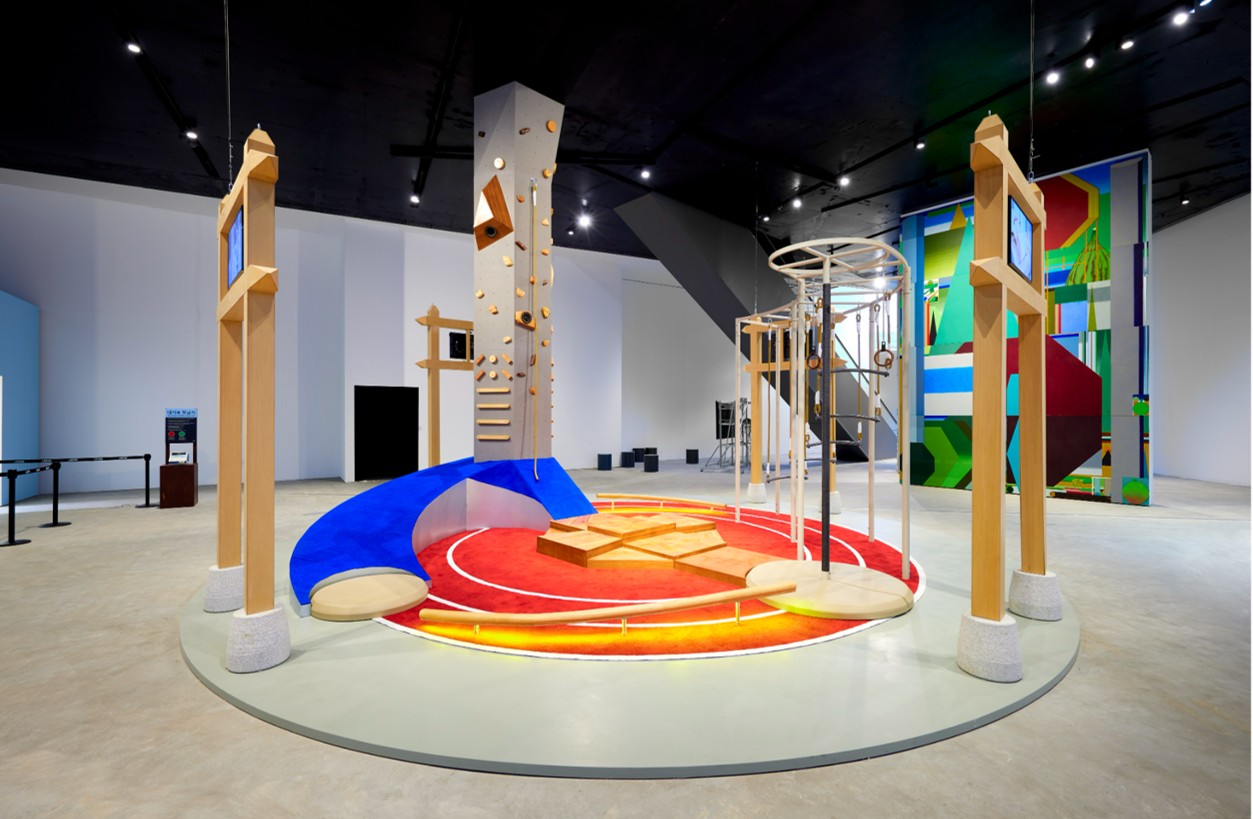
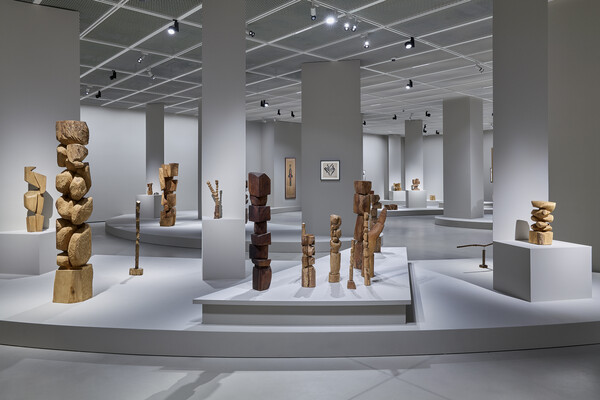
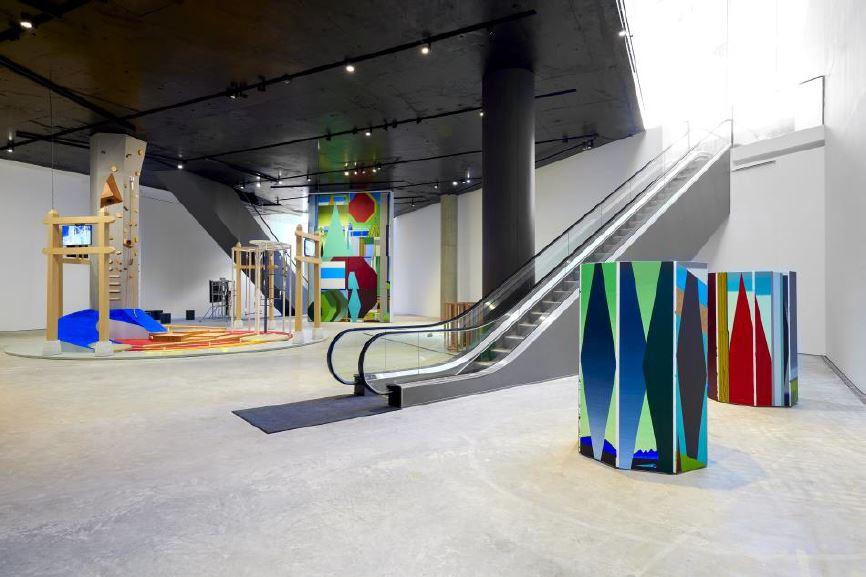
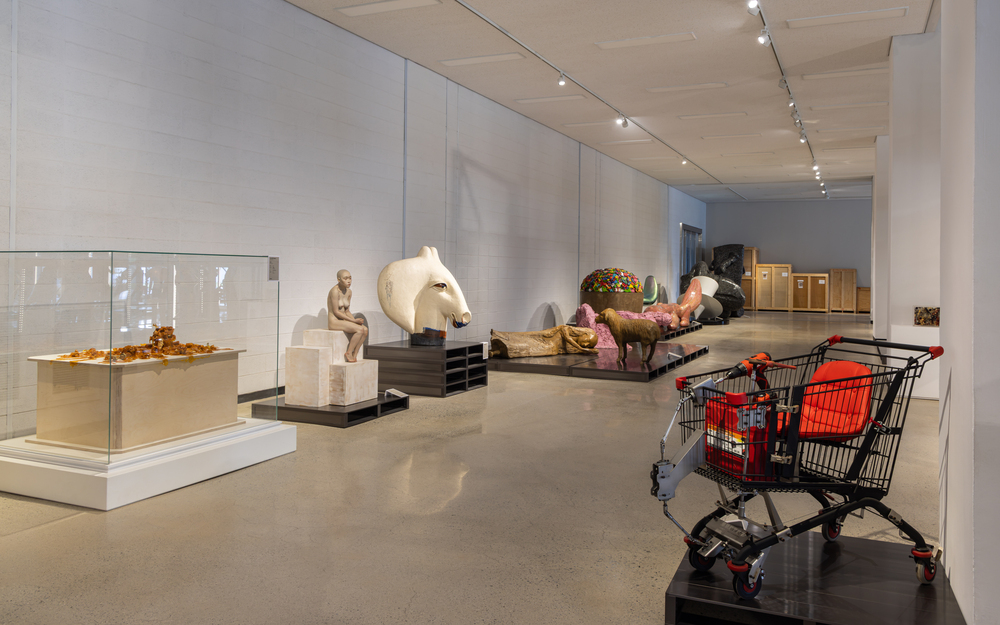
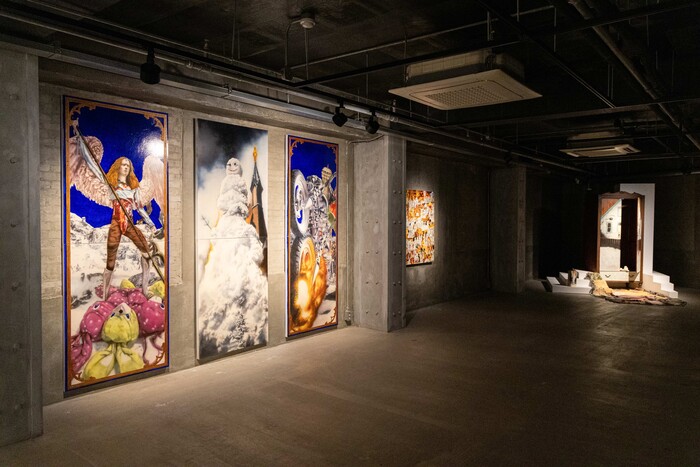
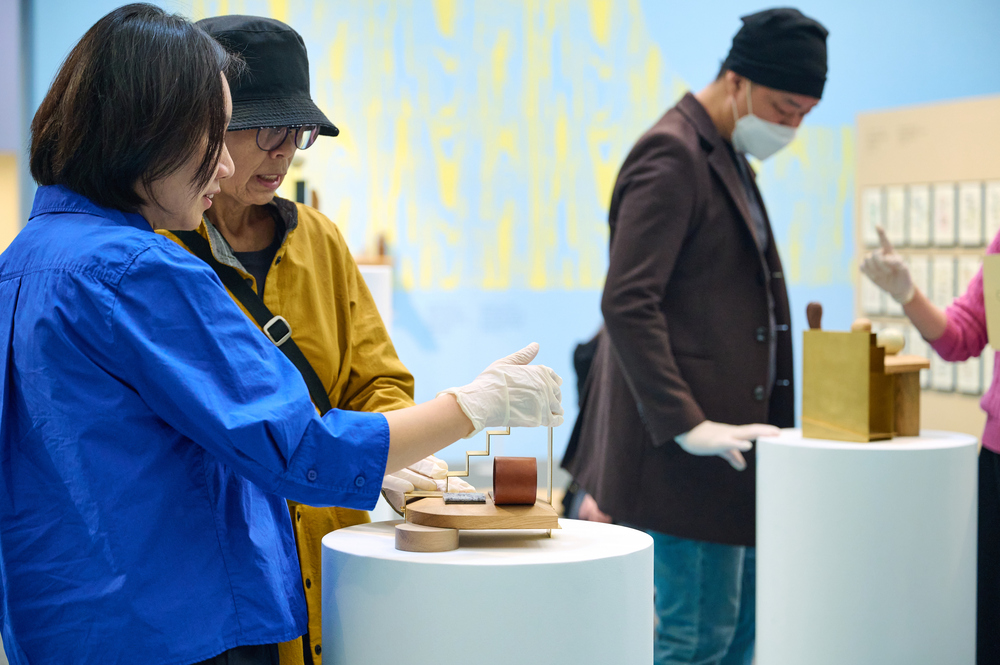
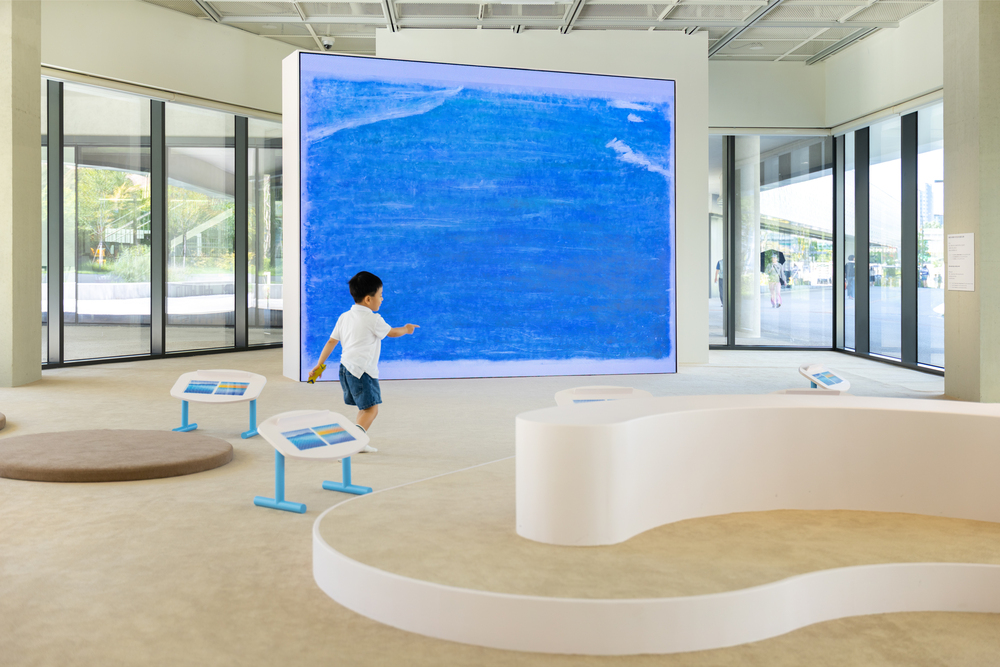
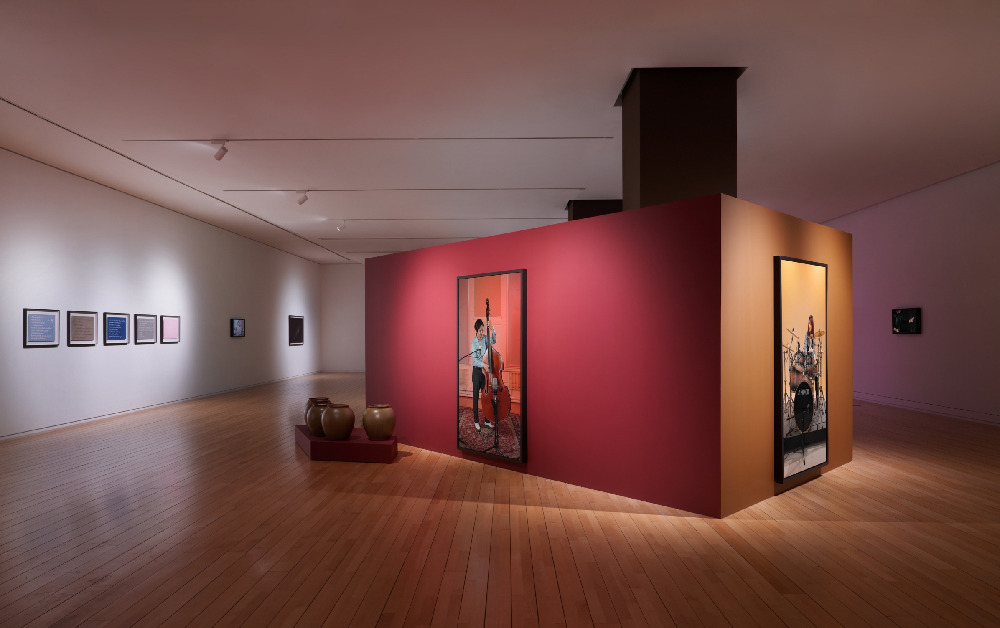
Somokjang Semi (Yoo Hyemi), Physical Training Ground [1], installation view, Art Spectrum 2022, Leeum Museum of Art. Photo: Leeum Museum of Art.
A New Direction for a Program Supporting Korean Artists
Established
in 2001, Art Spectrum has served as a platform for discovering and supporting
emerging Korean artists. A significant turning point came with 《Dream Screen》 in 2024. With Rirkrit Tiravanija as artistic director and Hyo
Gyoung Jeon and Jiwon Yu as co-curators, the program expanded its scope to
include artists from across Asia. The exhibition explored the bodily sensations
and perceptions of reality of a generation that had grown up experiencing the
world through screens.
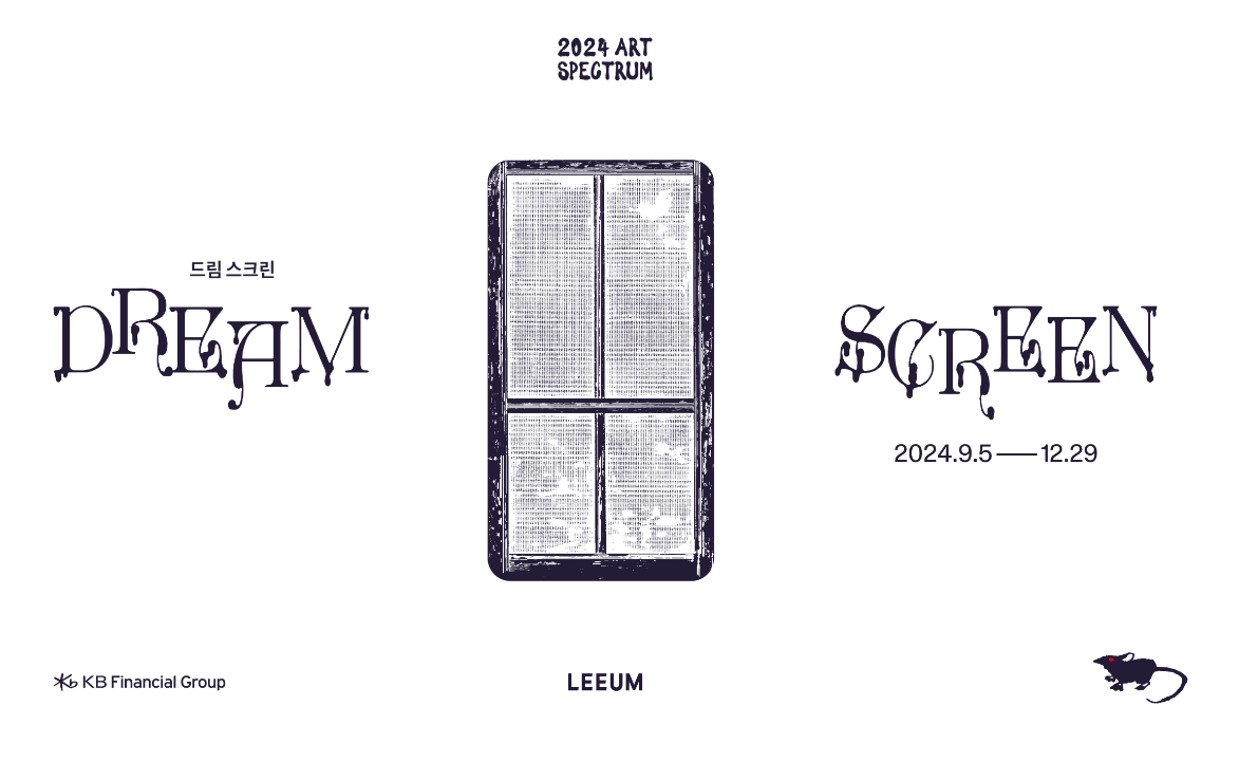
Official poster, Art Spectrum 2024: 《Dream Screen》. / Photo : Leeum Museum of Art
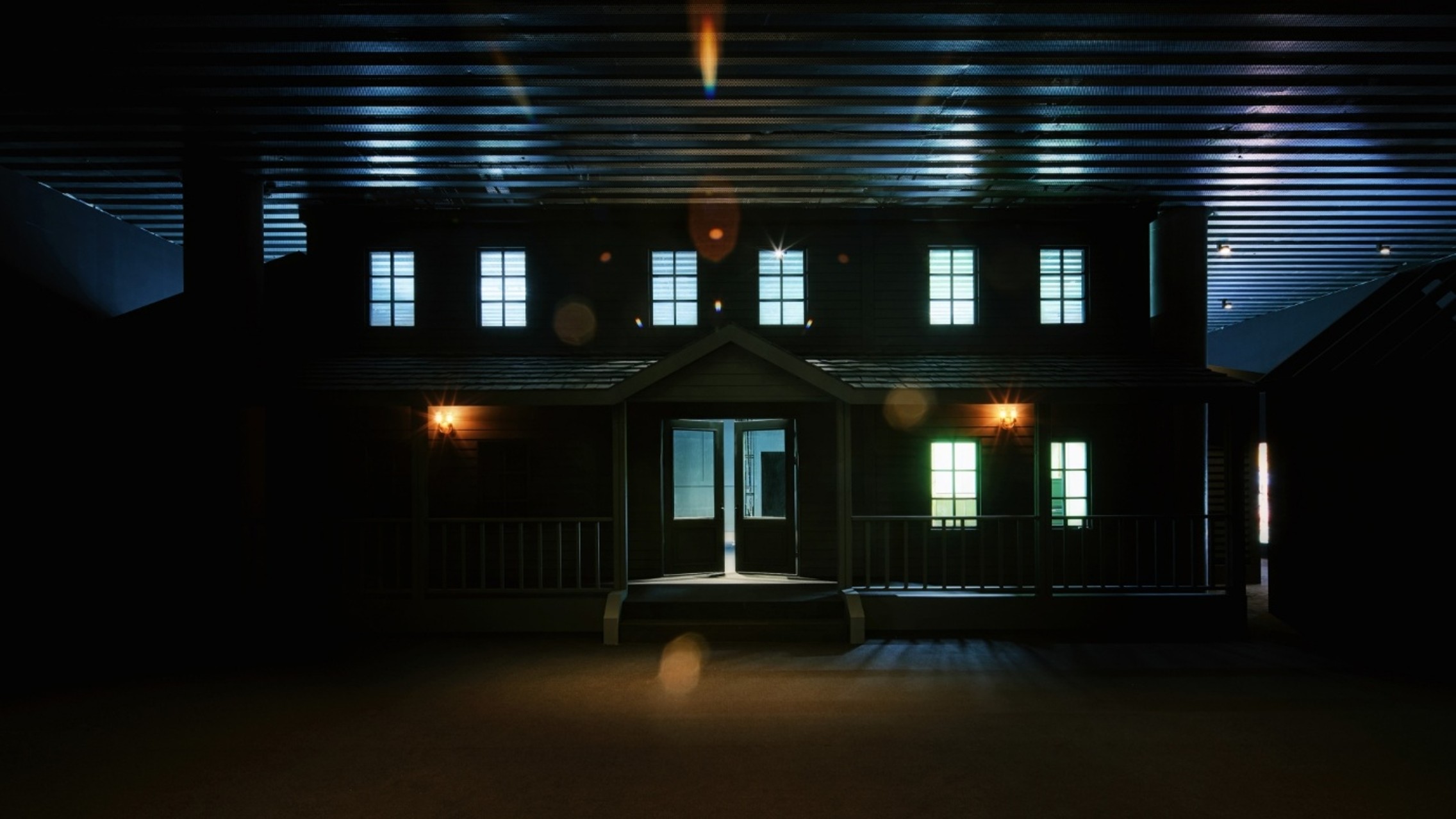
Installation view, Art Spectrum 2024: 《Dream Screen》. / Photo : Leeum Museum of Art
The 2026
edition continues this expansion while reconfiguring its curatorial framework.
Co-curated by Hyo Gyoung Jeon, June Young Kwak, and Palais de Tokyo’s Hugo
Vitrani, it also moves from Leeum to Hoam. Its central approach is to bring
works shaped by different cultural and social circumstances into conversation
while preserving their distinctions, rather than subsuming them under a single
identity or narrative.
This shift
broadens the frame of reference for interpreting Korean artists’ work.
Practices previously considered primarily in terms of generations and trends
within the Korean art scene are placed alongside experiences of labor and urban
life, technology and the body, migration and identity across Asia. The
particular qualities of Korean artists’ work can become more legible through
these relationships, as viewers consider how artists using similar media or
addressing shared concerns respond to different social circumstances.
Why Collaborate with Palais de Tokyo?
The
collaboration with Palais de Tokyo brings together the two institutions’
efforts to discover emerging artists. In an interview, Vitrani cited their
shared interest in younger artists as a basis for the partnership and expressed
a desire to learn about artistic practices in Asia. Palais de Tokyo’s official
materials also describe its expanding engagement with artistic and cultural
scenes across the region. The exhibition is part of the official program
marking the 140th anniversary of diplomatic relations between France and the
Republic of Korea.
Vitrani has
explored the relationship between urban culture and art institutions and
initiated the “Lasco Project”, which experiments with urban art in Palais de
Tokyo’s subterranean spaces. His curatorial work offers a useful context for
considering how subcultures intervene in different areas of the museum in this
exhibition.
The
partnership is significant in that a Korean institution provides the venue and
conditions for production, while curators with experience in different art
scenes connect artists and practices. Korean contemporary art’s international
engagement grows both through artists’ participation in exhibitions abroad and
through Korean institutions’ capacity to initiate international conversations.
Art Spectrum’s evolution demonstrates the potential of this latter approach.
Connecting Practices Through “Asia”
The
exhibition connects creators from different regions with Asia as its central
focus. The participation of French artist Ibrahim Meïté Sikely makes clear that
its scope extends beyond artists who are nationals of Asian countries.
Engagement with Asian cultures, cultural exchange, and movement between regions
also offer ways to understand its composition. The Korean and French curators
seek points of connection between practices while retaining the differences in
their backgrounds.
These
connections can be found in workplace hazards, bodies moving through urban
infrastructure, and the ways architecture directs visitors’ movement.
Considering Korean artists’ work alongside practices from elsewhere opens up a
broader view of how they respond to contemporary concerns.
Giving Spatial Form to Labor and the Body
Chinese
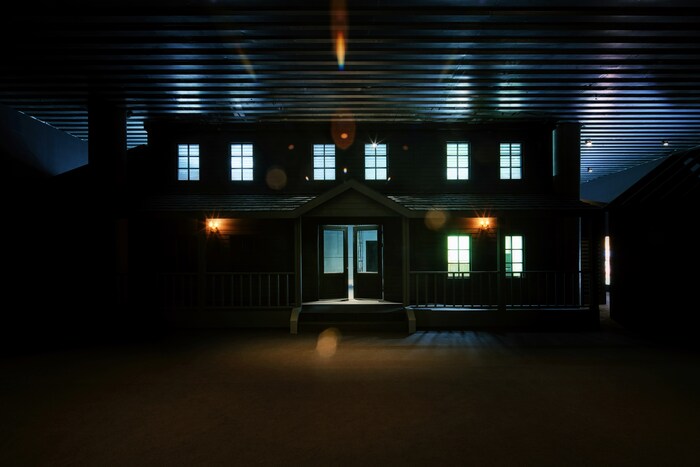
artist Ruofan Chen’s Suffocating originates in the poor
ventilation and dust exposure she witnessed at a furniture factory in Wuhan. A
house-like structure, tilted as though on the verge of collapse, brings the
risks borne by workers who produce everyday objects into the exhibition space.
The image of a house as a source of shelter and stability is overlaid with the
precarity of production, prompting viewers to consider both the appearance of
finished objects and the working conditions behind them.
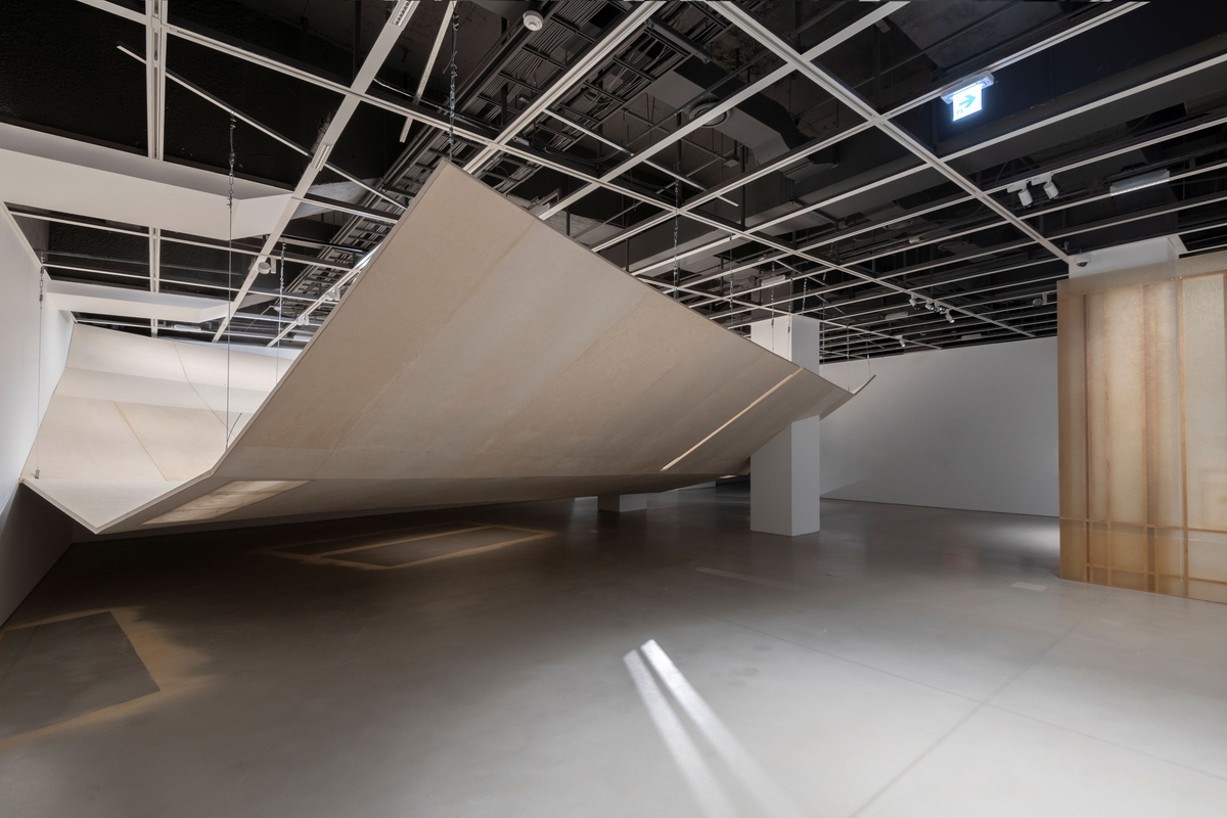
Ruofan Chen, installation view. / Photo: Hoam Museum of Art
Dong Hyun
Lee’s Hanging Baby Monkey combines pipes, fabric, light, and
smoke. Linked to Sleeping Mother Monkey, also included in
the exhibition, the work connects the mother’s and infant’s bodies through a
structure carrying light, smoke, and sound. Its pipework evokes both the
interior of a living organism and the service systems of a city.
The
combination of industrial apparatus and the forms of vulnerable living
creatures reveals how one body depends on another. The flows between them
suggest connections that sustain life and can also be read in terms of care and
interdependence.
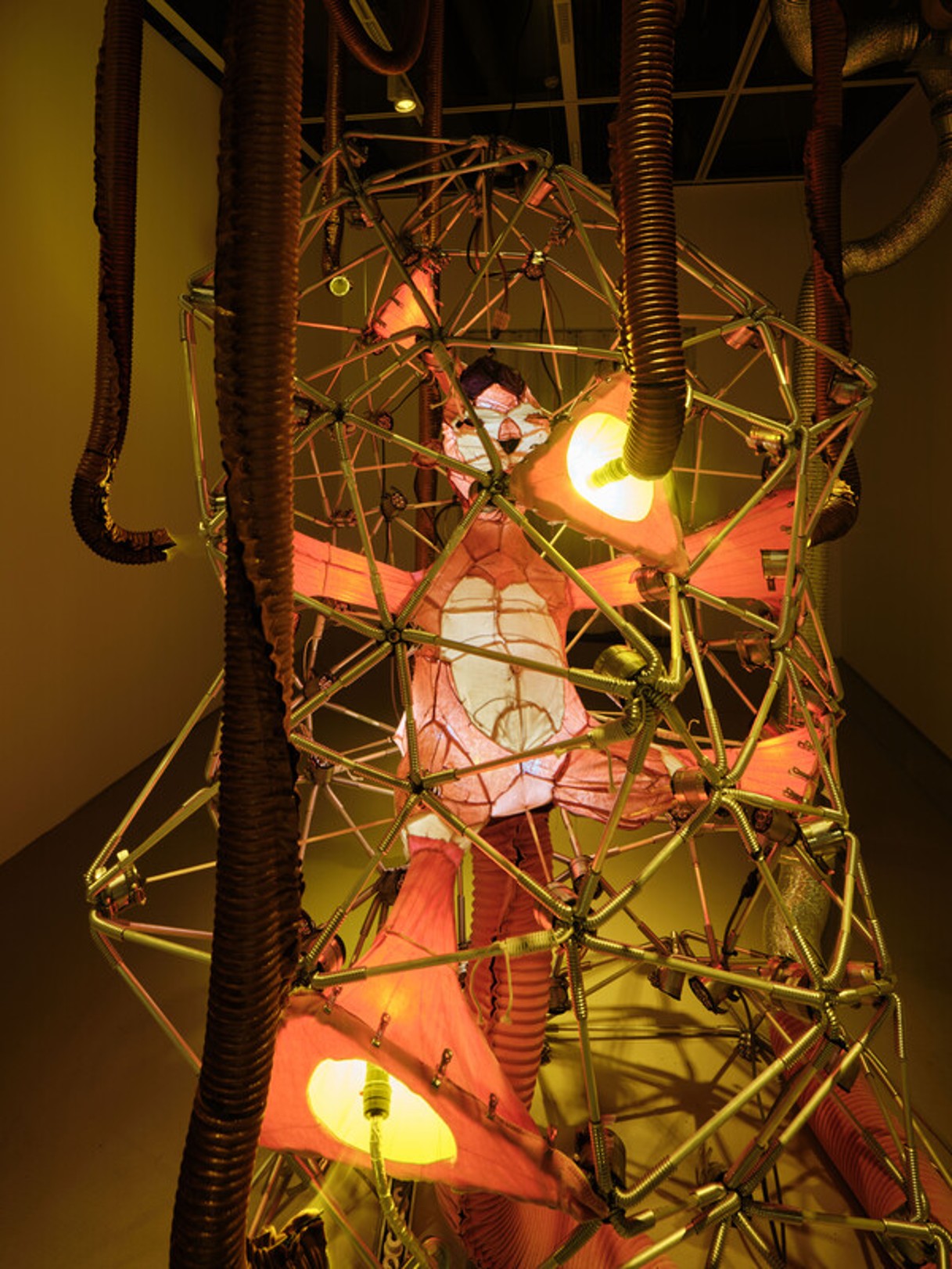
Dong Hyun Lee, Hanging Baby Monkey, 2026. Aluminum pipes, stainless-steel ties, rubber rings, rope, clamps, clothespins, fabric, corrugated aluminum tubing, thread, light bulbs, electrical wiring, hook rings, seven-outlet splitter, ducting, electric fog machine, and centrifugal fan. Floor component: 220 × 180 × 200 cm; ceiling component: dimensions variable. Installation view. Commissioned by Hoam Museum of Art. Image courtesy of Hoam Museum of Art. / Photo: Yeonje Kim.
Read
together, the two works draw attention to the environments surrounding the
body. Chen exposes the hazards of the workplace, while Lee expresses the
dependence of living beings through flows connecting two bodies.
Urban Structures and Visitors’ Movement
The Japanese
artist collective SIDE CORE’s rode work ver. under city
connects subterranean urban infrastructure with the movements of skateboarders.
Drainage facilities, tunnels, and maintenance corridors become linked through
new routes traced by moving bodies. The four-channel video reveals parts of the
city that are ordinarily difficult to access and explores the possibilities of
using spaces beyond their designated functions.
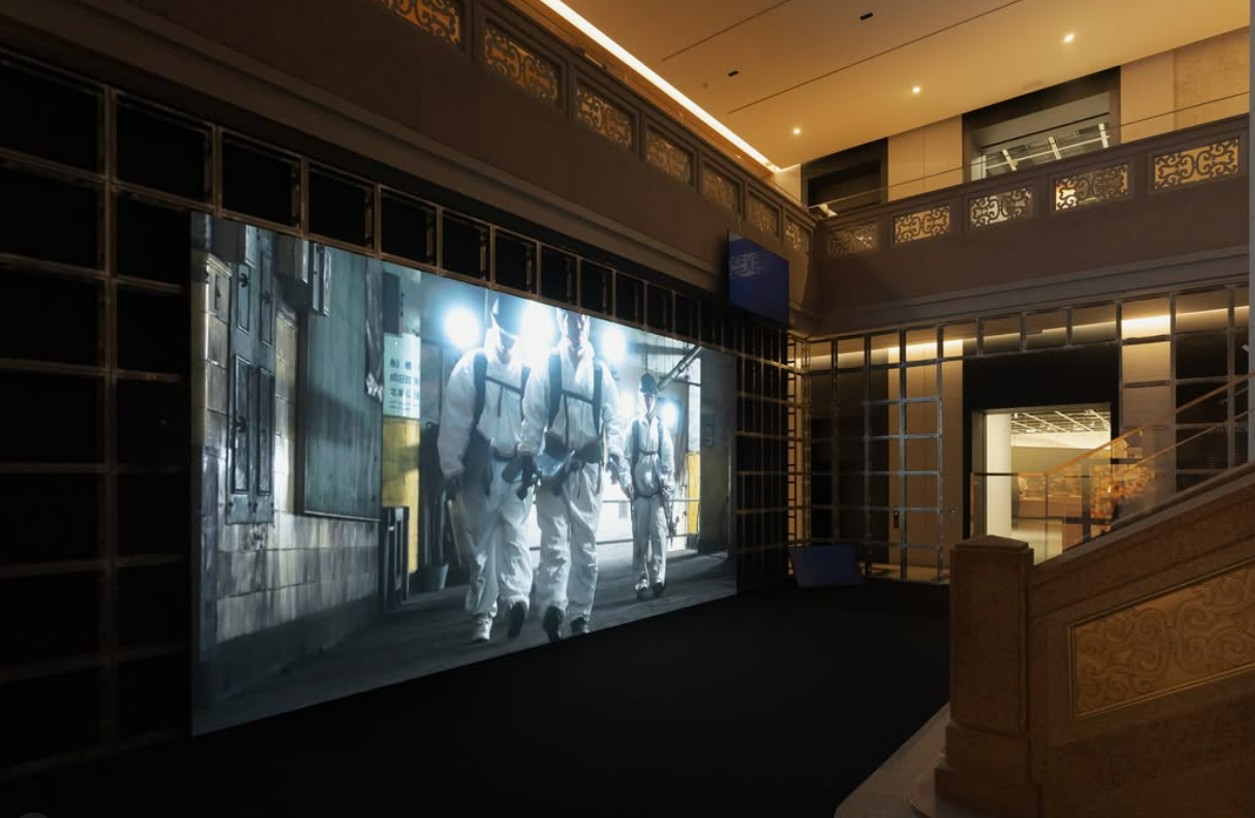
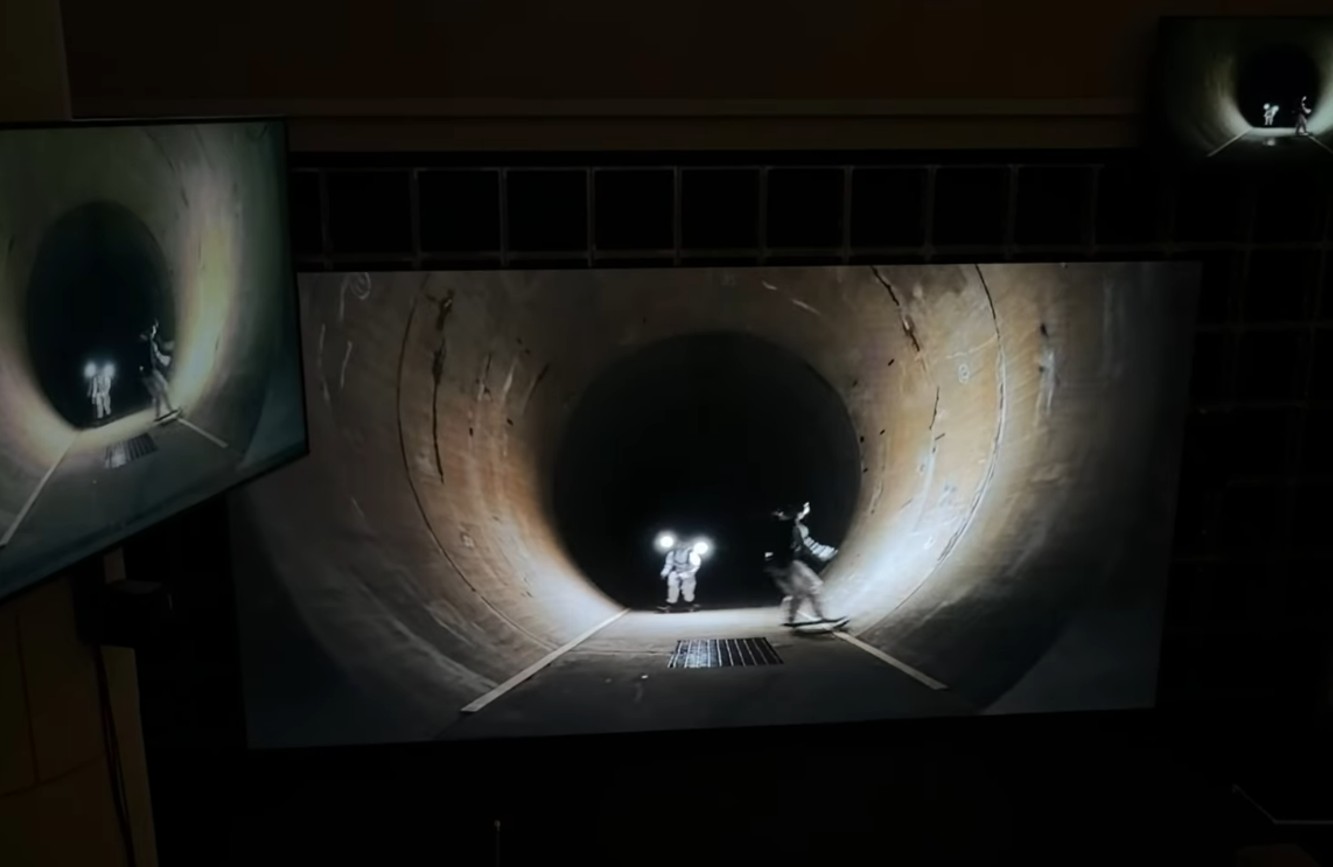
SIDE CORE, rode work ver. under city, 2023, 4-channel video, color, 11.2-channel sound, 16min 40sec/ Photo: Hoam Museum of Art
Ria Choi’s Slopes,
Pillar of Pillars, and Welcome Fence
divide and traverse the gallery, affecting visitors’ sightlines and movement.
Elements that support or partition space take sculptural form, encouraging
viewers to examine materials and shapes while becoming aware of their own
position within the room.
The title Welcome
Fence brings an expression of hospitality together with a device that
marks a boundary. It invites reflection on how a space welcomes people while
also directing their movement.
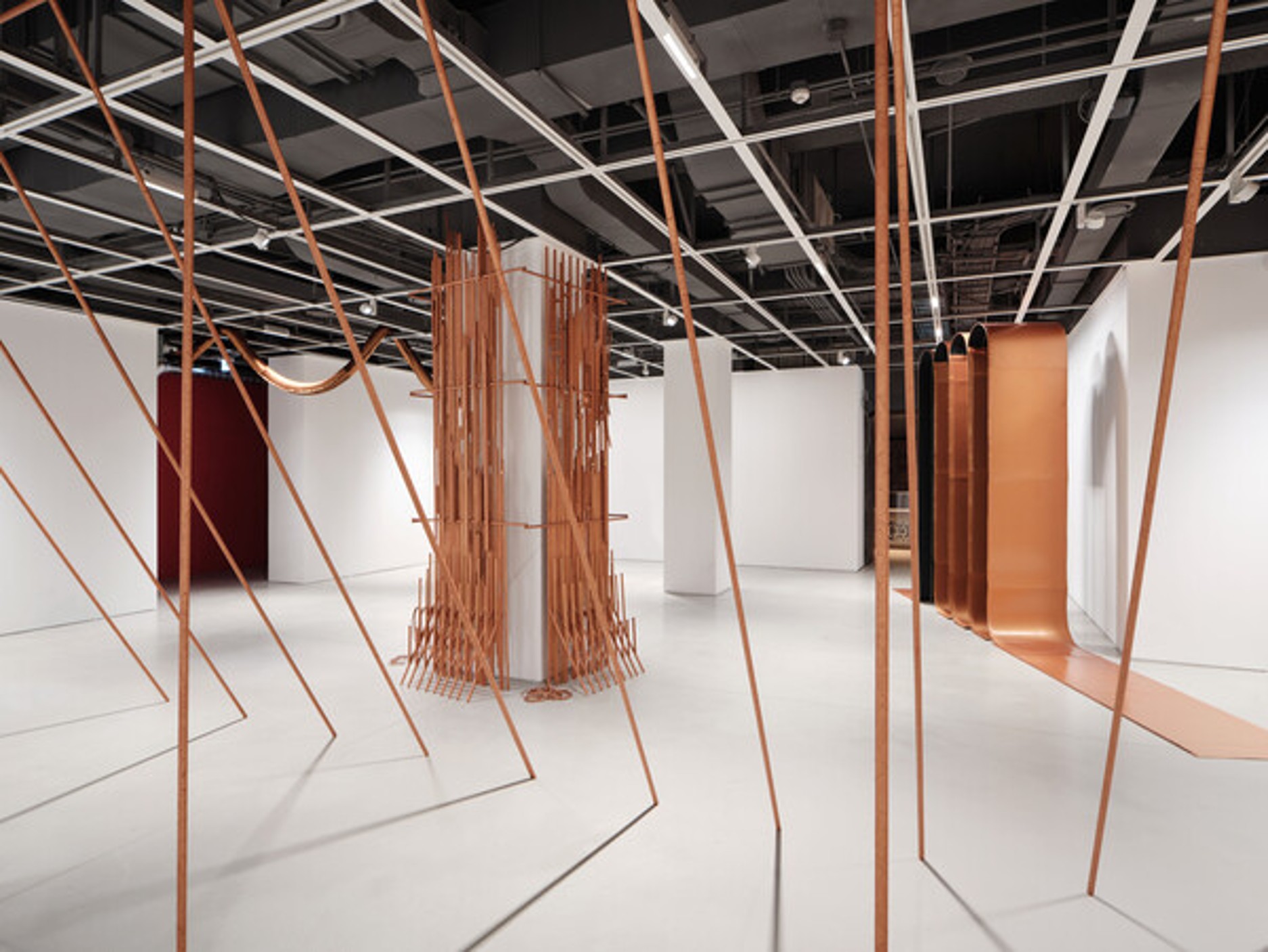
Ria Choi, Slopes, 2026; Pillar of Pillars, 2026; Welcome Fence, 2026. Installation view. Image courtesy of Hoam Museum of Art. / Photo: Yeonje Kim.
Both SIDE
CORE and Choi draw attention to bodies using space. Movement through the city’s
underground and visitors’ passage between sculptures offer two ways of
experiencing spatial structures anew.
Transforming the Garden: Looking, Walking,
and Resting
Rachel Youn’s
Parade Paradis II places a rotating artificial palm tree
among the living trees at Hoam Museum of Art. Its mechanical movement
introduces an unfamiliar rhythm into the garden’s familiar landscape, while the
juxtaposition of living and fabricated trees brings the distinction between
nature and artifice into focus.
The
juxtaposition of the traditional garden and the palm tree’s associations with
distant, exotic places also invites reflection on how images of paradise are
constructed. The work draws its meaning from the tension between these
associations and the cultural character of Hoam’s garden.
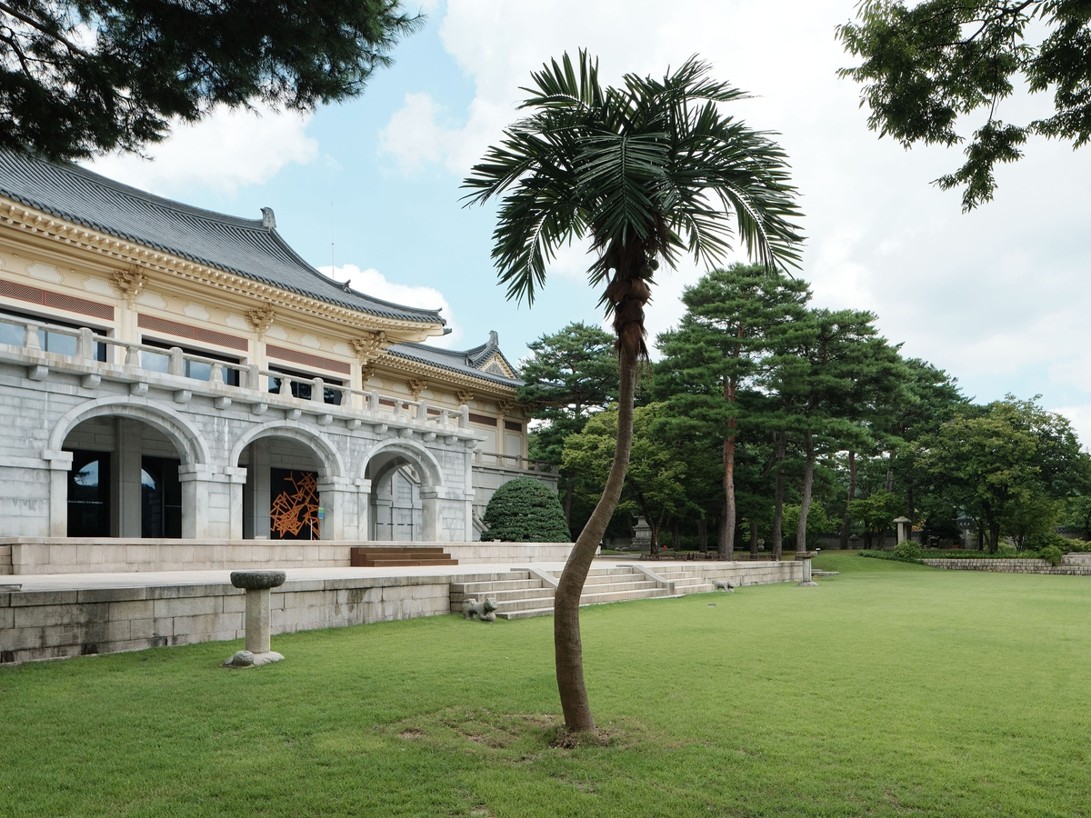
Rachel Youn, Parade Paradis II, installation view. / Photo: Hoam Museum of Art.
Japanese
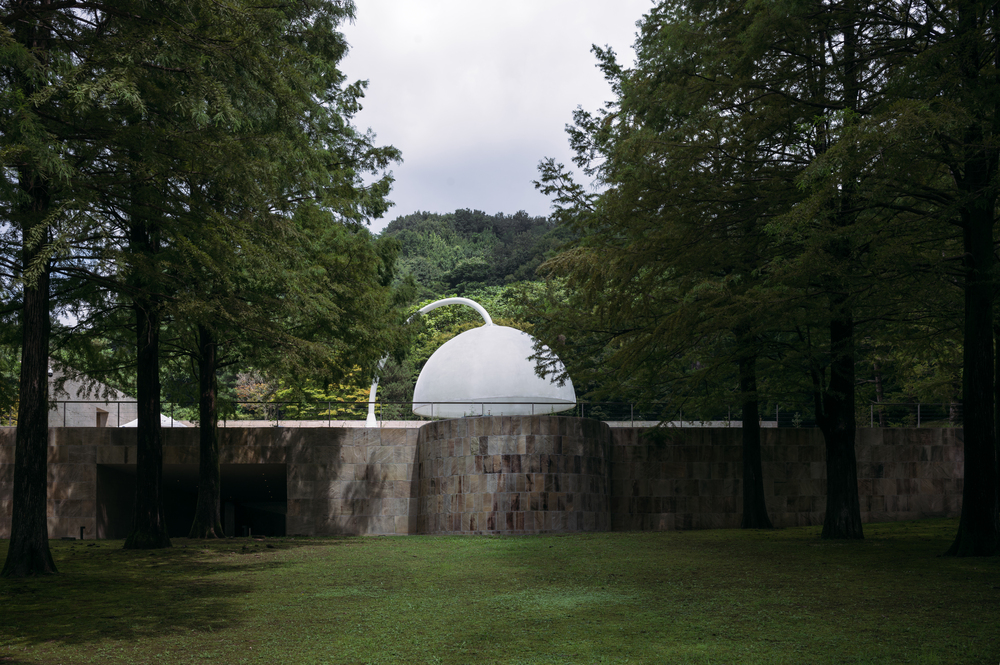
architect Suzuko Yamada’s Hanging Moon suspends an
eight-meter-wide hemispherical canopy in the garden, creating a place where
visitors can linger beneath it. Observing how this large form is suspended
against gravity, and resting beneath it, are both part of experiencing the
work.
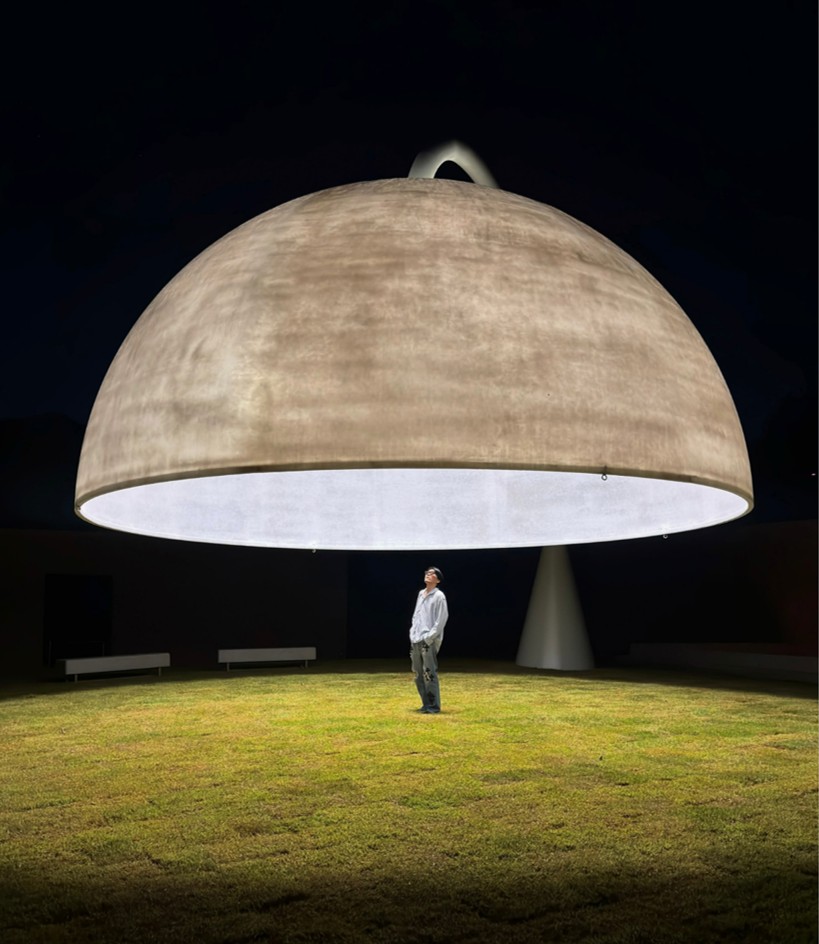
Suzuko Yamada, Hanging Moon, 2026. FRP, steel, reinforced concrete. Commissioned by Hoam Museum of Art. / Photo: Leeum Museum of Art Instagram
While Youn
adds an unfamiliar movement to the garden’s scenery, Yamada creates a place to
stay within it. Together, the works extend the experience of an outdoor
exhibition by connecting viewing, walking, and rest.
Lee and Choi
also play important roles in these spatial experiments. Apparatus connecting
bodies and sculptures directing visitors’ movement give concrete form to the
questions Korean artists bring to an international curatorial collaboration.
What Comes Next for Artist Support?
Art
Spectrum’s expansion can offer Korean artists new opportunities to consider
their work in a broader context, exchange ideas, and produce new work.
Commissions are particularly valuable in supporting artists as they develop
work in response to a museum’s spaces and circumstances. Relationships with
international peers and curators may likewise become an important part of the
program’s evolving value.
Alongside
this shift, it is important to consider how the program continues its original
role of supporting emerging Korean artists. As international participation
broadens, changes to selection criteria, the artists receiving support, and
subsequent opportunities are central to understanding the program’s direction.
Art Spectrum
2026 demonstrates how a Korean artist-development program can build
international relationships and broaden its approaches to exhibition-making and
support. Its achievements can be assessed through the new contexts it offers
for reading Korean artists’ work, opportunities to produce new commissions, and
exchanges that continue beyond the exhibition, as well as through the range of
countries and disciplines represented. The significance of this expansion will
become clearer if the experiments with Hoam’s spaces lead to sustained
improvements in artist support.
Exhibition Information
Exhibition:
2026 Art Spectrum: 《ARoomWhereEveryRadioIsTunedtoDifferentStations》
Dates: September 1–December 27, 2026
Venue: Hoam Museum of Art
Co-curators: Hyo Gyoung Jeon, June Young Kwak, Hugo Vitrani
Participants
and works: 23 artists and collectives from 10 countries; 63 works
Participating artists: Lêna Bùi, Ruofan
Chen, Musquiqui Chihying, Ria Choi, dpgp78, Halominium, Aerin Hong, Jasleen
Kaur, Jisu Kim, Dong Hyun Lee, Elia Nurvista, Wunggyu Park, Michelle Chang Qin,
Seendosi, Lieko Shiga, SIDE CORE, Ibrahim Meïté Sikely, Chulayarnnon Siriphol,
Martin Wong, Suzuko Yamada, Yuichi Yokoyama, Rachel Youn, Zhang Xu Zhan
Website: Hoam Museum of Art
[1] Physical Training Ground is an English rendering of 체력 단련 활동장;
the artist’s official English title could not be verified.