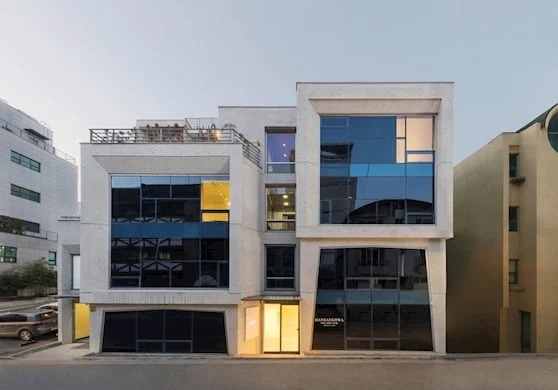

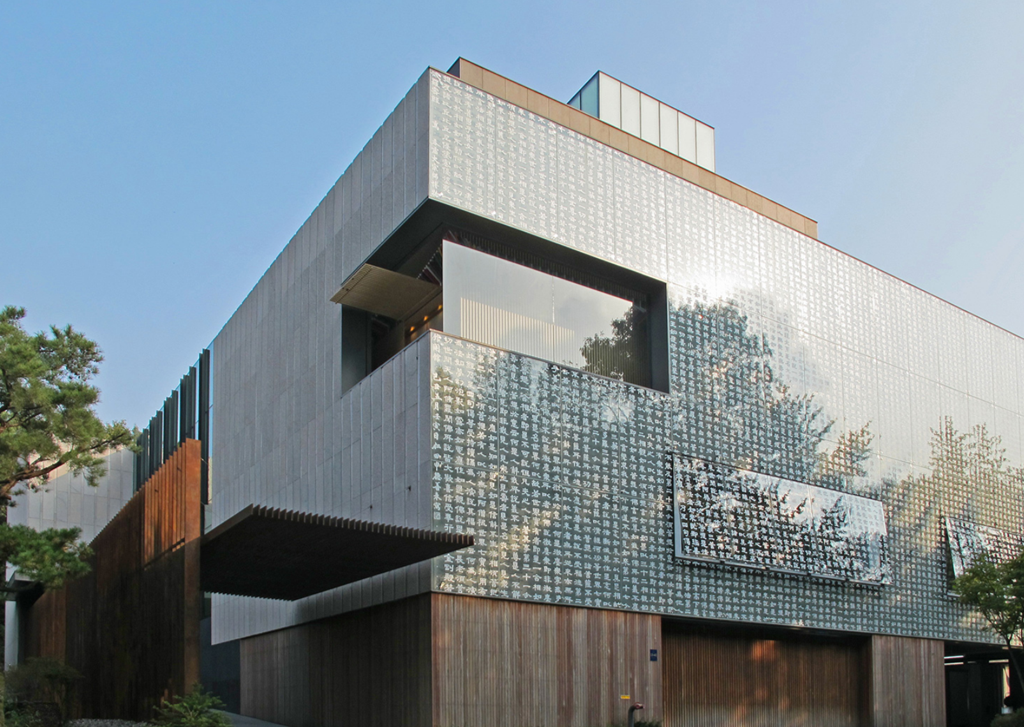
Exterior of the Tanheo Memorial Museum / Photo: Hanul Architecture
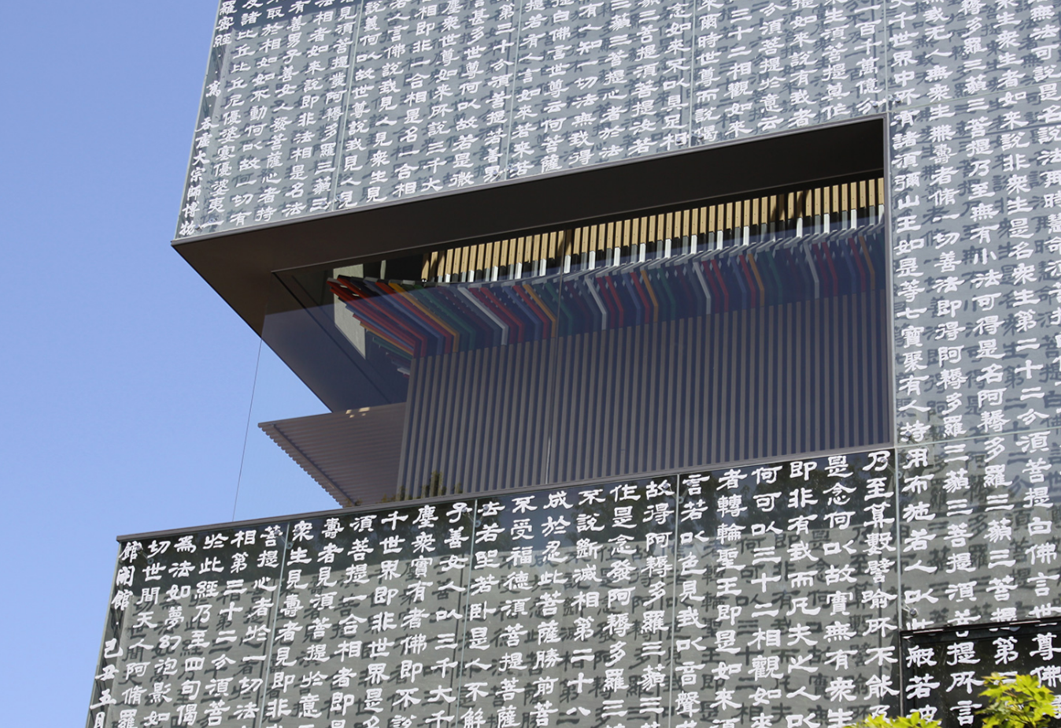
Exterior of the Tanheo Memorial Museum(detail) / Photo: Hanul Architecture
The exterior of the Tanheo Memorial Museum is adorned with the full text of the “Vajracchedika Prajnaparamita Sutra (The Diamond Sutra)”, signifying the institution as both a sacred site for Buddhist devotion and a place of scholarly pursuit.
The Museum as
Space
Located in
Jagok-dong, Gangnam, Seoul, the Tanheo Memorial Museum resists easy
classification within the conventional category of the museum.
Rather than
functioning as a space organized around discrete objects or artifacts, it may
be understood as a site where architecture, thought, and bodily experience
converge to produce meaning.
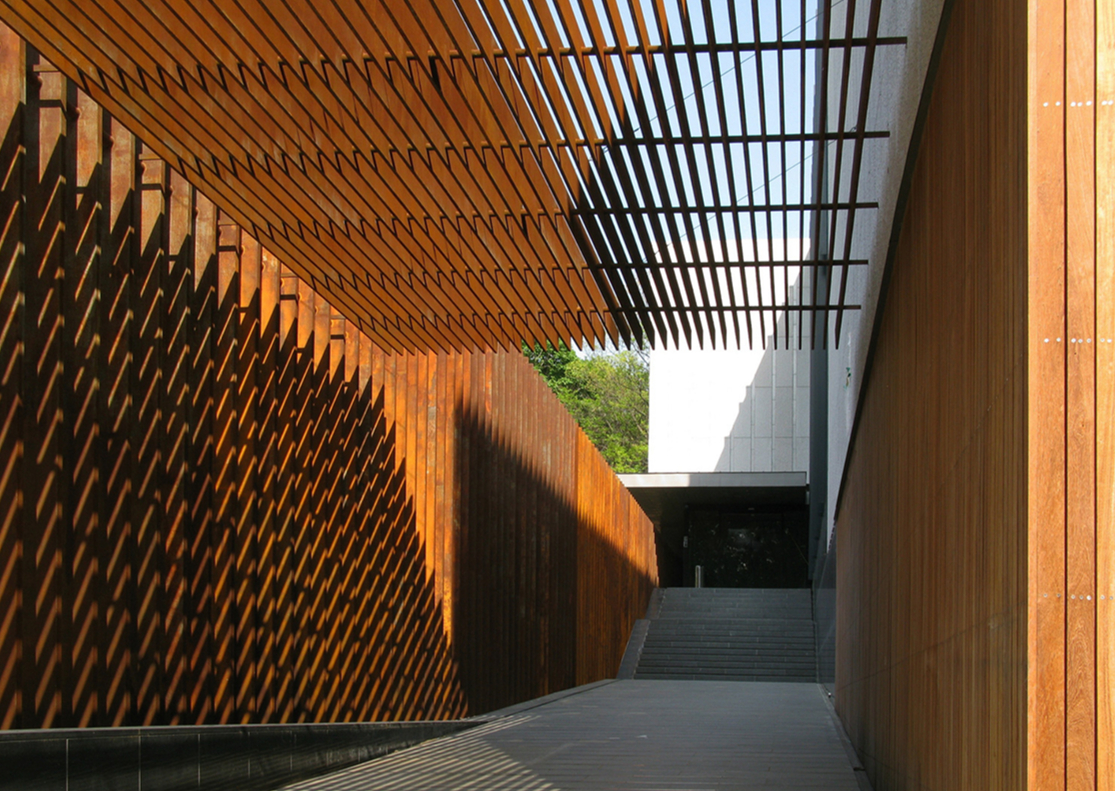
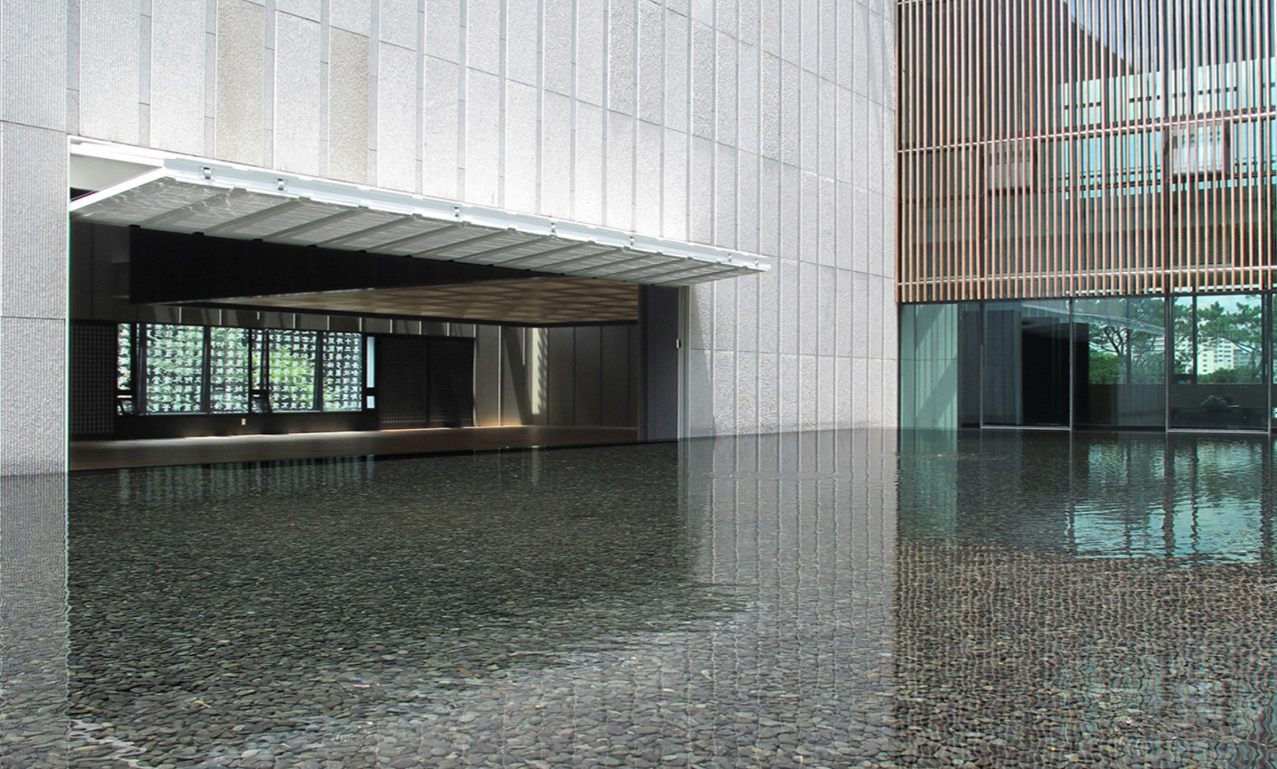
Entrance of the Tanheo Memorial Museum / Photo: Hanul Architecture
A total of 108 pillars stand at the entrance, symbolizing the 108 afflictions (kleshas) in Buddhist thought.
Interior of the Tanheo Memorial Museum / Photo: Hanul Architecture
The Structure
of Entry and Circulation
The entrance
sequence integrates symbolic structure with physical movement. The 108 pillars
at the threshold refer to the 108 worldly afflictions in Buddhist doctrine,
while also shaping the visitor’s movement and spatial perception. Passing
through this repeated field of columns, the visitor becomes aware of rhythm,
interval, and bodily presence. Viewing is thus extended beyond the visual,
becoming a corporeal and spatial experience.
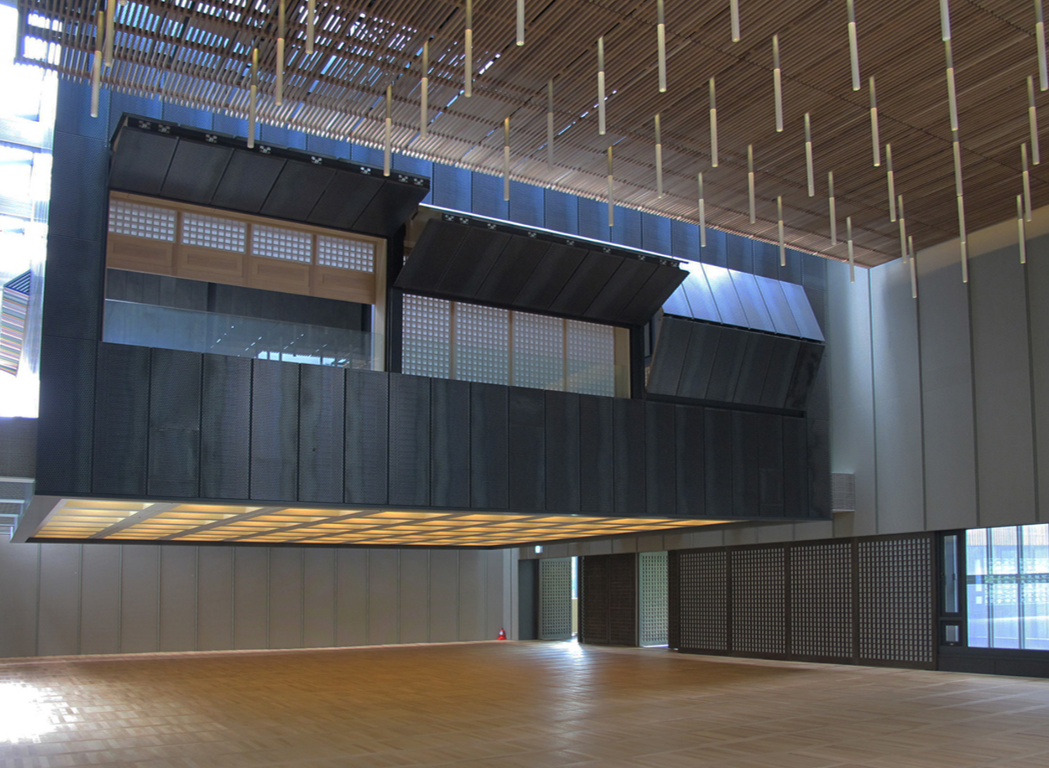
Bangsangul (方山窟) / Photo: Hanul Architecture
Bangsangul (方山窟)
Bangsangul most
closely reflects the spiritual presence of Venerable Tanheo. Its name derives
from Bangsan Cave at Woljeongsa Temple, where he completed his full Korean
translation of the『Avatamsaka Sutra (The Flower
Garland Sutra)』. The structure is designed without
surrounding pillars, appearing to float within space—an architectural
expression of Tanheo’s dharma name, “Tanheo (呑虛)”,
meaning “to swallow emptiness.”
The five-colored “dancheong”
represents the Buddha’s radiant light, while the northwestern sky symbolizes
the moment of enlightenment, when the Buddha attained awakening upon seeing the
morning star. As the central ritual space housing the altar, Bangsangul opens
in all directions, symbolizing the unobstructed and interpenetrating realm of
the Buddha—concepts described in Buddhist philosophy as “wonyung jajae
(perfect interpenetration and freedom)" and “ilche muae (total
non-obstruction)”. The space also functions as a special exhibition gallery.
The
Conjunction of Text and Architecture
The application
of the『Diamond Sutra』text
across the building’s exterior is one of the museum’s defining features. The
text does not operate as ornament, but as an architectural material. Inscribed
on the glass façade, it shifts in visibility according to light conditions,
appearing as a dynamic rather than fixed image. In this way, the text functions
not only as something to be read, but as a structural element that generates
spatial density.
Layered
Functions and Spatial Composition
The interior is
organized beyond the conventions of object-centered display. Exhibition
galleries, lecture spaces, and ritual areas are interconnected within a
continuous spatial flow. Their functions are not rigidly separated, but instead
overlap, forming an environment in which multiple modes of activity and
perception coexist.
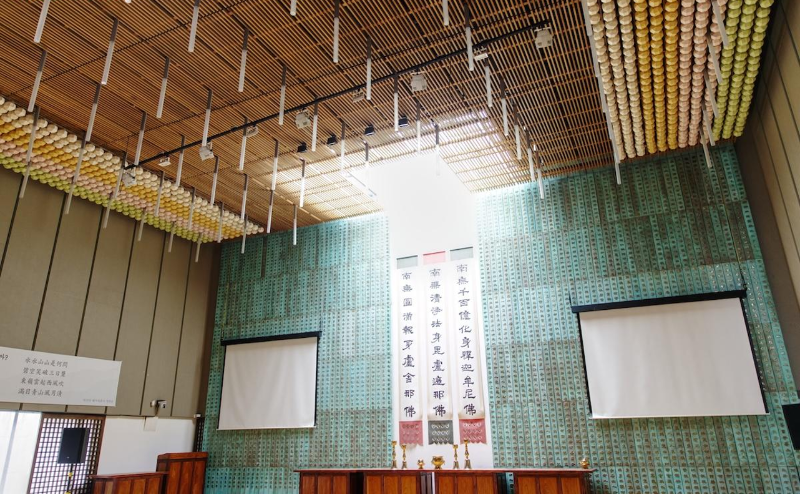
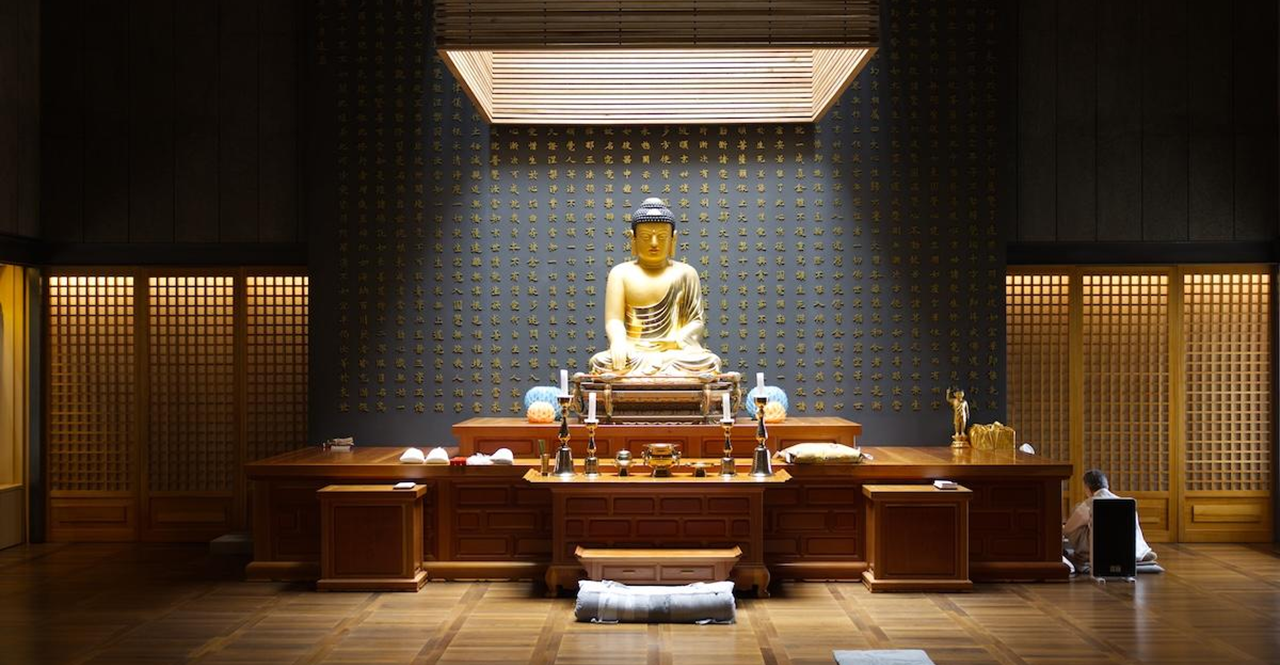
Bogwangmyeongjeon Hall (寶光明殿) / Photo: Im Joongbin
Bogwangmyeongjeon
Hall (寶光明殿)
Bogwangmyeongjeon
Hall is the largest hall within the museum. It reflects a deliberate intention
to recreate the hall described in the『Avatamsaka
Sutra』, where the Buddha is said to have delivered
his teachings. The expansive south-facing openness enhances practical
usability, while symbolically receiving the bright, yang energy of the south
and blocking the darker, yin energy of the north.
The space
signifies the aspiration to leave behind the deluded world and enter the
enlightened state of the bodhisattva—expressed in Buddhist terms as “sau
ipseong (forsaking ignorance and entering sagehood)”.
A Space Beyond
Genre
The Tanheo
Memorial Museum exists at the intersection of religious architecture, museum
typology, and contemporary design. It cannot be reduced to a single function;
instead, it maintains a condition in which multiple systems of meaning operate
simultaneously. This quality resonates with contemporary art’s ongoing
dissolution of medium-specific boundaries.
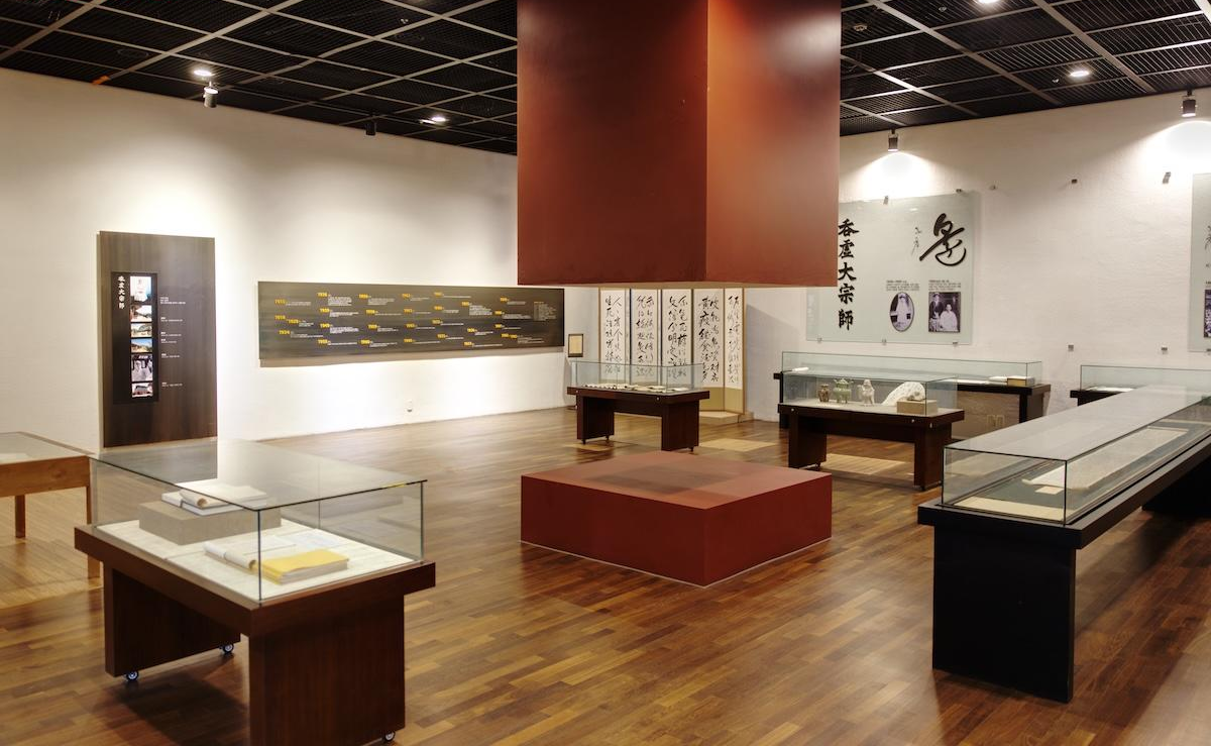
Second-floor exhibition gallery of the Tanheo Memorial Museum. © Im Joongbin
The
Spatialization of Thought
The intellectual
foundation of the museum lies in the work of Venerable Tanheo. Through his
translation and interpretation of Buddhist scriptures, he sought to render
Buddhist thought into a modern linguistic form. The museum extends this effort
into the spatial domain. Text becomes architecture, and thought is translated
into movement and circulation—demonstrating how abstract concepts may be
materialized.
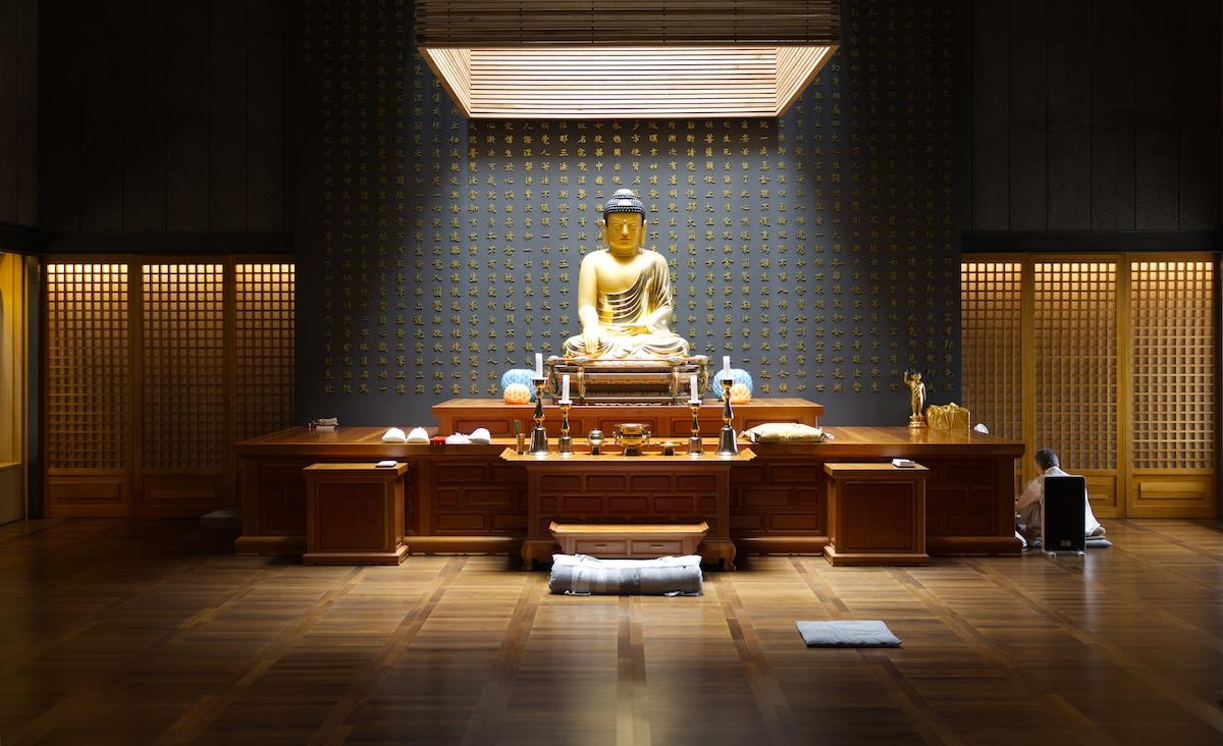
2층 전시실 맞은편에는 탄허기념박물관의 핵심 장소인 “방산굴”이 위치하고 있다. / ©임중빈
A
Heterogeneous Temporality Within the City
Within the urban
context of Gangnam—defined by density, speed, and consumption—the museum
establishes a contrasting temporal condition. While physically connected to the
city, the interior produces a slower, more contemplative mode of experience.
Art After
Space
The Tanheo
Memorial Museum departs from the conventional model in which meaning is
conveyed through exhibited objects. Here, space itself functions as the primary
medium. Meaning emerges not from fixed objects, but through movement,
perception, and temporal change. In this sense, the museum exemplifies how
architecture can operate as a structure of thought, aligning with the
experiential turn in contemporary art.
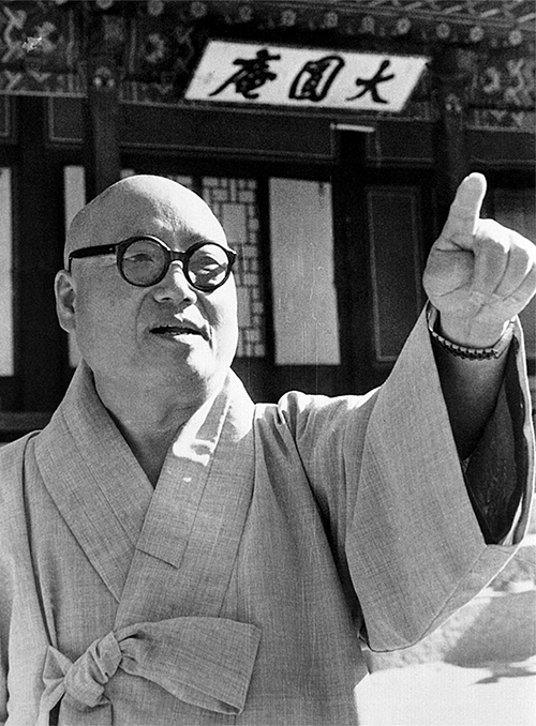
Venerable Tanheo / Photo: The Buddhist Newspaper
Venerable
Tanheo
Tanheo (呑虛, 1913–1983) was a leading scholar-monk in modern Korean Buddhism.
Through his extensive translation and annotation of Buddhist scriptures into
Korean, he played a crucial role in expanding the modern understanding of
Buddhist thought. He is particularly noted for his work on the『Avatamsaka Sutra』, through which he
rearticulated Buddhism as both an intellectual and public discourse. With deep
knowledge of East Asian classical traditions, he is regarded as a thinker who
engaged across Confucian, Buddhist, and Daoist philosophies.
The Tanheo
Memorial Museum serves not only as a record of his intellectual legacy, but as
a spatial rearticulation of his thought.
Visitor
Information
• Location:
Tanheo Memorial Museum, Jagok-dong, Gangnam-gu, Seoul
• Hours: 10:00
a.m. – 5:00 p.m.
• Closed: Mondays
and public holidays
• Admission: Free
※ Although
situated within the city, the museum—accessible via the Suseo Station area—offers
a relatively quiet and contemplative environment for visitors.