Disappearing
Artists, Unrecorded Legacies
In contemporary
Korean art, one fact stands out: despite countless exhibitions and projects held
every week, very few artists have an official website
that documents their practice in a structured and lasting way.
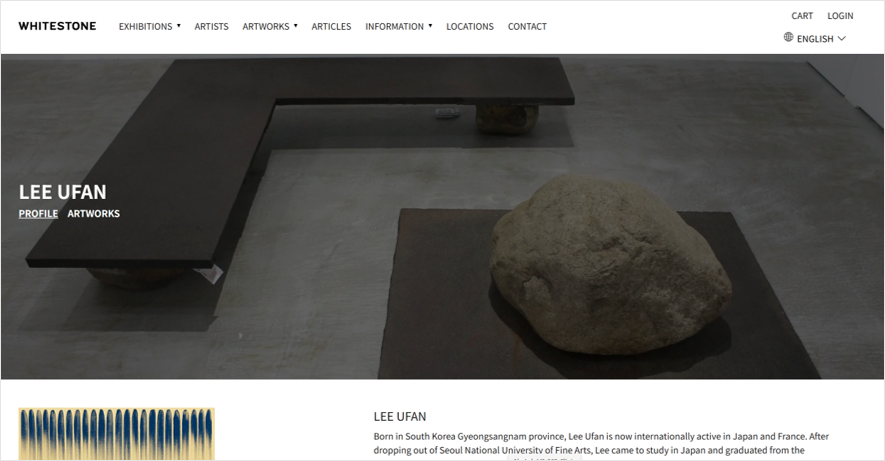 Lee Ufan as featured on the gallery’s website / Screenshot from
Whitestone Gallery’s official webpage
Lee Ufan as featured on the gallery’s website / Screenshot from
Whitestone Gallery’s official webpageEven Lee
Ufan, one of Korea’s most internationally recognized artists, has
no personal website and no Catalogue Raisonné of his
work. Neither Park Soo-keun nor Lee Jung-seop—two of Korea’s most revered
modern masters—have one. This absence is telling.
Search online,
and you will find fragmented gallery pages or old press clippings, but rarely a
coherent system through which one can read an artist’s body of work.
The few websites that do exist are typically limited to exhibition schedules or
short bios, with low-quality images and little to no critical or research material.
As a result, many artists’ practices are reduced to “image
fragments” floating through SNS feeds, eventually fading without
a trace.
SNS Is
Ephemeral, the Web Endures
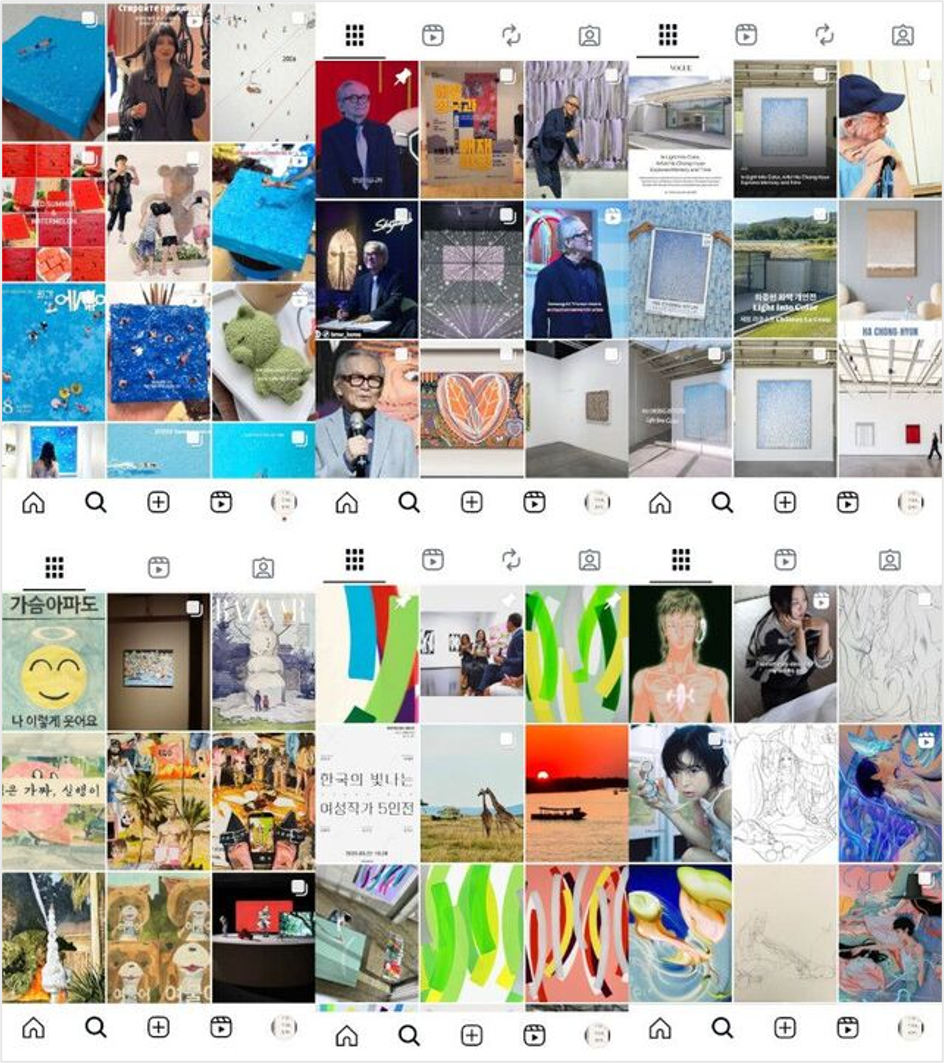 Screenshots of Korean artists’ Instagram
pages / Photo: Kookmin Ilbo
Screenshots of Korean artists’ Instagram
pages / Photo: Kookmin IlboMany Korean
artists are now active on Instagram. They post new works, share studio scenes,
and interact with audiences in real time.
But this
visibility is surface-level and short-lived. Feeds
flow endlessly, algorithms forget, and yesterday’s post becomes invisible. SNS
shows the present, but a website preserves the continuum.
These two platforms are not in competition; they must exist in tandem—social
media for immediacy, and the website as a foundation for permanence.
Only when SNS activity is anchored on a robust web platform does an artist’s
message transcend exposure and evolve into influence.
The Website as
a Creative Medium of Lifelong Record
A website is not
a marketing tool. It is a creative medium through
which an artist documents their world and situates themselves within time.
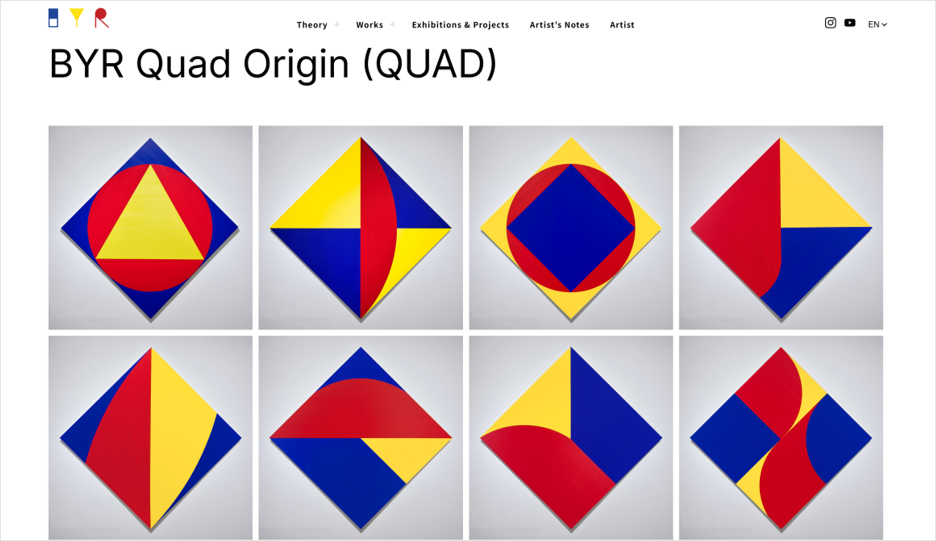
Screenshot of artist Heejo Kim’s website (heejokim.com)
The site presents the artist’s theoretical framework, statement, and works in a well-organized structure, available in both Korean and English.
A strong website
is not a gallery of images but a system of language—one that reveals the artist’s
thinking, evolution, and aesthetics at a glance.
It should include
complete image archives, exhibition histories, artist notes, critical texts,
installation views, interviews, and contextual information that traces the
making of each work.
When this
documentation is sustained, the website transcends the portfolio and becomes a <b>living Catalogue Raisonné—a
framework that not only demonstrates artistic excellence but naturally leads to
recognition, research, and promotion.
The Absence—and
Meaning—of the Catalogue Raisonné
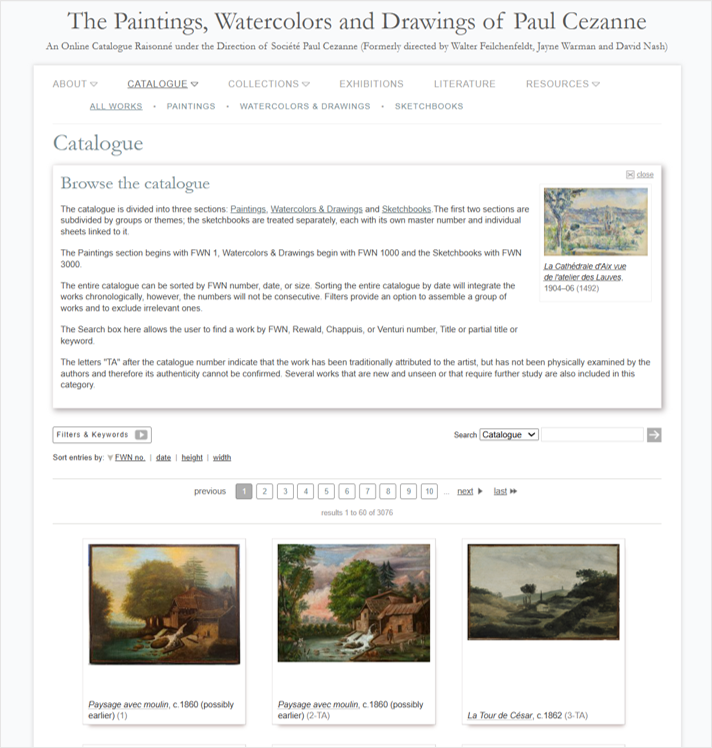 Digital Catalogue Raisonné featuring the complete works of Paul Cézanne
/ Source: Screenshot from https://www.cezannecatalogue.com
Digital Catalogue Raisonné featuring the complete works of Paul Cézanne
/ Source: Screenshot from https://www.cezannecatalogue.comA Catalogue
Raisonné is a scholarly, chronological record of all known works
by an artist, including dimensions, materials, provenance, exhibitions, and
literature.
It is not a list, but a proof of existence—a document
that anchors an artist’s authenticity and secures their place in art history.
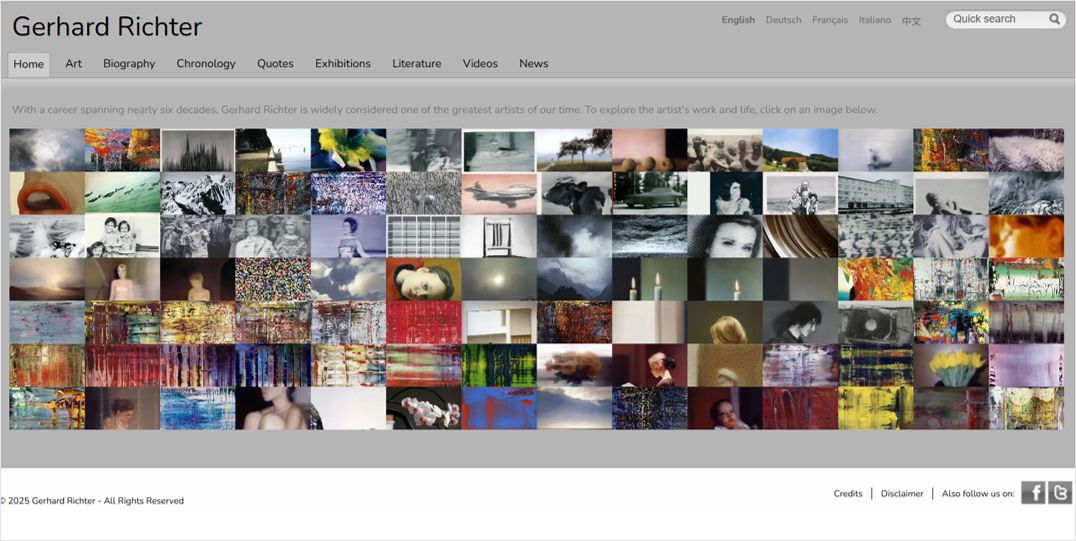 Main page of Gerhard Richter’s Online Catalogue Raisonné / Source: https://www.gerhard-richter.com
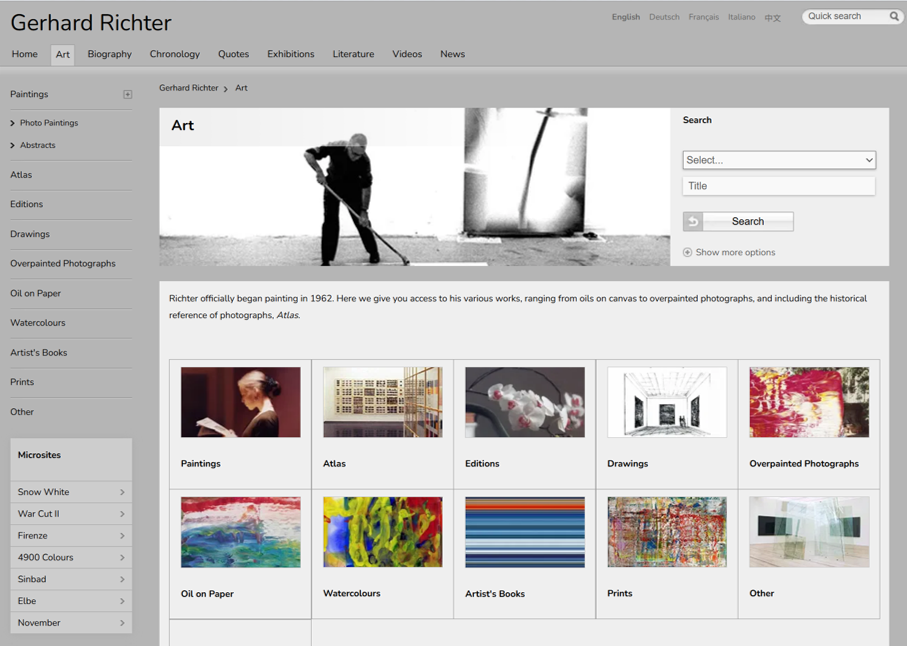 “Art” menu page of Gerhard Richter’s Online Catalogue Raisonné /
Source: https://www.gerhard-richter.com
“Art” menu page of Gerhard Richter’s Online Catalogue Raisonné /
Source: https://www.gerhard-richter.comArtists like Paul
Cézanne, Francis Bacon, Jeff Koons, and Gerhard Richter
have built online catalogues that do far more than display images. They
establish a system that allows for research, verification, and transmission.
Because these structures exist, their art continues to live—beyond markets,
beyond generations, beyond mortality itself.
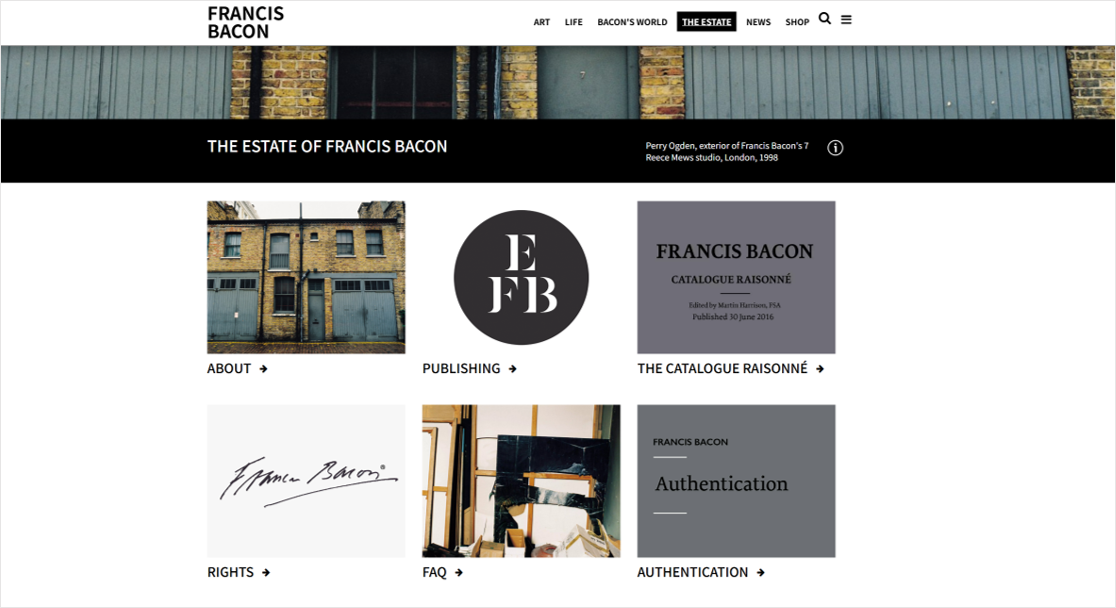 Francis Bacon’s Online Catalogue Raisonné / Source: https://www.francis-bacon.com
Korean artists,
by contrast, have works but lack the records to prove them.
This absence makes Korean art appear transient—“existing only in
the present.” It shortens the perceived depth of its
history on the global stage.
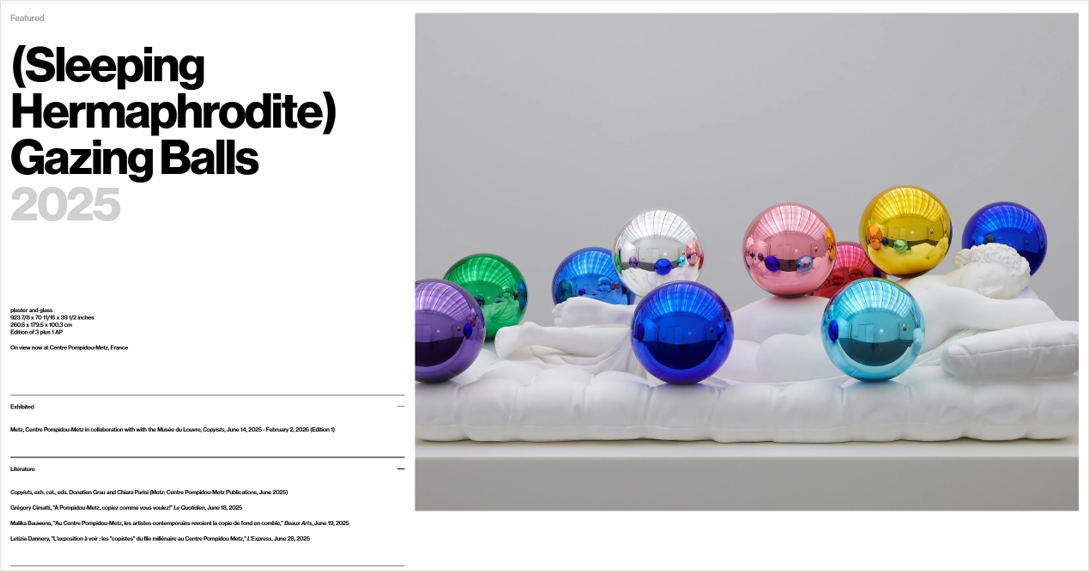 Jeff Koons’s Online Catalogue Raisonné / Source: https://www.jeffkoons.com
In the lower-left section, the work details include references to exhibitions, catalogues, and publications in which the piece has been featured.
In South Korea, not
a single artist has produced an officially recognized Catalogue Raisonné.
This is a shocking fact, and it reveals not a lack of funding or institutional
support, but the deeper absence of a recording culture—a
failure to see documentation as an integral part of creation itself.
Structural
Deficiency in Korean Art
Korea’s art
ecosystem remains exhibition-centered. A few
catalogues, postcards, or press releases often constitute the entire record of
a show.
Once the
exhibition ends, materials scatter or lose meaning. Even public institutions
lack standardized artist databases.
Within a market-dominated system, artists have little digital sovereignty and
no stable channel through which to document their own narratives.
Korean art thus
continues to be consumed as a sequence of isolated events, rather than a
connected continuum. This is not a matter of publicity—it is a structural flaw that
threatens the historical continuity of Korean art itself.
Digital
Infrastructure Is the Starting Point of Global Reach
For Korean art to
take root globally, building a recordable, standardized
infrastructure must come before international exhibitions.
An artist platform that meets global standards—where data, metadata, and
archives are reliable and verifiable—is no longer optional but essential.
With such
foundations, artists can articulate their worlds proactively and intelligibly, and
their work will remain accessible to future scholars. This is the true
beginning of global presence.
Art Begins in
Creation, but Is Completed Through Record
Art is born in
the moment of creation, but it achieves permanence through record. Social media
may testify to the present, but only a website preserves history.
A website is not
a repository of works; it is the linguistic and historical map
of an artist’s existence—a structure that verifies, preserves, and extends
their art through time.
For Korean
artists to survive, evolve, and truly engage with the world, they must first
build the language and infrastructure that allow them
to record and interpret their own universes—a platform that stands as both
archive and agency, replacing the functions of gallerists, managers, and
promoters.
A person leaves a
name; an artist leaves their work. But unrecorded art disappears.
An artist’s website is not a digital accessory—it is the most
fundamental and ultimate medium through which a life in art endures, transmitted
to history and to the generations that follow.