
Dasom Park (b. 1989) has developed her
practice by closely interweaving painterly methodology with an interest in the
“body” as material—something subject to inevitable transformation. Her work
undergoes a process of examining how the body, understood as a material
concept, operates in reality, while also reflecting on the notion of loss
embedded within it.
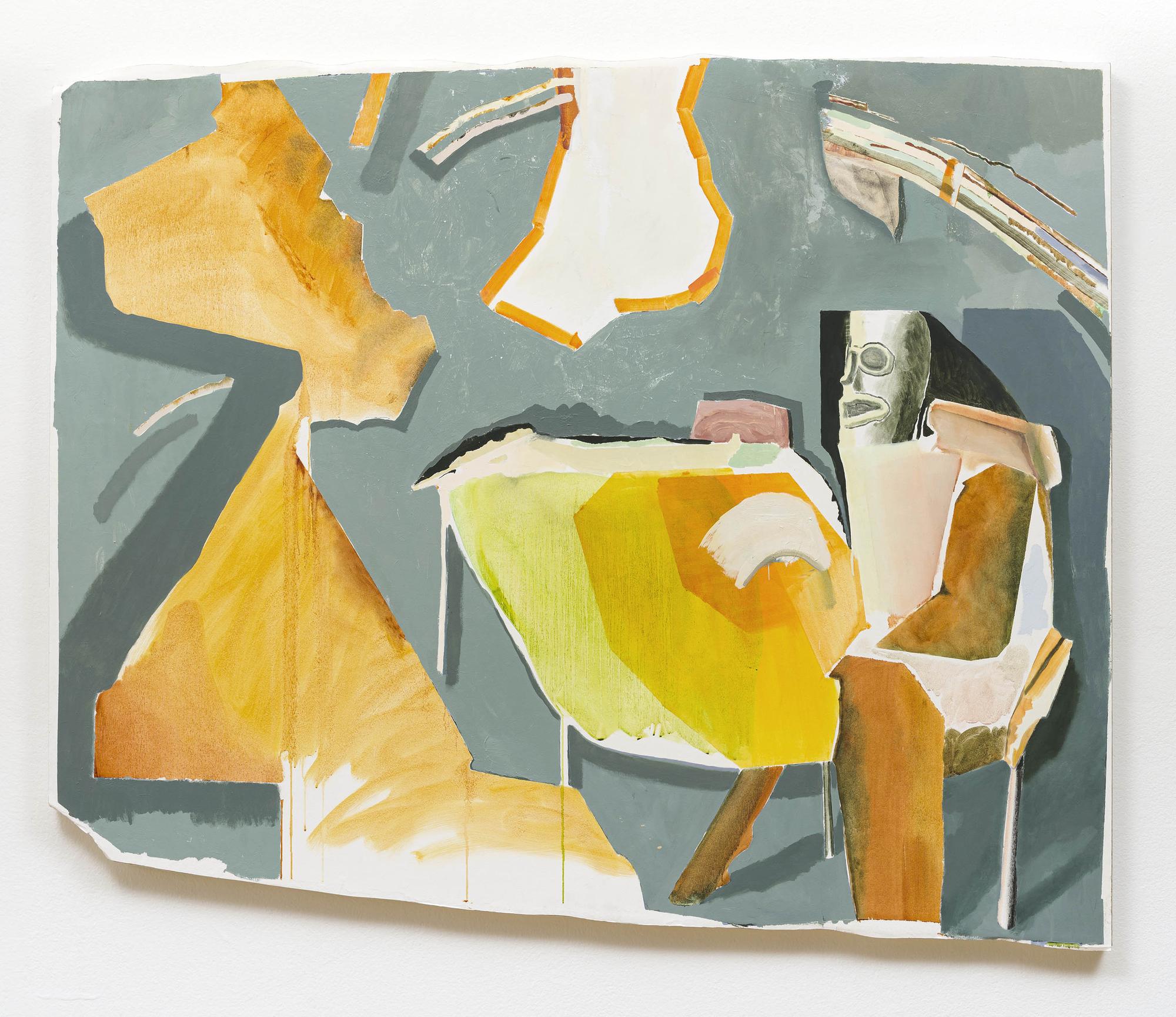
Dasom Park, In a Submarine, 2019, Oil on paper, 150x120cm ©Dasom Park
In her early works, Dasom Park created
scenes that resemble fragments from a dream. Within these compositions, the
bodies of humans, objects, and even insects are exchanged with one another, and
through repeated acts of substitution, they lose their original
specificity—eventually dissolving into a single incline or curve.
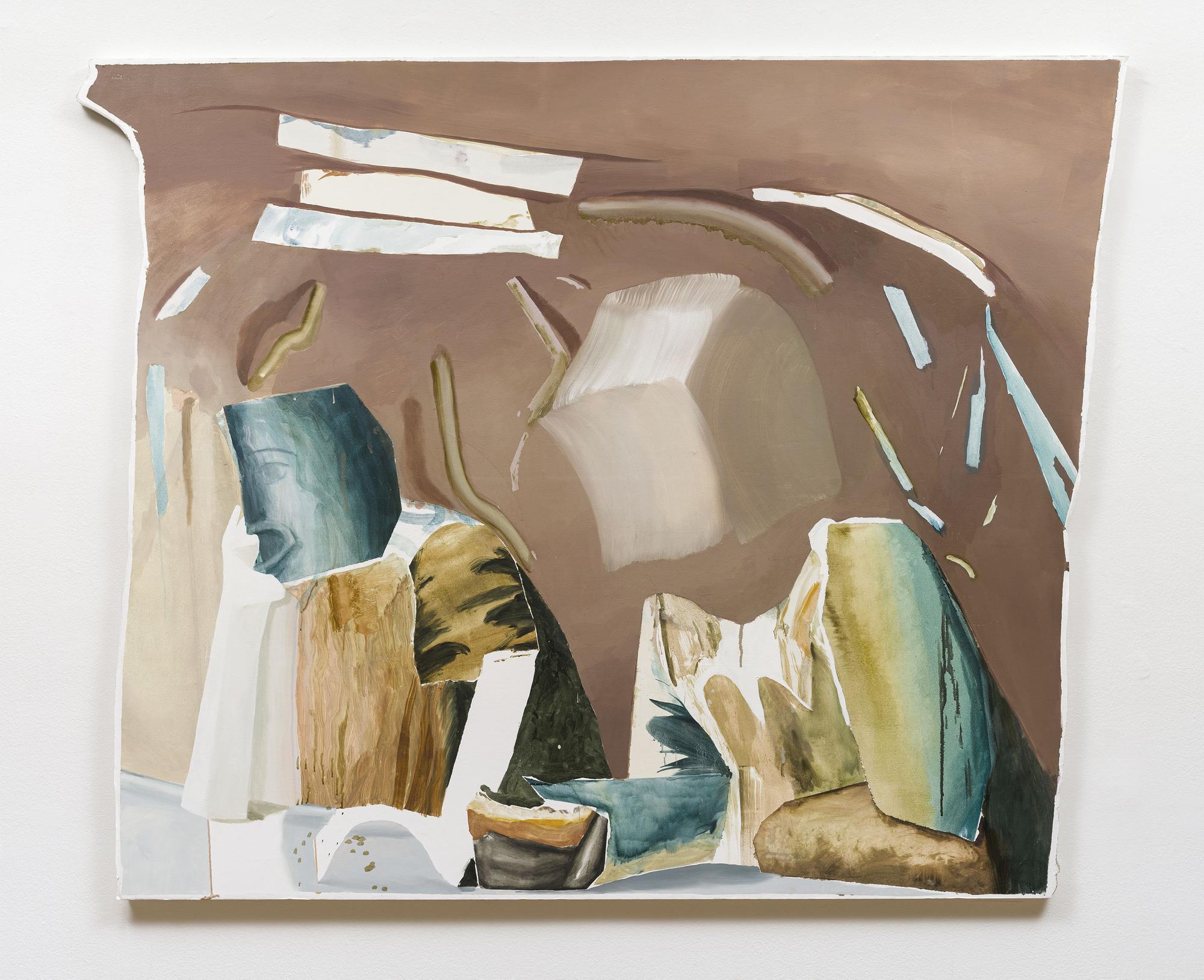
Dasom Park, Dining Room, 2020, Oil on paper, 188x151cm ©Dasom Park
Through this dreamlike methodology, Dasom
Park sought to confront universal fears about life. She regarded human
death—particularly the inevitable aging of the elders she loved—with a mixture
of tenderness and anxiety.
According to her artist’s note, Park
explains that she “invokes the methodology of dreams in order not to let each
moment of transformation, which arrives incessantly and faithfully, become a
loss—to avoid being engulfed by loss.” For her, the space-time of dreams is a
realm where transformation and distortion may occur without necessarily
carrying the conventional sorrow of loss.
Thus, within this liberated dreamscape, she
imagines the joyful collapse of what she once believed in, thereby facing the
anxiety and fear brought about by the inescapable conditions of reality.
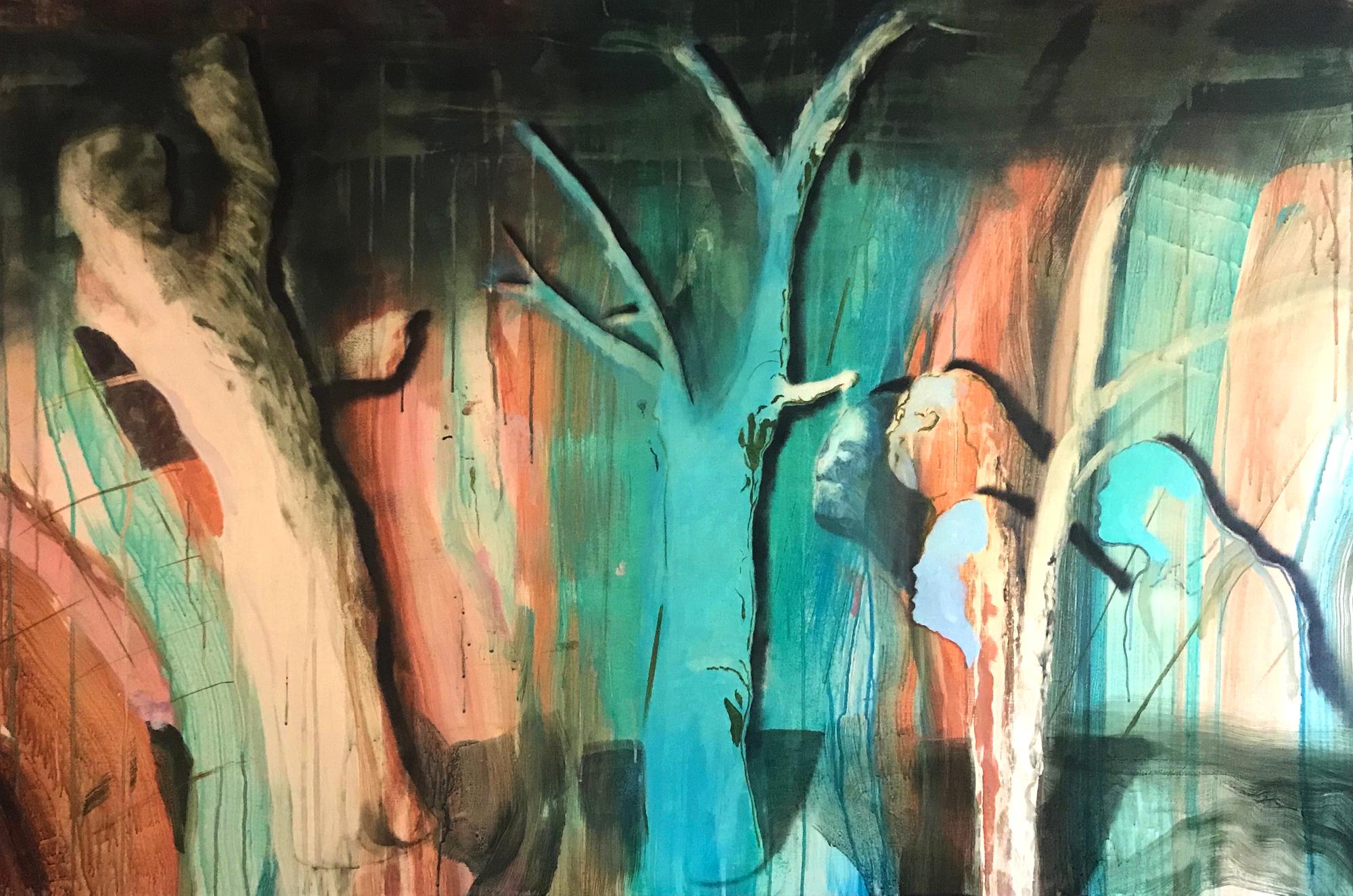
Dasom Park, Between Trees, 2018, Acrylic and oil on canvas, 145.5x97cm ©Dasom Park
Park understood the reason one can remain
unperturbed by the transformations that occur in dreams as stemming from the
fact that “we have forgotten that we were ourselves, that the thing was once
itself.” On this premise of forgetting, she began to translate the methodology
of dreams into painting.
In her 2017 works, she depicted the
landscapes of forgotten cities; from 2018 onward, she painted faces absorbed in
moments of intoxication so deep that they seemed to forget space and time—and
even themselves. The bodies of these figures often appear as though they have
lost awareness of their own position and texture.
From 2019, she began more actively to
explore scenes in which bodies undergo transformation. Posing the question,
“How can I dismantle the bodies I paint in a way that is more natural, softer,
and more tender?” she sought to strip away, one by one, the conditions that
conventionally define what it means to “live as a human being.”
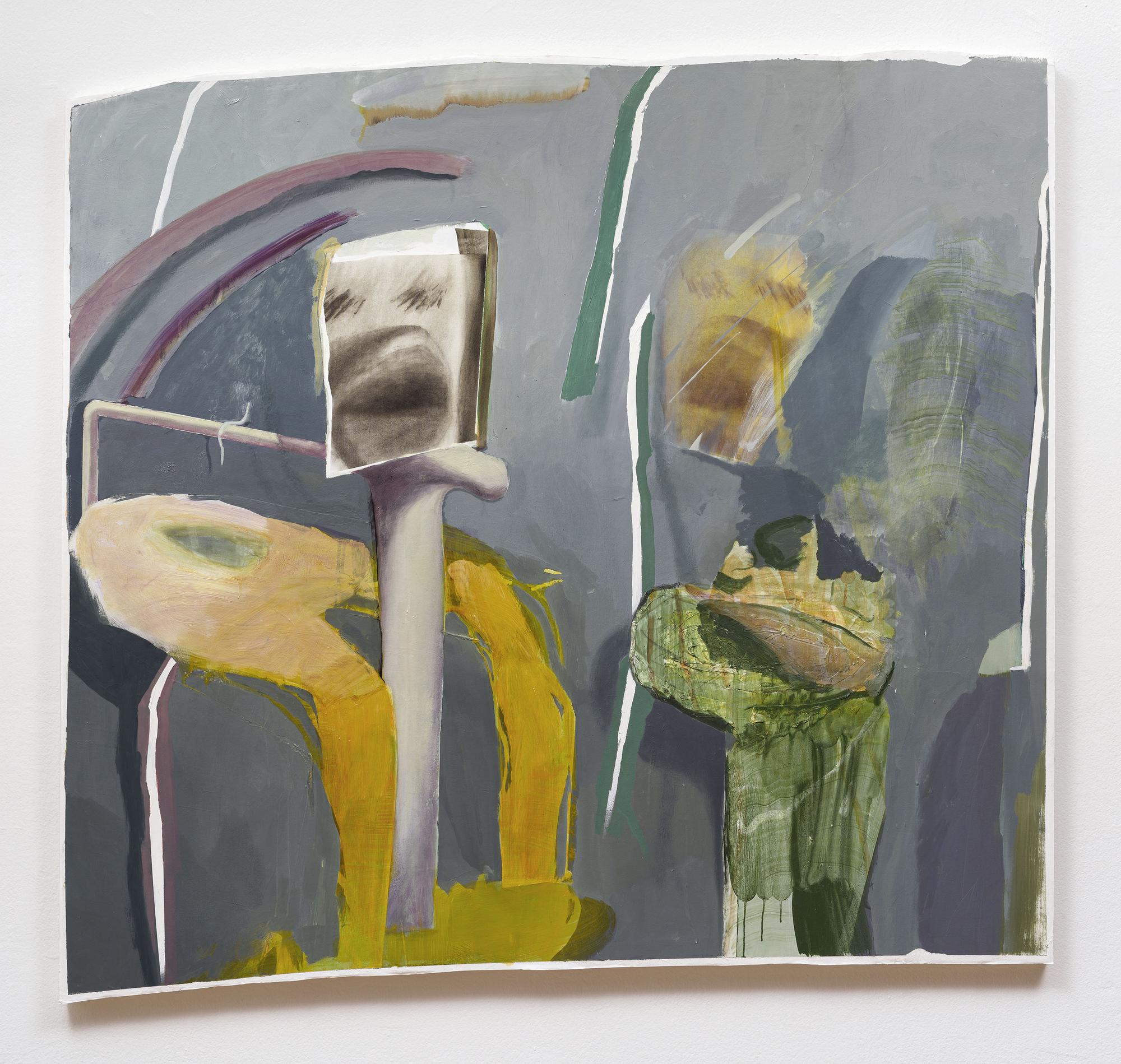 Dasom Park,
A Narrow Place, 2020, Oil on paper, 138x151cm ©Dasom Park
Dasom Park,
A Narrow Place, 2020, Oil on paper, 138x151cm ©Dasom ParkFor instance, the artist imagined houses
that stand above ground being relocated beneath it, or bodies confined within
enclosed spaces and closed communities. She envisioned these bodies exchanged
with those of animals, insects, or even objects, and pictured scenes in which
bodies that had endured repeated acts of dismantling gradually transformed into
forms that lean, rest upon, or depend on something else.
Bodies that can no longer sustain
themselves do not simply approach extinction within her paintings. Just as any
transformation can unfold freely and without fear in a dream, the bodies she
depicts endlessly deconstruct, mutate, and expand within the world of
painting—harboring at once the possibilities of dissolution and generation.
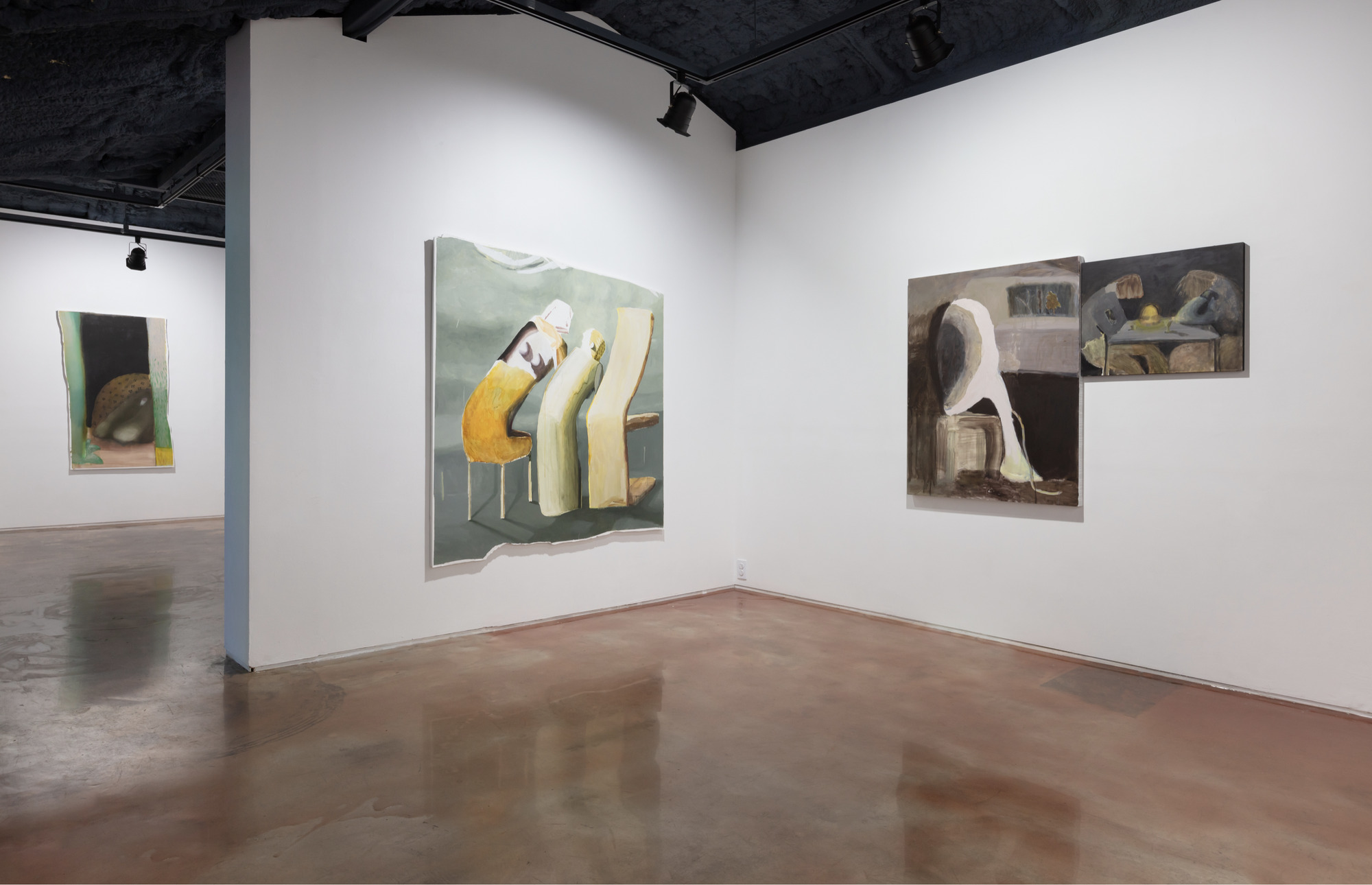
Installation view of 《House of A Hunched Back》 (Place MAK2, 2021) ©Dasom Park
Dasom Park’s first solo exhibition, 《House of A Hunched Back》, held at Place MAK2
in 2021, unfolded the transformations of the aging body—particularly the
“incline” of the elderly’s bent posture—through her dream methodology. Within
her canvases, all people and objects assume slanted forms. This peculiar
spectacle, in which every subject equally adopts a tilted state, resembles a
scene from a dream.
By constructing a new world composed
entirely of inclinations, the negative connotations embedded in the hunched
body of the elderly are effaced. The act of translating all entities into
inclines returns the world to a condition of nonlinearity and chaos,
functioning almost like a spell that dissolves hierarchy.
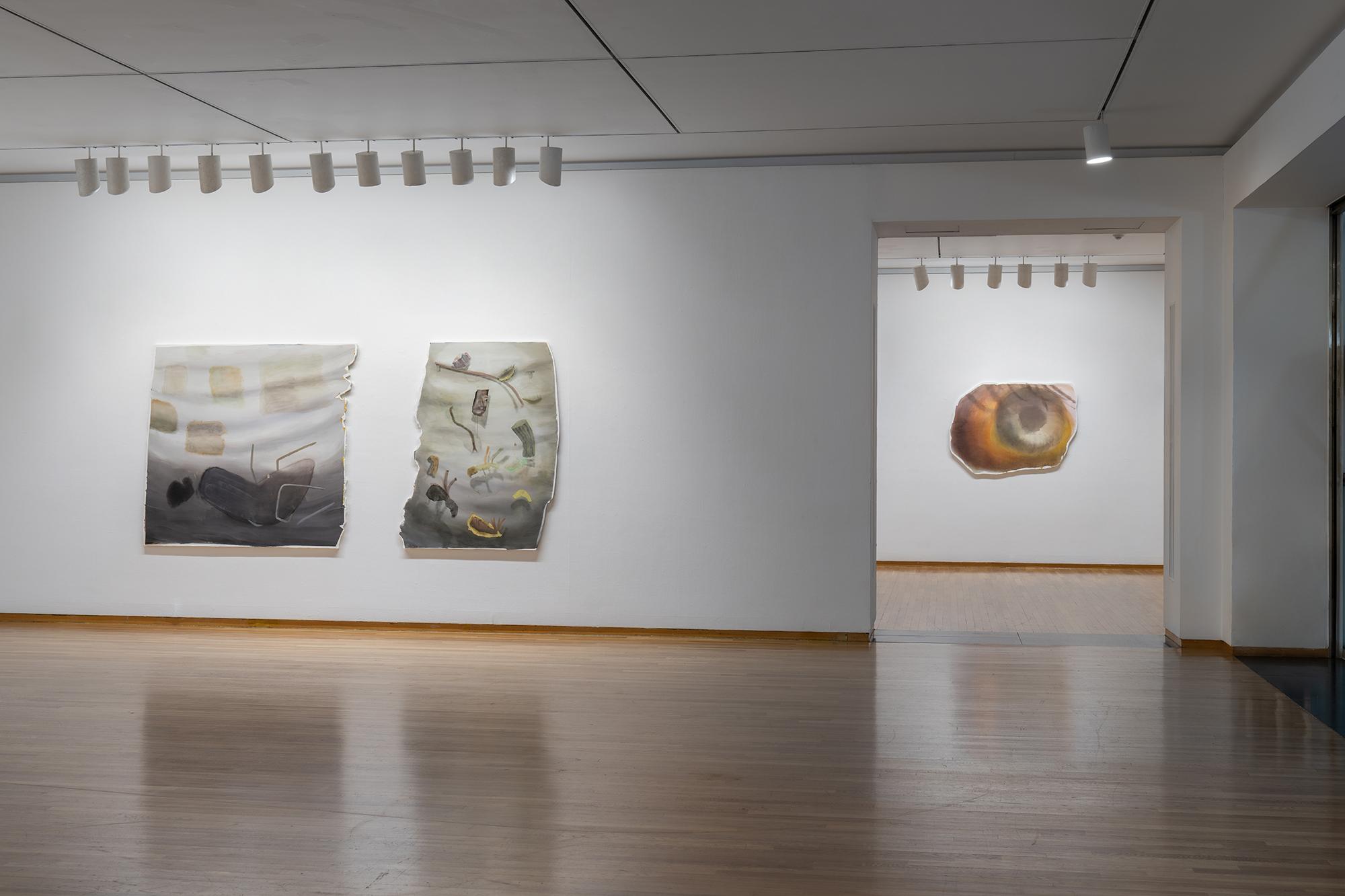
Installation view of 《The Art of Matter》 (Kumho Museum of Art, 2022) ©Dasom Park
In her 2022 solo exhibition 《The Art of Matter》, held at the Kumho Museum
of Art, Dasom Park sought to interweave her reflections on the body even more
closely with painterly methodology.
Within irregularly deformed frames and
nonstandard supports, melting inclines and curves, clusters of varying sizes
and shapes, and bodily images are organically interconnected through subtle
chromatic relationships.
In these dreamlike and unfamiliar spaces,
viewers encounter bodies that have become infinitely liberated from
conventional constraints of time and space. Through this experience, the
exhibition offers an opportunity to reconsider and reflect upon the body from
perspectives beyond those we typically assume.
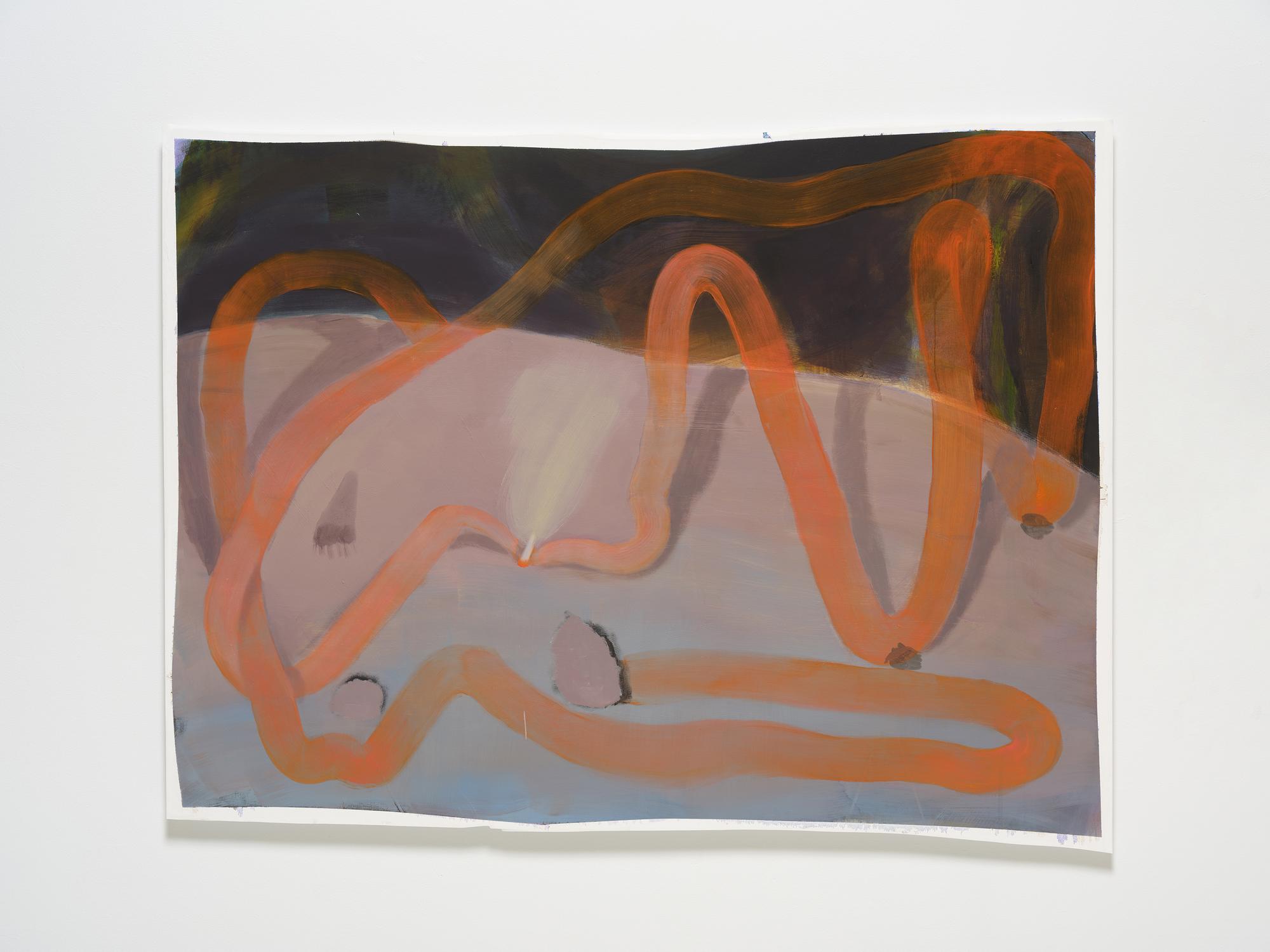
Dasom Park, Smoking, 2022, Oil on paper, 111x151cm ©Dasom Park
Meanwhile, in her 2023 solo exhibition 《Drive》, held at Gallery2, Dasom Park
superimposed the roller coaster track—engineered to repeat vertical motion
through gravity—with the aged, wrinkled body shaped by the passage of time.
Her longstanding inquiry into the body is
transposed onto the sweeping curves of the roller coaster in two paintings,
Smoking (2022) and Bad Photo (2022).
Having often associated the sight of an ailing body with sorrow or melancholy,
she began to search for the fundamental source of those emotions, ultimately
arriving at the clear and inescapable causes of time and gravity.
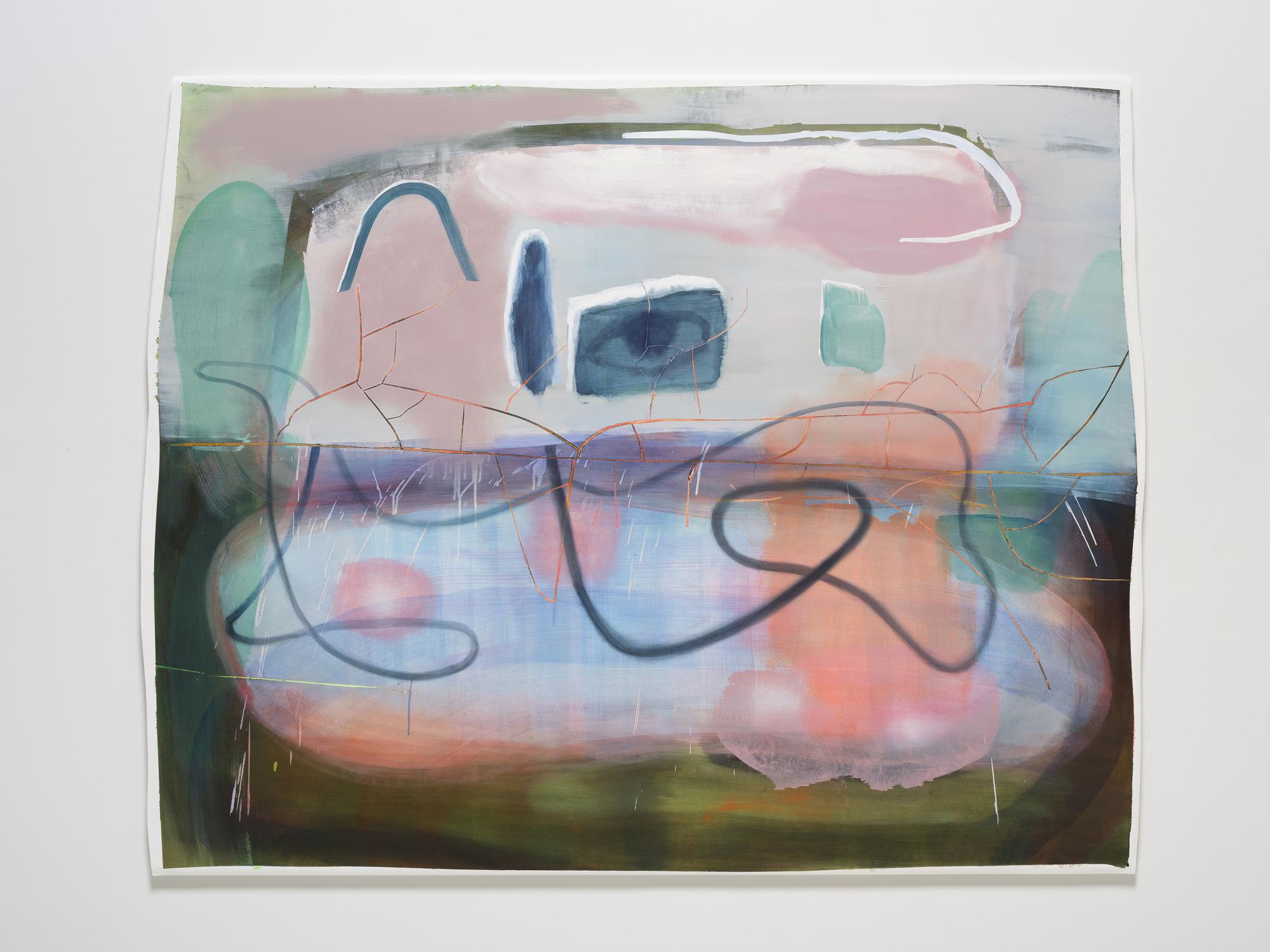
Dasom Park, Bad Photo, 2022, Oil on paper, 150x186cm ©Dasom Park
Matters unrelated to the essence of emotion
lie beyond human control, and the body transforms into a neutral material that
simply registers wrinkles. As Park gradually came to observe the aging body
with an increasingly detached gaze, the curves she encountered in the roller
coaster became a device for rendering the sensation of the wrinkled body as
undulating form.
Rather than foregrounding the emotions
evoked by the body, she prioritizes drawing its form—using curvature as a means
to understand wrinkles as they are, in and of themselves.
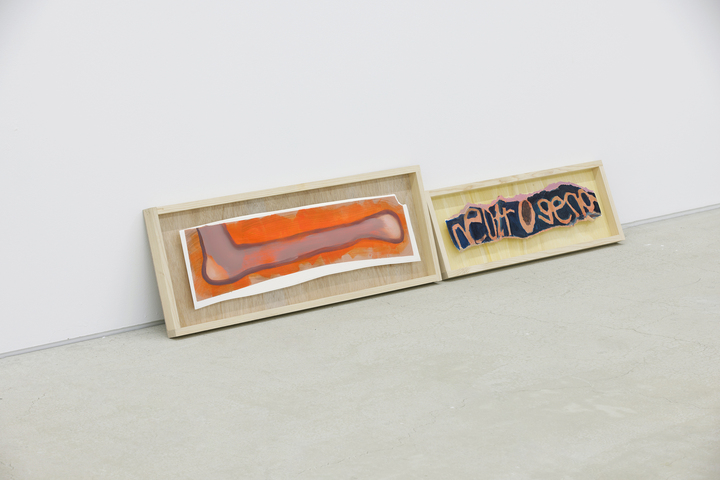
Installation view of 《Drive》 (Gallery2, 2023) ©Dasom Park
Dasom Park’s paintings begin with the act
of tearing paper and conclude with the drawing of cracks. This approach
momentarily sets aside the a priori rules of painting in order to move closer
to results that emerge naturally and candidly under the touch of the human
hand.
Tracing the path through which the image
comes into being, one encounters paper torn along its grain, forms conceived in
the mind or shaped by surrounding conditions, and surfaces fissured by drawn
cracks. Whether following the direction of the paper’s fibers, the way a form
unfolds, or the movement of the eye across the surface, the painting retains
traces of gazes guided not solely by the artist’s will, but by the inclinations
of the very elements that constitute the work.
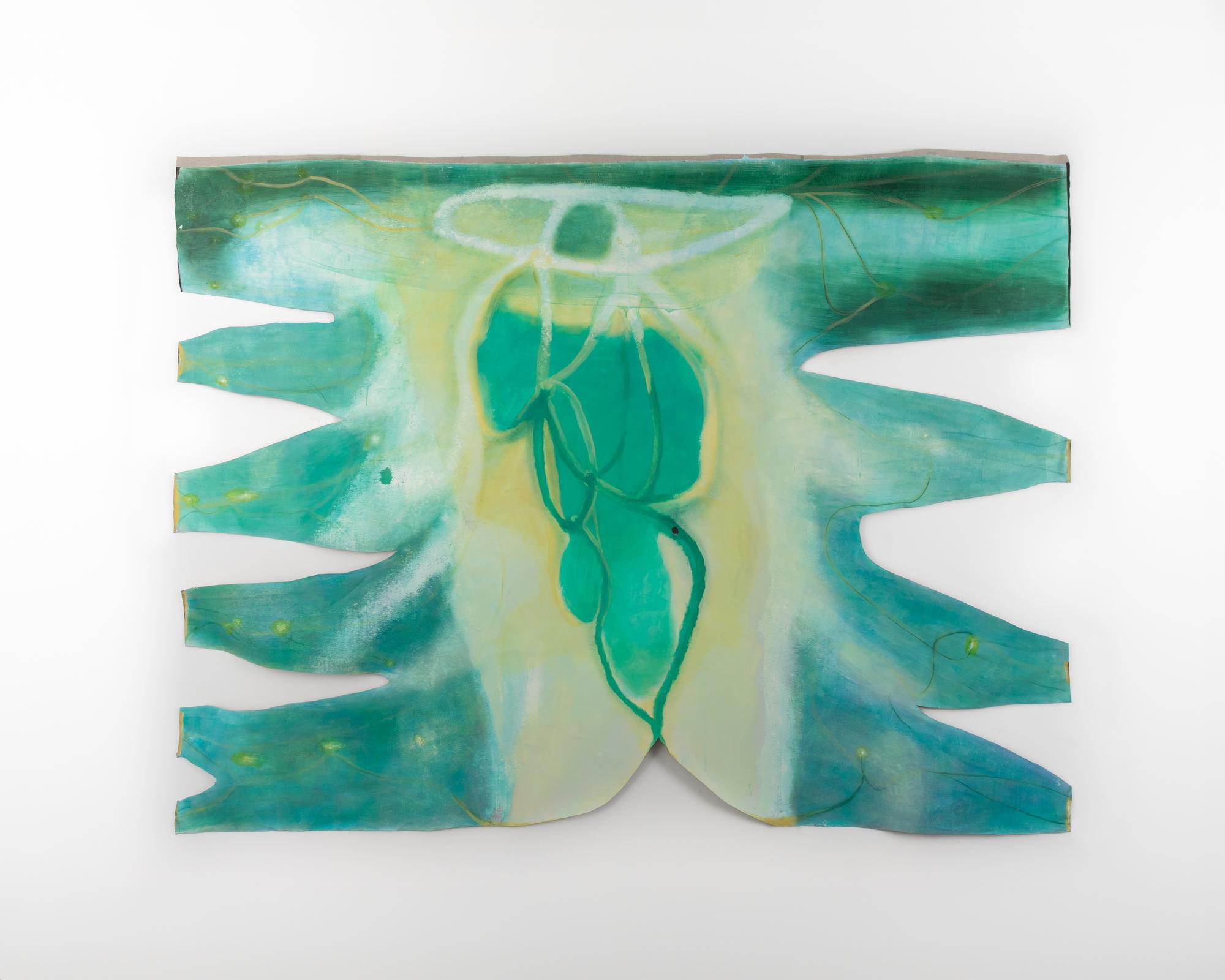
Dasom Park, Almost Squid, 2024, Oil on canvas, 141x215cm ©Dasom Park
Over the past several years, Dasom Park has
focused on the materiality of paper. As she came to recognize its limitations,
she recently began incorporating the pliable properties of fabric into her
painting practice. Rather than working on a gessoed “white” canvas as a neutral
ground, she sought to explore images that grow in accordance with the inherent
material qualities of the cloth itself.
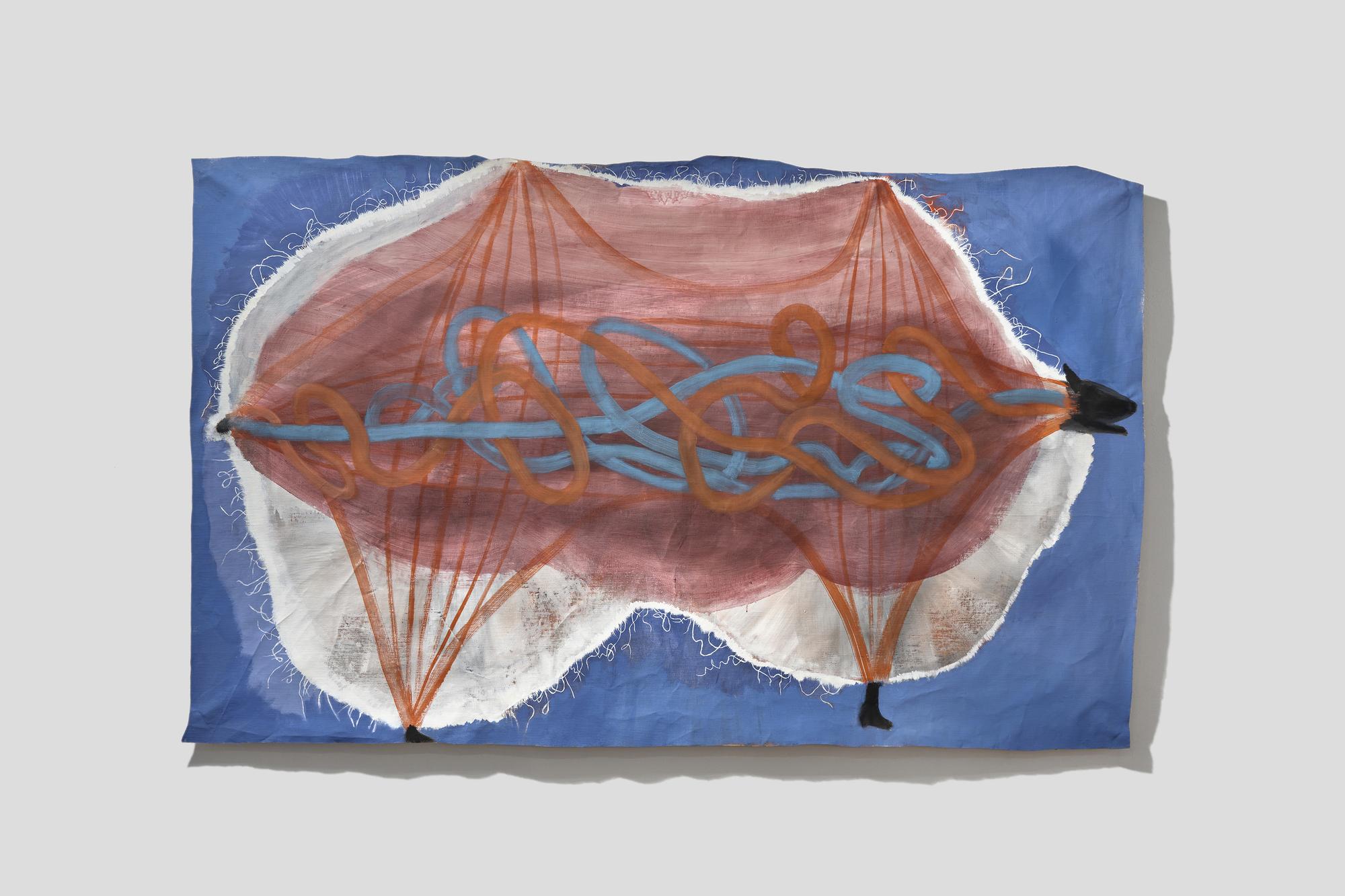
Dasom Park, Romantic Animal, 2024, Oil on canvas, 108x173cm ©Dasom Park
For example, in the 2024 painting
Romantic Animal, the materiality of the fabric and the image
appear as one while the cloth remains attached to the wall. Park closely
observed the wrinkles formed around the few points where tape fixed the fabric
in place, as well as the shadows created by those folds, incorporating them as
integral pictorial elements. As she painted in accordance with the creased
contours of the cloth, the fabric and the image drew ever closer together, and
the painting gradually grew into the semblance of a living organism.
Because the work reveals without
concealment the process of its own making and its internal structure—becoming
an image in and of itself—Park considered it “romantic,” and thus titled it Romantic
Animal. Building upon this painterly inquiry grounded in the
materiality of fabric, she has continued to expand her contemplation of the
“body of painting.”
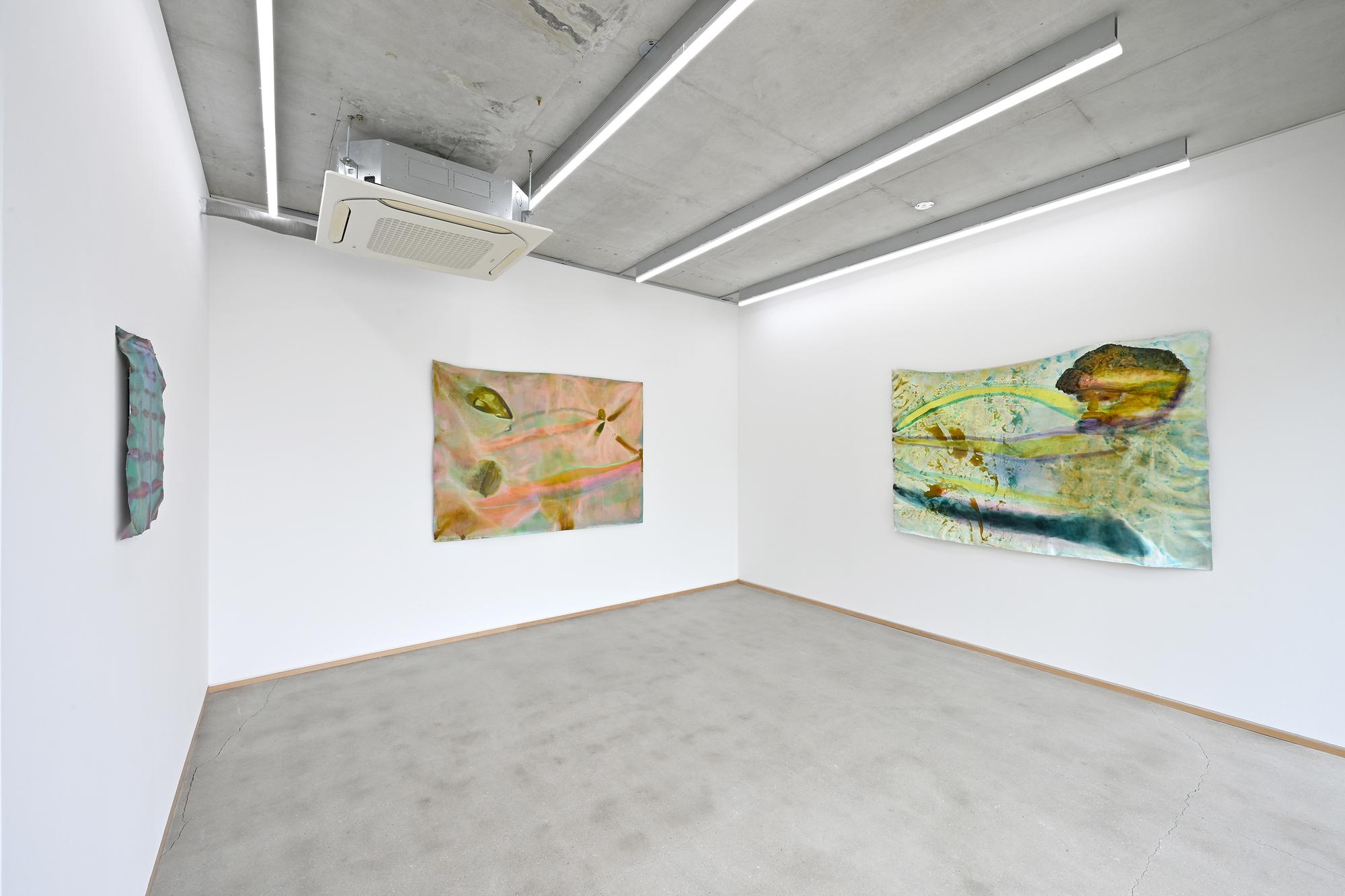
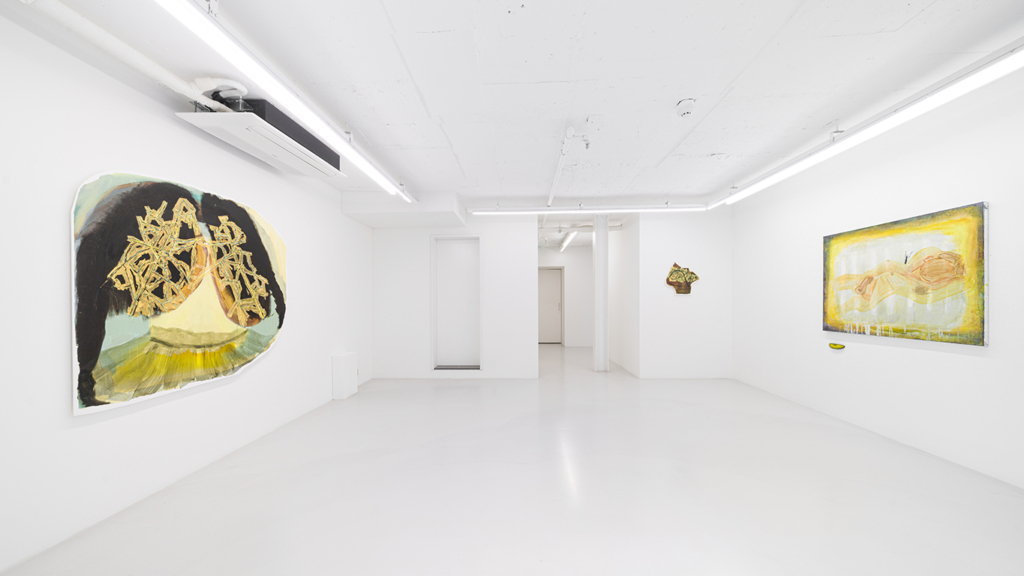
Installation view of 《Hanging Paintings》 (A-Lounge Contemporary, 2025) ©Dasom Park
Extending her inquiry into the physicality
of painting, the solo exhibition 《Hanging Paintings》 (A-Lounge Contemporary, 2025) layers and peels back the
skin—positioning the surface of the canvas as a site of sensory solidarity and
as a point of contact between bodies.
In place of a rigidly fixed frame, the
corners of the canvas are pulled taut with steel wires, generating tension
across a sensitive surface. Upon this structure, the boundary between body and
painting loosens. Her works respond to environmental forces such as gravity,
friction, and temperature. The curling of fabric, the detachment of tape, and
even the sagging caused by weight become events that belong simultaneously to
the painting and to the body, interwoven as one.
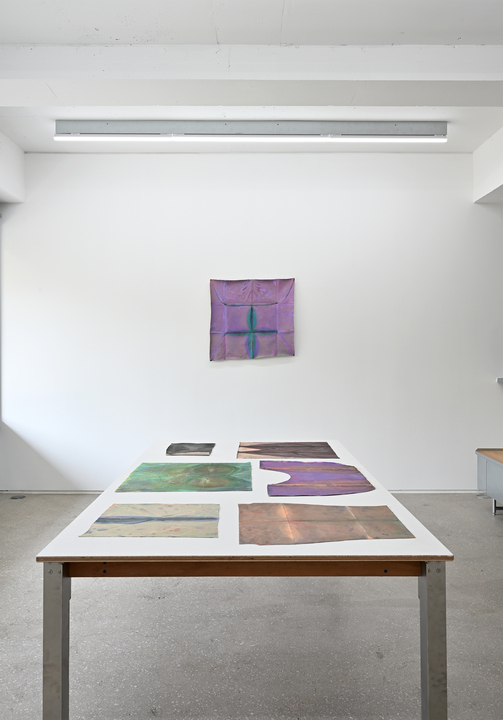
Installation view of 《Hanging Paintings》 (A-Lounge Contemporary, 2025) ©Dasom Park
Like the human body that inevitably
undergoes transformation, her paintings become vulnerable bodies placed before
unpredictable environmental change. For the artist, the canvas is akin to
clothing, bedding, or flooring—a sheet-like material that can be folded,
crumpled, or cut—an emergent form of life that yields to the conditions of its
own material existence.
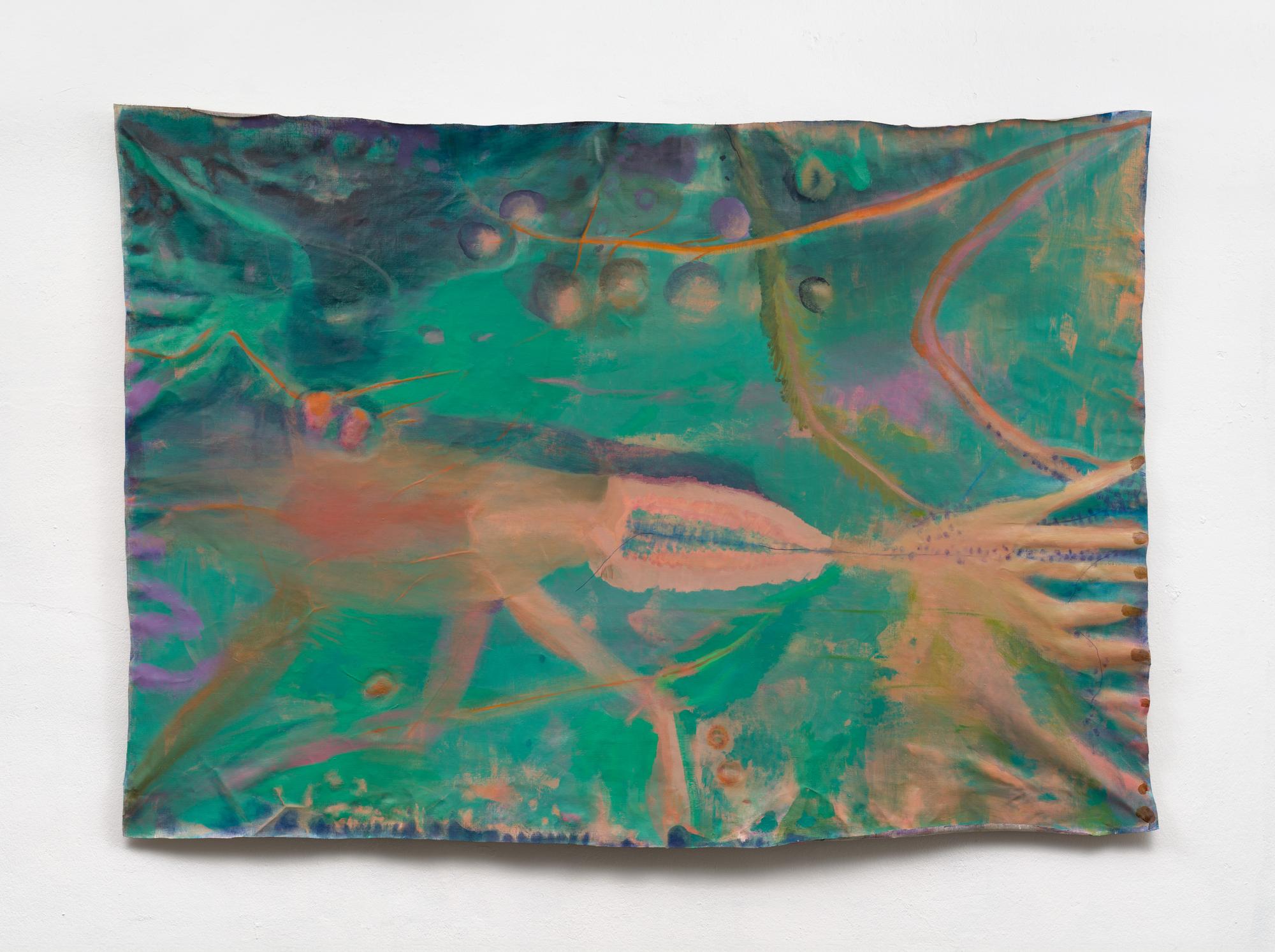
Dasom Park, The Painting Dreaming a Nightmare, 2025, Acrylic and oil on linen, 119.2x169.5cm ©Dasom Park
By adopting the very process through which
matter responds and comes alive as her methodology, Dasom Park’s paintings move
beyond serving as mere vessels for images; they become tactile devices akin to
skin, transmitting sensation through contact. In identifying the human body
with the body of painting, she forges a tender solidarity through—and
alongside—material itself.
Her works thus no longer remain static
entities fixed to the wall, but are encountered as flexible bodies and living
matter.
“I imagine, within this liberated space
where no transformation or distortion exacts a penalty, the joyful collapse of
what I once believed in.” (Dasom Park, Artist’s Note)
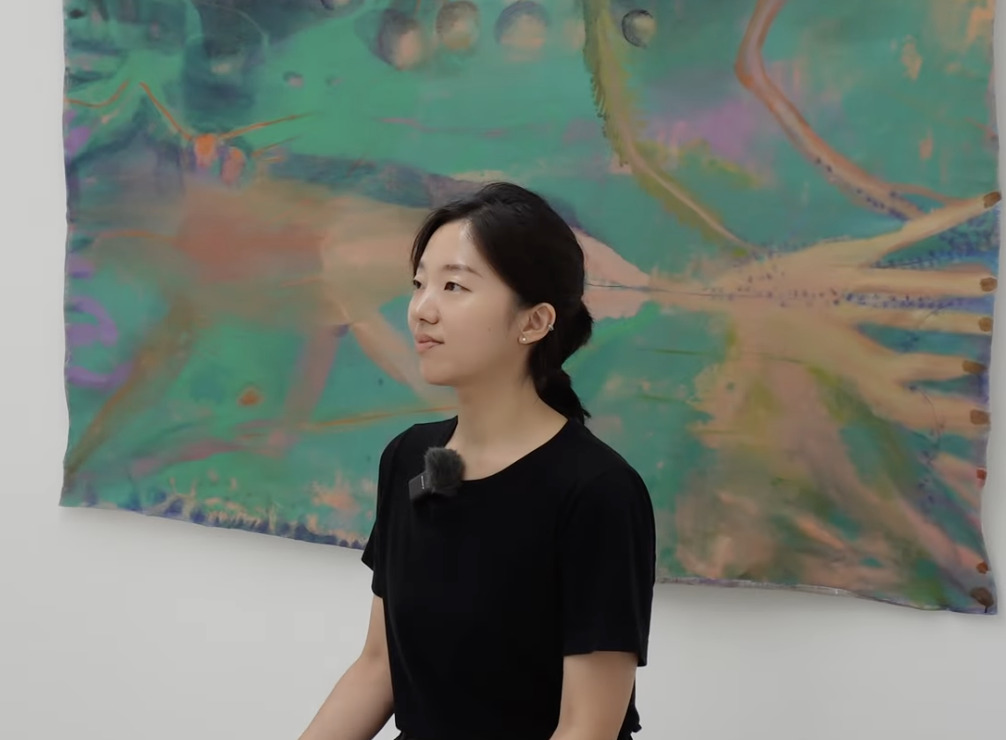
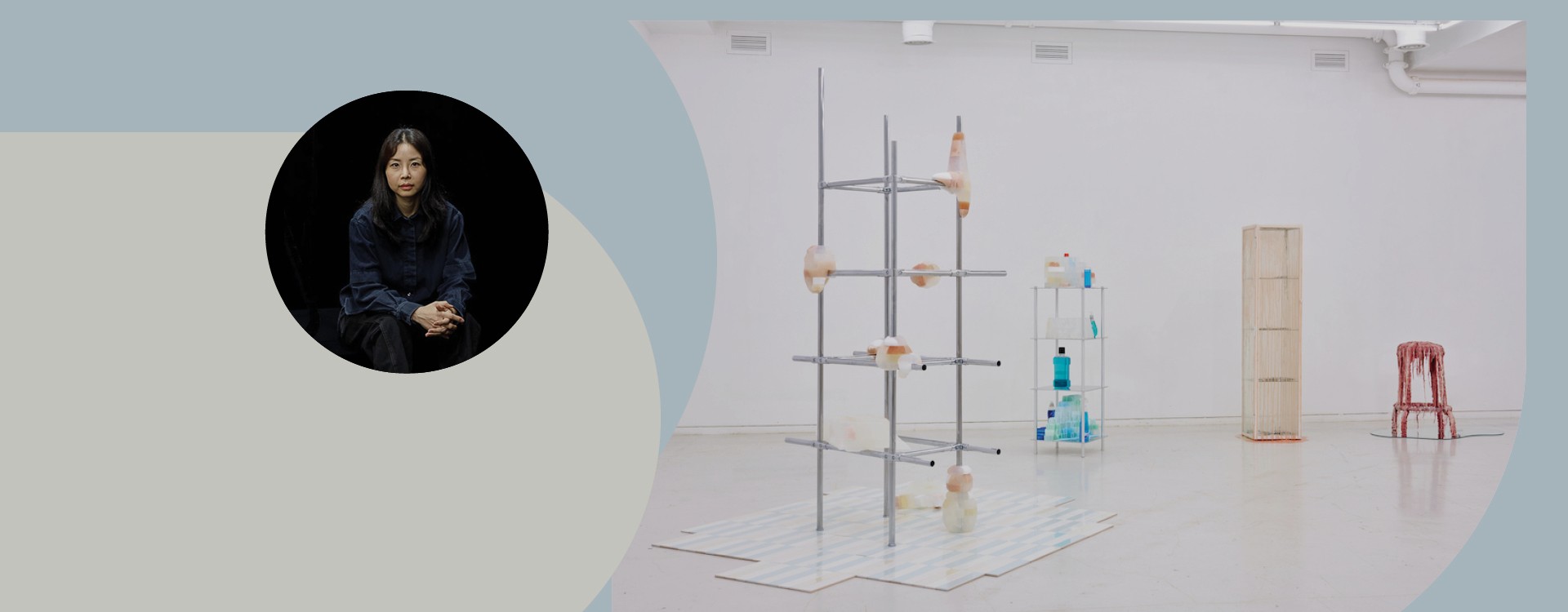
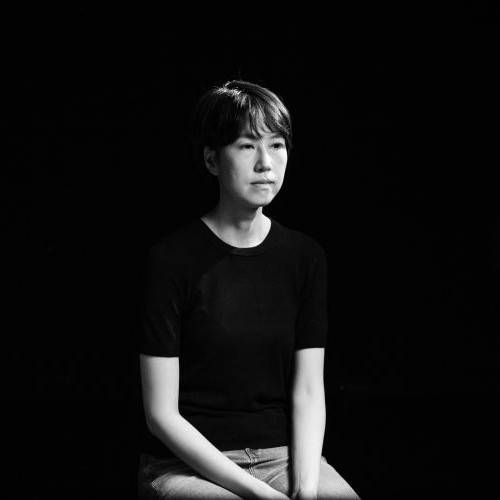
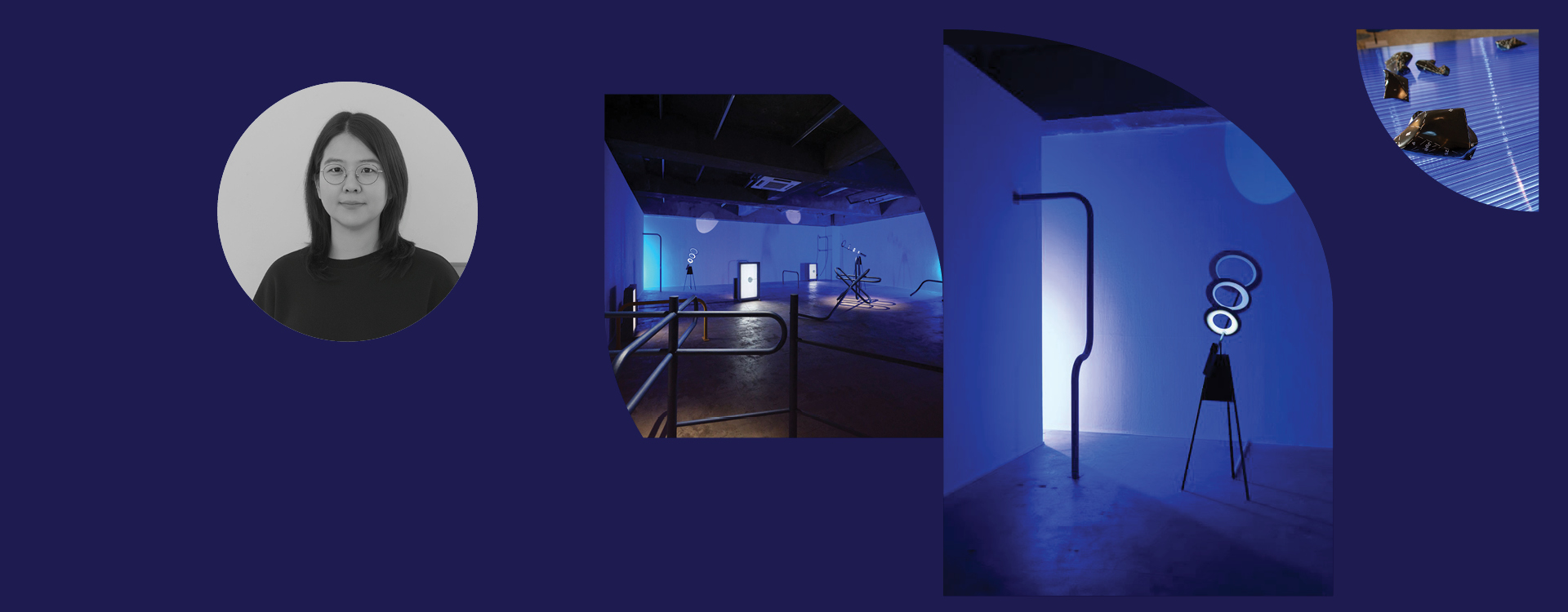
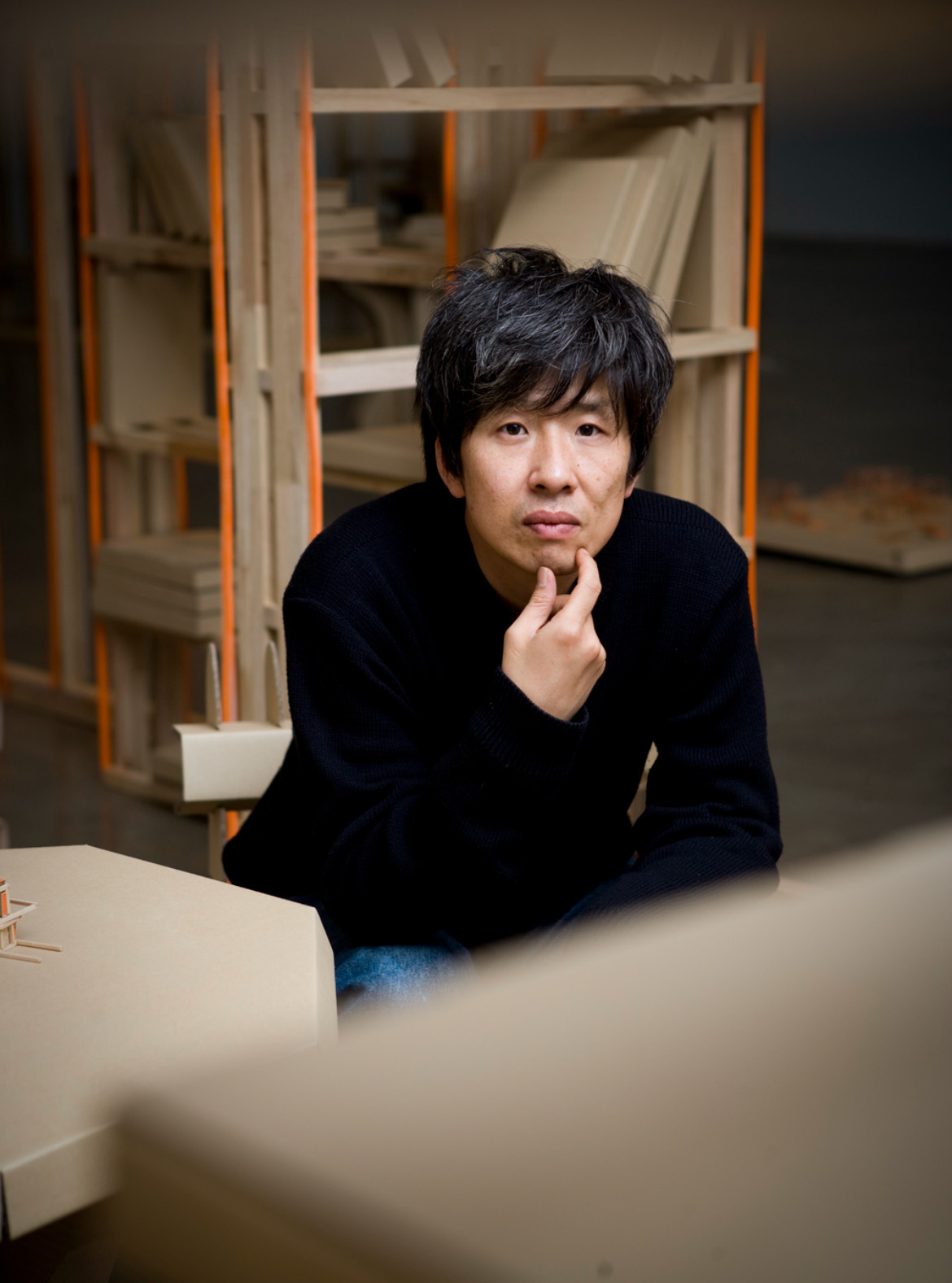
Artist Dasom Park ©A-Lounge Contemporary
Dasom Park earned her BFA in Painting from
Ewha Womans University and her MFA there as well. Her solo exhibitions include 《Hanging Paintings》 (A-Lounge Contemporary,
Seoul, 2025), 《Four Sheets》 (Vohm
Gallery, Seoul, 2024), 《Romantic Maxima》 (Place MAK2, Seoul, 2024), 《Flat Fire》
(Gallery SP, Seoul, 2023), and 《Drive》 (Gallery2, Seoul, 2023).
She has also participated in numerous group
exhibitions, including 《Shifting Scenes》 (APOproject, Seoul, 2025), 《And Afterwards》 (Kumho Museum of Art, Seoul, 2024), 《The
Original Face》 (Laheen Gallery, Seoul, 2024), 《THREE HOLES》 (EVERYART Gallery, Seoul,
2023), 《Random Pages》 (Gallery
SP, Seoul, 2022), 《Where All Places Are》 (Kumho Museum of Art, Seoul, 2021), among others.
Park was a resident artist at the Kumho Art
Studio (15th term) from 2019 to 2021, and was selected as a Kumho Young Artist
in 2022.
References
- 박다솜, Dasom Park (Artist Website)
- 플레이스막2, [서문] 검은개의 집 (Place MAK2, [Preface] House of A Hunched Back)
- 금호미술관, [전시 개요] 몸의 기술 (Kumho Museum of Art, [Exhibition Overview] The Art of Matter)
- 갤러리2, [서문] 드라이브 (Gallery2, [Preface] Drive)
- 플레이스막2, [서문] 로맨틱 맥시마 (Place MAK2, [Preface] Romantic Maxima)
- 금호미술관, [작가 소개] 지금의 화면 (Kumho Museum of Art, [Artist] And Afterwards)
- 에이라운지 컨템포러리, [서문] 매달린 그림 (A-Lounge Contemporary, [Preface] Hanging Paintings)