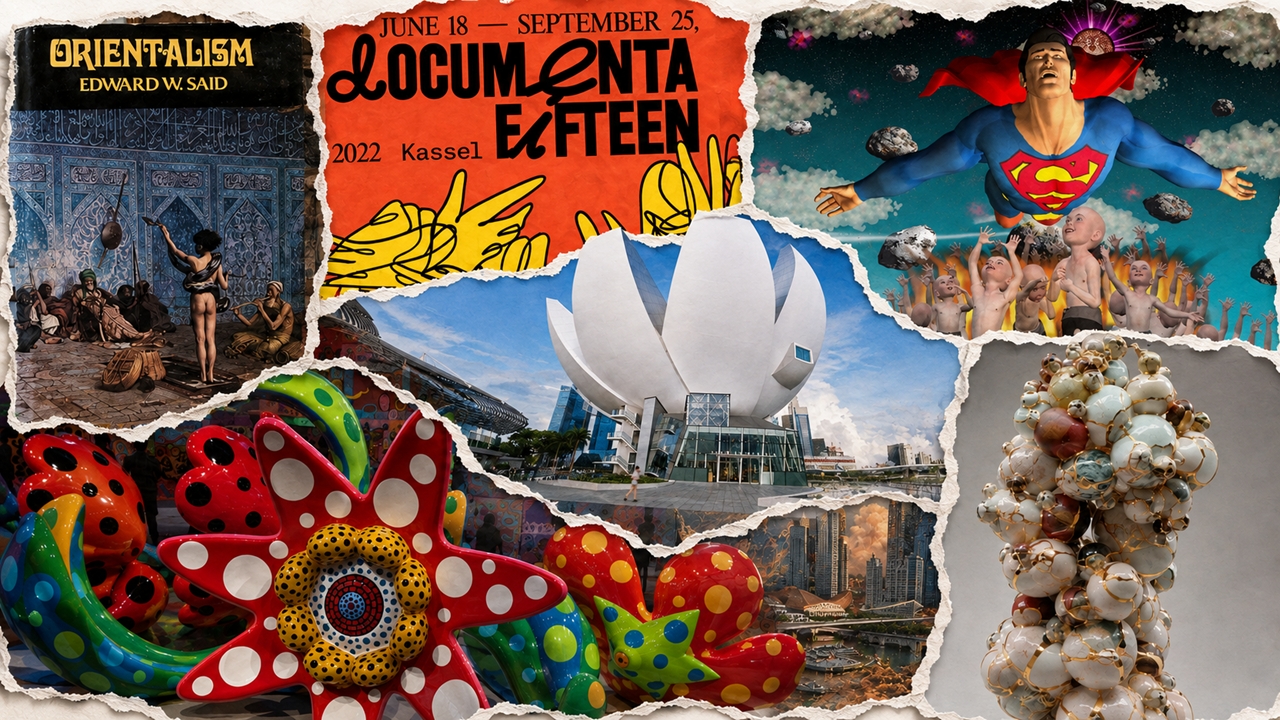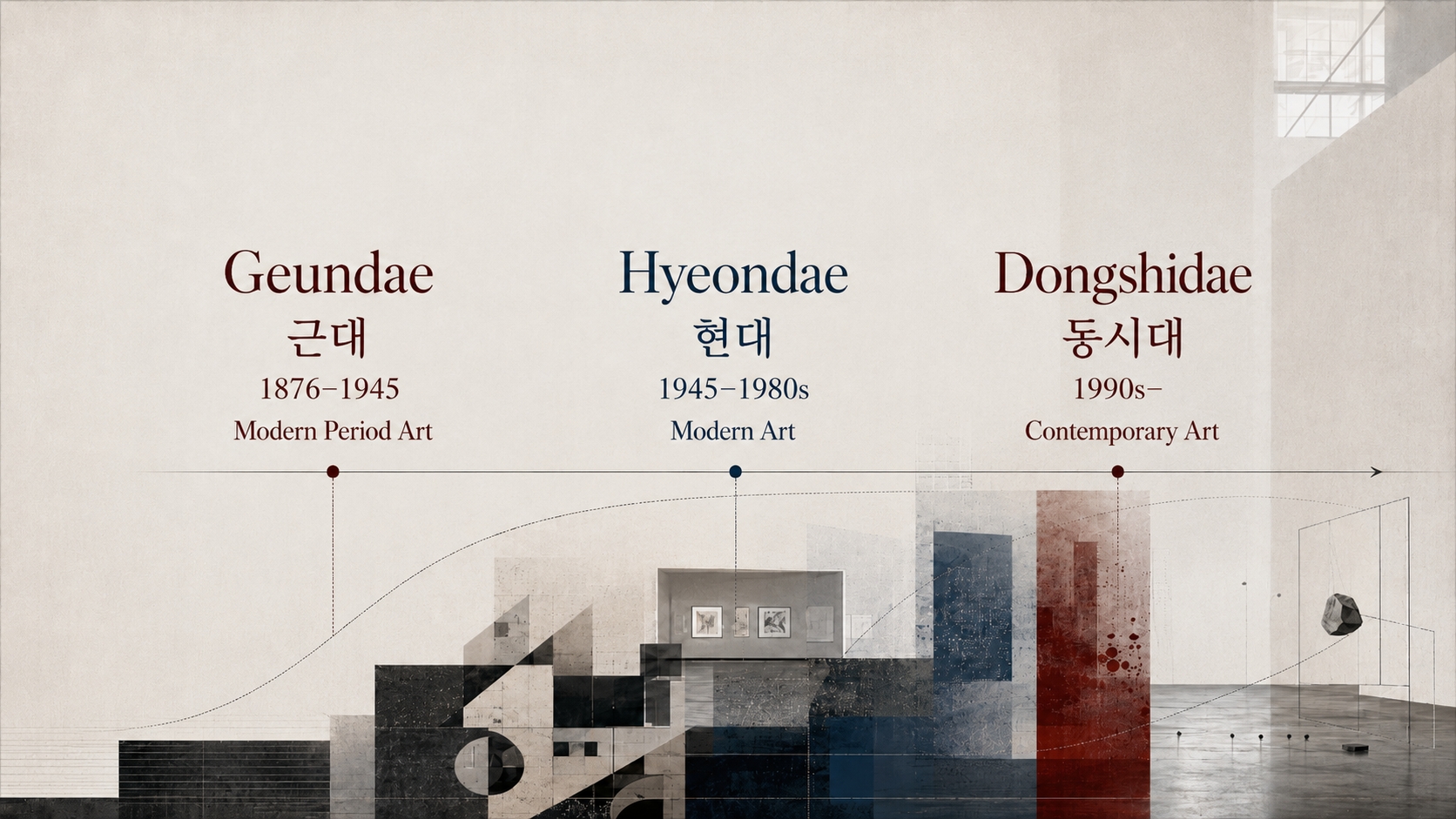

Toward the Post-Contemporary
If
modernism grounded art in formal innovation and historical progress, and
postmodernism dismantled that narrative by foregrounding difference and the
relativization of meaning, contemporary art today no longer functions as a
framework capable of articulating new aesthetic principles or a coherent
historical direction.
Rather
than a norm or a goal, it names a condition in which art operates after the
exhaustion of historical teleology. Discourses, media, and political contexts
belonging to different temporalities now coexist and collide without hierarchy;
this simultaneity itself has become the operative premise of the contemporary.
In
this sense, the contemporary is neither a style nor a movement, but an
operational regime that emerged once art could no longer be legitimized through
a singular criterion. Within this regime, artworks have derived meaning less
from formal necessity than from institutional positioning, discursive
circulation, and modes of distribution. Artistic autonomy has been sustained
not through internal coherence, but precariously, through continuous tension
with external conditions.
Today,
however, this condition has reached a point of exhaustion. As simultaneity
becomes permanent, art increasingly loses the coordinates by which it might
define itself. Difference and plurality no longer exert critical force, while
discourse circulates through repetition rather than accumulation. Although the
term “contemporary” remains in use, its capacity to account for present
artistic reality is increasingly in doubt.
What
we now encounter is not simply a moment after the contemporary, but a situation
in which the concept of the contemporary itself is losing explanatory force—a
threshold that may be described as post-contemporary.
The
post-contemporary does not designate a new chronological phase or the emergence
of novel forms. Rather, it signals a fundamental shift in how the conditions
surrounding art are perceived and interrogated. This shift is not marked by the
arrival of a new style or movement, but by the simultaneous emergence of
unresolved questions at precisely those points where established discursive
frameworks cease to function.
The Post-Contemporary Moment and the Response of Korean
Contemporary Art
-The Artist’s Reconfigured Position
Under
post-contemporary conditions, the artist can no longer be defined primarily as
a producer of new forms. This does not imply the end of artistic creation.
Rather, it reflects the historical saturation of form itself: most formal
strategies already exist, and the collapse of medium specificity has rendered
formal novelty insufficient as a ground of artistic legitimacy. The issue is
not the absence of new forms, but the erosion of form as the final horizon of
judgment.
Yet
the artist’s role has not diminished. On the contrary, the post-contemporary
condition imposes a heavier burden of responsibility. Before determining what
to produce, the artist must now determine under which conditions production
will take place. Institutional contexts, exhibitionary and circulatory
structures, and degrees of technological or automated intervention are no
longer external frameworks, but constitutive elements of the work
itself—elements that demand conscious judgment and accountability.
A work
no longer comes into being solely as an object or outcome. It materializes
through a sequence of decisions: which institutional frameworks it enters, how
it circulates, and to what extent technological mediation is accepted or
resisted. These decisions do not merely contextualize the work after the fact;
they constitute its operative conditions. The artist thus shifts from a
producer of forms to an agent who selects and organizes the conditions
under which a work can exist.
Within
this shift, artistic identity is likewise reconfigured. Originality no longer
refers to a distinctive style or visual signature, but to the capacity to
recognize given conditions, to decide which to inhabit, and to determine where
resistance or reconfiguration becomes necessary. Artistic agency emerges not
from the mythology of originality, but from an ability to think through
conditions and to assume responsibility for their consequences.
In
this sense, the post-contemporary artist is less an inventor of new forms than
a subject who actively chooses the conditions of possibility for artistic
production—and bears responsibility for that choice. Art is no longer evaluated
by what it presents, but by the judgments and conditions through which it
becomes possible.
- Reconfiguring the Language of Criticism
Under
post-contemporary conditions, the language and function of criticism must also
be reconfigured. For much of the contemporary period, criticism operated
primarily as a mechanism of contextualization and discursive mediation, linking
works to theory, politics, or social concerns in order to secure their
legitimacy. In doing so, criticism often functioned less as an agent of
judgment than as a system for arranging meanings already in circulation.
Today,
such explanatory criticism has largely lost its persuasive force. Works are no
longer under-contextualized; they are overdetermined by context. Meaning is not
scarce but excessive. The critical challenge is no longer to demonstrate
relevance, but to discern what genuinely matters. When criticism confines
itself to the production of additional meaning, it risks accelerating semantic
inflation rather than exercising critical discernment.
What
is now required of criticism is not the accumulation of meaning, but the
rearticulation of criteria. Criticism must ask which questions are central to a
work, which decisions have been strategically or tacitly avoided, and what
temporal and ethical responsibilities the work presupposes. This is not a
language that renders works intelligible, but one that exposes the conditions
under which they operate and the consequences of those conditions.
Such
criticism cannot claim neutrality. To judge is to assume risk, including the
possibility of error. Post-contemporary criticism is not an extension of
interpretation, but the enactment of judgment. It does not keep all
possibilities open; it asserts the significance of specific problems and
accepts responsibility for that assertion. In doing so, criticism once again
occupies a decisively political and ethical position.
Post-contemporary
art can only take shape through a process in which artists, critics,
institutions, and markets critically reassess their respective roles. What is
demanded is not an increase in images or speed, but a deceleration of judgment
and an intensified awareness of conditions. This transformation does not arrive
through new theoretical proclamations, but begins with the sustained
recognition that existing languages and structures are no longer adequate.
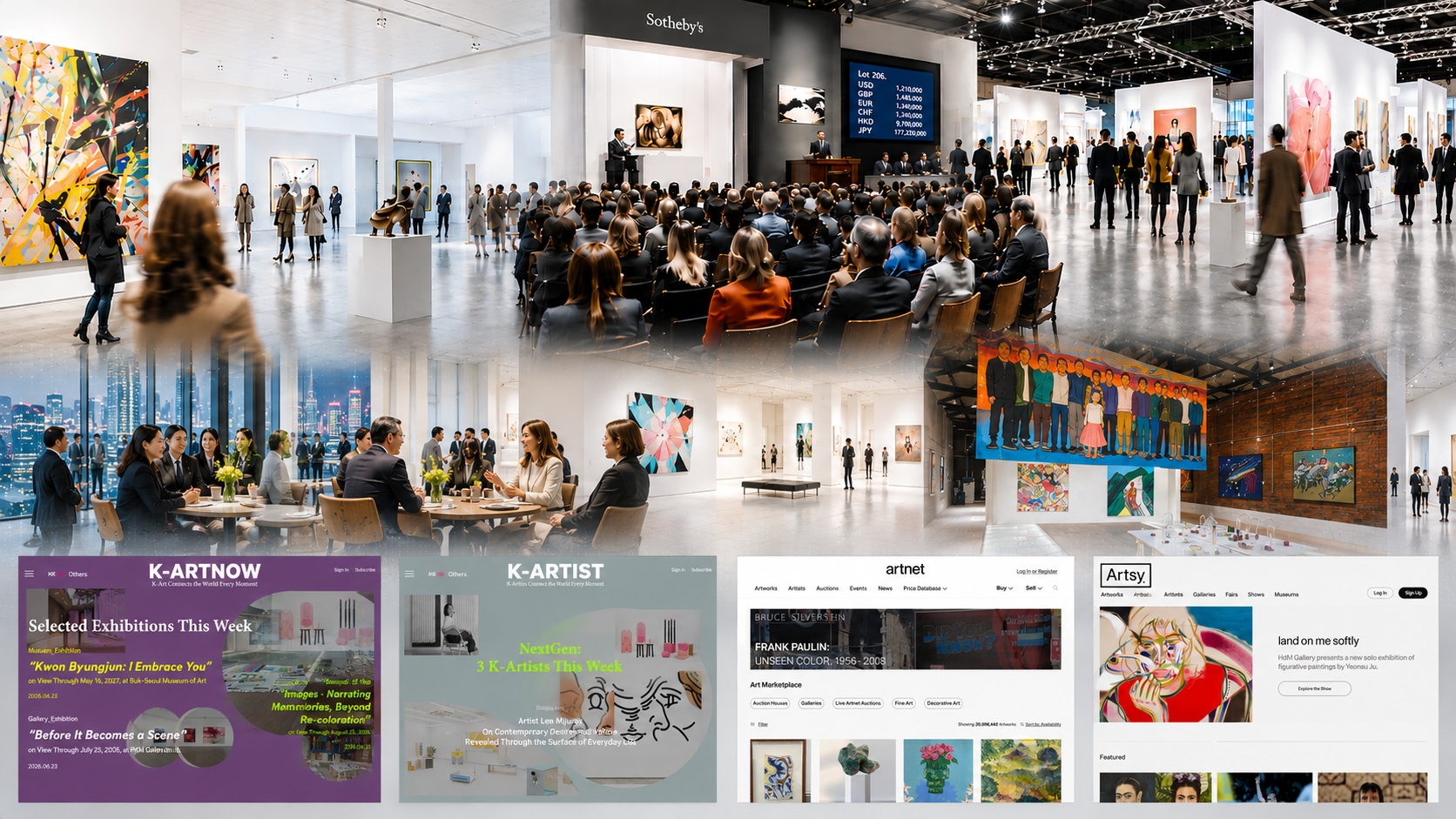
Market, Institution, and Artificial Intelligence
Art no
longer functions primarily as a site of experience or reflection. It has been
absorbed into a regime in which images, discourses, data, and prices circulate
as interchangeable indices. Works are increasingly managed not as acts of
meaning-making, but as units optimized for consumption, while art is organized
around legibility and transmissibility.
Institutions
function as systems of movement, exhibition, and inscription. Museums,
biennials, and public collections historicize works and situate them within
discourse, but they also stabilize specific tendencies and languages through
mechanisms of selection and exclusion. Institutions are not neutral
repositories; they are apparatuses of judgment that determine how art is
understood and remembered.
Markets
translate these structures into the language of value. Judgments of artistic
singularity become entangled with price, scarcity, and circulation history,
while meaning is converted into economic signal. The rhythms of production and
consumption dictate the tempo and direction of artistic work, privileging rapid
response and immediate readability. Judgment appears less as deliberation than
as aggregation.
Technology
accelerates both domains. Digital platforms, algorithmic systems, and
artificial intelligence fundamentally transform the production and circulation
of images, destabilizing traditional notions of authorship, originality, and
agency. AI is not merely an instrument, but a condition that intervenes
directly in processes of creation and evaluation, shifting attention from what
art produces to how production itself is structured.
Crucially,
capital, institutions, and technology no longer operate as separable external
forces. Institutions internalize market logic; markets expand through
technological mediation; technology acquires legitimacy through institutional
validation. Within this composite structure, art circulates incessantly, while
the locus of judgment and responsibility becomes increasingly indeterminate.
The crisis of contemporary art thus reveals itself not as a problem of form,
but as a problem of the conditions under which meaning and judgment can still
be sustained.
What
post-contemporary art demands, therefore, is not the proliferation of new
images or styles, but a renewed interrogation of the conditions under which art
can still retain judgment, responsibility, temporality, and experiential
density. The post-contemporary should be understood not as a domain of results,
but as a critical problem-space in which the conditions of art itself are at
stake.
Toward a Post-Contemporary Subject
Global
art no longer coheres around a single center. But to mistake this fragmentation
for universal openness is to misread the present condition. Power has not
disappeared; it has been redistributed into structures of judgment,
authorization, and circulation, where it operates with greater opacity and
sophistication. Contemporary art is reorganized less around production than
around who judges and who is authorized to matter.
Within
this transitional moment, the question confronting Korean contemporary art is
unequivocal. Will it remain an efficient participant within the global system,
or will it function as a subject capable of generating questions—positioning
itself as a site of production within global contemporary art? This is not a
question of scale or speed, but of whether autonomous thought can be initiated
and sustained.
What
the global art field now requires is not stylistic novelty or regional
distinction, but the capacity to critically articulate conditions that the
present fails to adequately account for: intensified proximity between
technology and life, isolation amid hyper-connectivity, asymmetrical
negotiations of memory and history, and the automation of judgment. Korean
society has long been a site where these conditions operate in condensed form.
This is not merely contextual background, but a potential condition of
production—one that will never actualize automatically.
The
problem is not a lack of capability. The core issue confronting Korean
contemporary art is a structural reluctance to assume responsibility for
judgment. Artists have learned that reproducing dominant trends minimizes risk;
critics have grown accustomed to languages that avoid institutional friction;
institutions have repeated systems that exclude failure; markets have rewarded
these choices with visibility and price. The result has been momentary success
without durable accumulation.
The
post-contemporary transition begins here. It is not a matter of new forms, but
of who is willing to assume the risk of judgment. Artists can no longer remain
technicians of image production; they must determine the conditions of their
practice and accept the consequences. Critics must perform judgment even at the
risk of being wrong. Institutions must move beyond mechanisms that merely
stabilize outcomes and instead construct structures in which failure and delay
can accumulate over time. Markets, too, must confront the possibility of
sharing the risks inherent in the formation of meaning.
If any
of these agents fail to act autonomously, Korean contemporary art will remain
confined to the position of consumer and distributor within the
post-contemporary landscape.
The
claim that “Korean art has potential” has lost its usefulness. That potential
has already been demonstrated. What is now required is not expectation, but
decision—not the acquisition of new knowledge, but the refusal to repeat what
has already proven insufficient.
No
substantive transformation will occur unless Korean contemporary art confronts
the questions it has long deferred and assumes responsibility for their
consequences.
The
next phase of Korean contemporary art depends on whether a subject can
emerge that poses these questions itself—and fully assumes responsibility for
the judgments it makes.
Jay Jongho Kim graduated from the Department of Art Theory at Hongik University and earned his master's degree in Art Planning from the same university. From 1996 to 2006, he worked as a curator at Gallery Seomi, planning director at CAIS Gallery, head of the curatorial research team at Art Center Nabi, director at Gallery Hyundai, and curator at Gana New York. From 2008 to 2017, he served as the executive director of Doosan Gallery Seoul & New York and Doosan Residency New York, introducing Korean contemporary artists to the local scene in New York. After returning to Korea in 2017, he worked as an art consultant, conducting art education, collection consulting, and various art projects. In 2021, he founded A Project Company and is currently running the platforms K-ARTNOW.COM and K-ARTIST.COM, which aim to promote Korean contemporary art on the global stage.